Play store

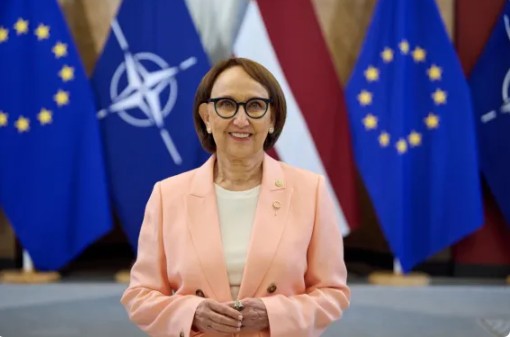
Rebeca Grynspan is emerging as the frontrunner in the race to become the next secretary-general of the United Nations. But securing the top diplomatic post may prove far more difficult than leading the field in informal polls, particularly if she cannot win the backing of US President Donald Trump.
In successive straw polls among members of the United Nations Security Council (UNSC), the Costa Rican diplomat has consistently emerged ahead of her rivals.
If elected, Grynspan, 70, would become the first woman and the first Jewish person to lead the United Nations. She currently heads the UN Conference on Trade and Development (UNCTAD), one of the organisation’s principal bodies dealing with global economic issues.
However, with the deadline for selecting a successor to outgoing Secretary-General Antonio Guterres approaching on December 31, Grynspan has yet to translate her frontrunner status into a guaranteed victory. At least one veto from a permanent member of the Security Council threatens to derail her candidacy.
The secret ballots and intense geopolitical rivalries surrounding the selection process make it difficult to establish which of the five permanent members oppose her appointment. Eight candidates are competing for the world’s top diplomatic position.
Analysts say Grynspan’s extensive experience within the UN system, as well as her positions on Israel’s occupation of Palestinian territory and Russia’s war in Ukraine, could complicate her efforts to secure the necessary support from the world’s most powerful nations.
Above all, she faces the challenge of winning over Trump, whose administration has repeatedly questioned the UN’s role and sought to reshape the international organisation.
Grynspan, however, believes her diplomatic record and willingness to take risks could work in her favour.
“The UN must become less risk-averse. Its biggest risk today is the risk of not trying,” she told Al Jazeera. “I have listened to people who need the UN but increasingly doubt it can act. They want leadership willing to take risks for peace.”
Acknowledging that diplomatic negotiations do not always produce immediate results, the UNCTAD chief argued that the secretary-general has a unique responsibility to keep pursuing solutions.
“Any mediator knows that 10 ideas may fail before the 11th succeeds,” she said. “Few governments can afford the political cost of so many rejections. The secretary-general can.”
Grynspan is no stranger to breaking barriers. In 2021, she became the first woman appointed secretary-general of UNCTAD, taking charge of the organisation amid the economic disruption caused by the COVID-19 pandemic.
Her priorities included supporting economic recovery, advancing digital transformation and promoting climate-related development goals.
Before joining the UN’s trade body, she built a distinguished career in Costa Rican politics and international diplomacy. She served as the country’s second vice-president from 1994 to 1998 and held several ministerial positions, including deputy finance minister.
An economist by training, she played an important role in addressing Costa Rica’s debt crisis during the 1980s.
Her international career expanded significantly in the following years. In 2014, she was appointed secretary-general of the Ibero-American Conference, an organisation bringing together 22 countries from Latin America, the Caribbean and Europe.
She also held senior positions within the UN Development Programme (UNDP) and the UN Commission for the Reconstruction of Haiti.
In her bid for the secretary-general’s post, Grynspan has outlined an ambitious reform agenda, arguing that the organisation must become more proactive in resolving conflicts and responding to global challenges.
“To defend the United Nations today is to have the courage to change it. No organisation after 80 years can say, we don’t have to change anything,” she told Al Jazeera.
“The UN has to embrace reform, not be defensive about reform.”
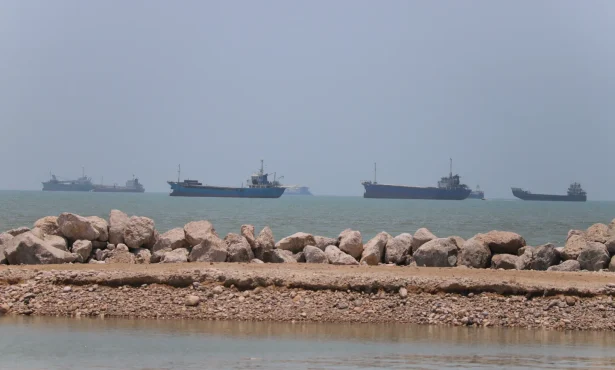
Grynspan’s leadership at UNCTAD has focused on global trade, debt sustainability and economic inequality. One of her most significant diplomatic achievements was her role in the Black Sea Grain Initiative, which helped facilitate Ukrainian agricultural exports during Russia’s war against Ukraine.
She played a key role in negotiating arrangements involving the warring parties while undergoing treatment for breast cancer.
But securing an agreement was only part of the challenge. Making it operational required bringing financial institutions, insurers and shipping companies on board.
“Making the agreements work meant bringing others to the table,” Grynspan recalled. “Banks would not clear payments, insurers would not cover vessels and shipping companies hesitated. We brought them into the effort.”
Brokered by the UN and Turkiye in 2022, the initiative enabled the export of approximately 32 million tonnes of grain and helped reduce global food prices by 22 per cent, according to UNCTAD. It remained operational for about a year before Russia withdrew in 2023.
Grynspan said the key to making the agreement work was persuading Moscow and Kyiv that they did not need to resolve their wider conflict to cooperate on the specific issue of grain exports.
That pragmatic approach, she says, would guide her engagement with the Security Council if she becomes secretary-general.
“If wars do not wait for ideal conditions, neither should diplomacy,” she said.
Her criticism of Russia’s withdrawal from the grain agreement, however, could become an obstacle. Richard Gowan, programme director for global issues and institutions at the International Crisis Group, previously told Al Jazeera that Moscow could use its veto to block her candidacy.
Nevertheless, Grynspan has continued her diplomatic outreach. Like the other contenders, she has been seeking support from key Security Council members, including meeting Russian Foreign Minister Sergey Lavrov in April.
Grynspan’s family background and her position on the Israel-Palestine conflict could also become factors in the selection process.
The daughter of Polish Jewish refugees who fled to Central America during the Holocaust, she has close family connections with Israel. She studied there, while her sister has lived in the country for years. Her nephew and niece also served in the Israeli military, and relatives living there identify themselves as Zionists.
Her public position on Israel’s war on Gaza, however, has broadly reflected that of the United Nations. She condemned Hamas’s October 2023 attack on Israel and subsequently called for a ceasefire as Israel launched its military campaign in the besieged Palestinian territory.
The UN’s independent Commission of Inquiry has concluded that Israel committed genocide in Gaza.
Under Grynspan’s leadership, UNCTAD has published several reports documenting the devastating economic consequences of Israeli policies and military operations in the occupied Palestinian territory.
A landmark report published in February this year estimated that the Palestinian economy lost $212.2 billion in constant 2015 dollars between 2000 and 2024.
“This partial, estimated lost potential, equivalent to nearly 20 times the entire Palestinian GDP of 2024, stems directly from Israeli occupation policies, restrictions, closures, and recurrent military operations,” the report stated.
Last year, Grynspan also highlighted the dramatic collapse in Gaza’s economy, noting that GDP per capita had fallen to just $161 annually, an 83 per cent decline from $970 in 2023, before the war began. She described the contraction as one of the most severe in modern economic history.
Her family connections, combined with her work and public positions, have drawn attention from different sides of the Israel-Palestine debate, although she has generally avoided extensive public discussion of the conflict or her Jewish identity.
“What my identity gives me is empathy, not bias,” she told Al Jazeera.
Reflecting on her parents’ experience as Jewish refugees during the Second World War, Grynspan said their story had shaped her understanding of the consequences of conflict and the importance of peace.
“I am the daughter of peace. My parents were refugees of the Second World War. I know what war takes away and I know what peace makes possible. It is possible for us to do it again, together,” she said.
According to Haaretz, Israeli officials have not publicly commented on the prospect of her becoming the next UN secretary-general.
Despite leading the straw polls, Grynspan’s path to the secretary-general’s office remains uncertain. The five permanent members of the Security Council, the United States, Russia, China, France and the United Kingdom, each have veto power. Opposition from even one of them could end her bid.
Her identity as a longstanding UN insider may be an advantage in terms of institutional experience, but it could also work against her in Washington.
Trump has repeatedly sought to weaken, restructure and reduce US engagement with the UN system. Analysts therefore question whether Grynspan can persuade his administration that she is the right candidate to lead an organisation whose existing structure and priorities Trump has challenged.
Earlier this month, the United States and Russia reportedly backed the United Arab Emirates’ candidate, Lana Nusseibeh, while France and the United Kingdom offered little resistance, according to diplomats cited by the media platform Devex.
Nusseibeh received six votes against her in the latest straw poll, which involved all 15 Security Council members. However, it remains unclear whether those opposing votes included any vetoes.
China, meanwhile, has reportedly indicated a preference for a Latin American candidate, according to The New York Times, although Beijing has not publicly endorsed any contender.
Esther Brimmer, a senior fellow at the Council on Foreign Relations and a former US assistant secretary of state for international organisation affairs, believes Grynspan will need to demonstrate a clear commitment to reforming the UN system to win Washington’s support.
She said the Costa Rican diplomat would have to convince the Trump administration of her willingness to pursue “reform, reorganisation, and consolidation” across the organisation.
“An insider candidate has to work much harder to convince decision-makers of her commitment to change such a large and complicated organisation,” Brimmer told Al Jazeera.
“US officials have been clear and consistent in highlighting the need for reform. Multilateral diplomacy will be shaped by how that ‘reform’ is defined and implemented.”
Ultimately, whether Grynspan’s vision of reform can meet the expectations of Trump and his administration may determine the outcome of the race.
She has demonstrated an ability to bring opposing sides to the negotiating table, even under extraordinary circumstances. But securing the UN’s top job may require her to navigate an even more difficult diplomatic challenge: convincing the very powers that question the organisation’s relevance that she is the person capable of changing it. Source: Al Jazeera News