


 Play store

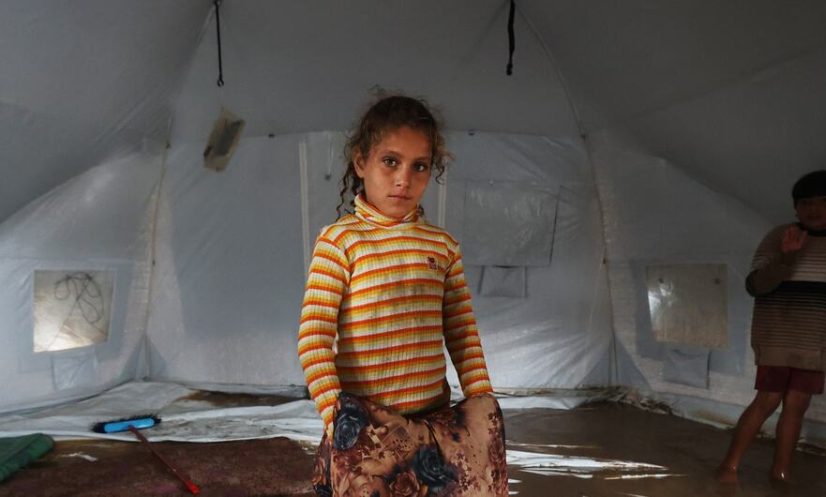
GAZA: Winter rains and flooding are worsening Gaza’s humanitarian crisis, destroying scarce food supplies, damaging makeshift shelters and leaving millions of displaced people struggling to stay warm and fed amid severe shortages of basic necessities.
“Most people burn rubbish to cook their food. Now even the rubbish is wet,” warned Shaun Hughes, World Food Programme (WFP) country director for Palestine.
Briefing journalists in Geneva following a visit to the Gaza Strip last week, Hughes said floodwater and sewage had destroyed food stocks stored in tents, while cooking gas and firewood were either unavailable or beyond the reach of most families.
The growing damage has raised fears about how displaced Palestinians will survive the winter months.
“After just one day of rain, tens of thousands of shelters were damaged or destroyed,” said Karl Baker, regional crisis coordinator for the UN International Organization for Migration (IOM).
At least five people were killed when a sandbank collapsed just over a week ago. Humanitarian partners also reported that two children had died in accidental fires started by families trying to keep warm by cooking inside their tents, Baker added.
The UN’s food and migration agencies warned that critical funding shortages and continued restrictions on humanitarian deliveries were placing further pressure on an already fragile relief operation.
More than 1.7 million people in Gaza remain displaced, while 1.4 million face acute hunger.
In displacement camps, the WFP previously provided one hot meal a day. That has now been reduced to one meal every two days, Hughes said.
Recent improvements in food security remain fragile and depend largely on humanitarian assistance rather than any recovery in livelihoods, markets or local food production. Winter flooding and the destruction of food stocks threaten to reverse those gains.
“When you’re in Gaza, it does not feel like a ceasefire,” Hughes said.
He pointed out that Israeli military control over nearly 70 per cent of Gaza had left residents with little land to grow food. Fishing was prohibited and dangerous, while unemployment stood at more than 80 per cent.
Without humanitarian assistance, people have few, if any, alternative means of survival, he added.
As winter sets in, improving conditions in displacement camps is among the most immediate ways to protect vulnerable families, according to the IOM.
Humanitarian teams have spent months preparing camp sites for winter by digging drainage channels, reinforcing pathways and using flour bags as sandbags to reduce flooding.
However, the agency needs at least $9 million in the coming months for flood prevention, fire safety measures, heating points, lighting and emergency improvements to displacement sites.
Additional resources and basic equipment, including shovels, sandbags and nails, are also urgently needed to help communities protect themselves and reinforce their shelters.
Humanitarian agencies are coordinating with Israel’s Coordination of Government Activities in the Territories (COGAT) to ensure that equipment entering Gaza meets Israeli security requirements. However, UN agencies say the clearance process is lengthy and heavily bureaucratic.
The IOM has urged UN Member States to use their influence with Israeli authorities to open additional border crossings and ensure the immediate and predictable entry of humanitarian supplies, particularly stronger and more durable shelter materials.
“Anything that can come in at any time, we just highly appreciate it and from any source; but of course, it needs to be durable and that’s what we’re looking for in order just to get through this winter,” said Karl Baker, head of the IOM’s Gaza programme.
He said more than 100,000 tents were ready for delivery from Egypt, but their entry depended on meeting strict requirements, including specifications for the diameter of central tent poles.
“Usually anything under 38 millimetres is okay; anything above, it’s usually deemed as not acceptable,” he explained.
He added that such restrictions did not necessarily mean the items were classified as having dual-use potential, but rather that particular tents were not being permitted entry at the time. Humanitarian agencies were not given specific explanations, he said.
Women, who shoulder much of the responsibility for household survival, are facing growing difficulties in feeding their children and keeping their families warm as flooding and sewage expose displaced people to disease and rodents.
UN Women raised the concerns during Tuesday’s briefing in Geneva, warning that Gaza was entering its fourth winter of displacement.
One in four households in Gaza is headed by a woman. Even before the recent flooding, these families were more likely to live in inadequate shelters.
Widows and women whose husbands have been forcibly disappeared, severely injured or remain missing are facing “unimaginable hardship, often alone”, the agency said.
The worsening winter conditions have added another layer of suffering for families already struggling with displacement, hunger and the loss of basic means of survival. Source: UN News