


 Play store

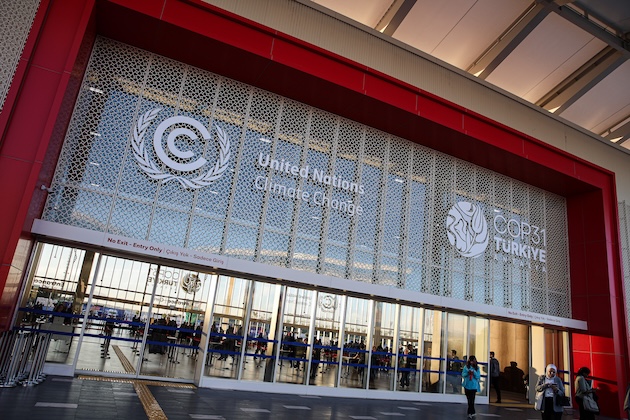
ANTALYA, Türkiye: Four countries have pledged or proposed a combined $200 million for global environment and climate funds at the COP31 talks in Antalya, offering fresh financial support as developing nations push for greater assistance to tackle climate change.
Denmark, South Korea, Belgium and Germany have announced contributions to three separate funding mechanisms managed by the Global Environment Facility (GEF), which supports environmental protection and climate resilience in developing countries.
Denmark plans to contribute 800 million Danish kroner, equivalent to around €107 million, to the ninth replenishment of the GEF Trust Fund. South Korea has pledged 4.5 million Special Drawing Rights (SDRs), an international reserve asset.
According to the GEF, the latest offers bring total pledges to the Trust Fund to more than $4.5 billion for the 2026-2030 period.
Belgium has pledged €50 million to the Least Developed Countries Fund (LDCF), while Germany has proposed €10 million for the LDCF and another €8 million for the Special Climate Change Fund (SCCF).
“Both contributions remain subject to parliamentary approval,” said Birgit Pickel, a senior official at Germany’s development ministry, in the GEF announcement.
The LDCF provides grants to the world’s 44 least developed countries, while the SCCF supports climate adaptation in small island developing states outside that group, as well as innovation and private-sector initiatives.
The GEF expects at least 80 per cent of the latest Trust Fund replenishment to generate climate benefits. However, the funding will also support projects involving biodiversity, land and water, rather than being exclusively allocated to climate adaptation.
Since 2001, the LDCF and SCCF have provided nearly $3 billion for more than 580 projects, which are expected to directly benefit over 100 million people, according to the GEF.
The new commitments come as developing countries face an enormous gap between their climate adaptation needs and available international financing.
The UN Environment Programme (UNEP) estimates that developing countries will require around $305 billion annually by 2035 to meet their adaptation needs. However, international public finance for adaptation stood at only $28 billion to $32 billion in 2024.
Although the latest pledges cover several environmental funds and cannot be directly compared with annual adaptation requirements, the widening financing gap has emerged as a major issue at the Antalya negotiations.
“Even tripling adaptation finance would meet less than 30 per cent of what is needed,” UN Secretary-General António Guterres told reporters at COP31.
Guterres also met the heads of international climate funds and called for reducing bureaucratic hurdles that make it difficult for developing countries, particularly those with limited institutional capacity, to access financing.
The COP31 presidency’s draft cover decision, released on November 16, expressed concern over declining annual contributions to the LDCF and the GEF and called on developed countries to increase their support. The draft remains under negotiation and has yet to be adopted.
The Least Developed Countries Group is demanding a threefold increase in adaptation finance to at least $120 billion annually well before 2035. It is also seeking simpler access to funding and more predictable public grants to implement national adaptation plans.
“Ambition needs the means to deliver it,” said the group’s chair, Ambassador Adão Soares Barbosa of Timor-Leste, ahead of the negotiations.
The group is also pressing for greater financial support to address loss and damage, referring to climate-related harm that vulnerable communities cannot prevent or overcome through adaptation measures alone.
An earlier LDCF-backed project in Tanzania illustrates how such funding can benefit vulnerable communities.
The Ecosystem-based Adaptation for Rural Resilience project supported access to water, landscape restoration and alternative livelihoods in areas facing increasingly dry conditions.
According to UNEP, the project had drilled 15 boreholes by 2024, including 12 powered by solar energy, providing improved access to water for more than 35,000 people across five districts. It also supported tree planting and alternative income-generating activities, including beekeeping.
“We used to face many challenges growing vegetables,” Malegesi Makene Chilongo, a resident of a village that received a borehole, told UNEP. The agency said the new water source had enabled villagers to establish small farms.
Bangladesh is also in line to benefit from a separate LDCF-supported project currently in preparation to restore mangroves and strengthen livelihoods in the Greater Sundarbans.
The $8.84 million project is expected to benefit 43,050 people, half of them women, according to a GEF report submitted to the UN climate convention.
However, the GEF announcement did not specify which projects would receive funding from the latest pledges.
GEF Chief Executive Diego Mesa Puyo said the institution was working to “catalyse greater private finance alongside public investment”.
But experts and climate negotiators face the challenge of attracting private investment for essential adaptation measures. Projects such as early-warning systems and rural water supplies often offer limited commercial returns, while infrastructure such as water pumps requires sustained funding for maintenance.
UN climate chief Simon Stiell welcomed the new commitments, saying, “Grant finance remains essential to protecting lives, livelihoods, and development gains.”
For the least developed countries, the key question at COP31 is whether the latest offers will translate into predictable, accessible funding for governments and vulnerable communities, and whether more donors will step forward before COP32 in Addis Ababa. Source: IPS News