Play store


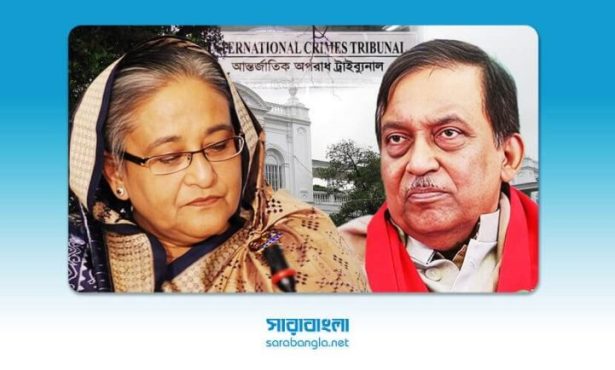
Dhaka: A legal notice has been served on the government, demanding diplomatic and administrative initiatives to bring back former prime minister Sheikh Hasina from India, where she is currently staying after being sentenced to death by the International Crimes Tribunal.
The notice calls for her safe return to Bangladesh, placement in lawful custody and completion of the subsequent judicial proceedings.
Supreme Court lawyer Md Mahmudul Hasan Mamun issued the notice on Wednesday in the public interest. It was sent by registered post and email to the Cabinet Secretary, Foreign Secretary, Secretary of the Public Security Division of the Home Ministry, Secretary of the Law, Justice and Parliamentary Affairs Ministry, Inspector General of Police (IGP) and Bangladesh’s High Commissioner to New Delhi.
The notice states that the initiative has no connection with any political party, the incumbent government or any position for or against Sheikh Hasina. Rather, it has been taken from a neutral standpoint in recognition of the state’s constitutional responsibilities.
It refers to Article 21(1) of the Constitution, which requires citizens to safeguard the country’s sovereignty, territorial integrity and public security, as well as Article 31, which guarantees every citizen the right to protection of the law.
National security has been given particular emphasis in the notice. It argues that, having served as prime minister for an extended period, Sheikh Hasina may possess sensitive information concerning Bangladesh’s defence system, intelligence networks, diplomatic protocols and national security arrangements.
The lawyer expressed concern that her prolonged stay in a neighbouring country could create risks of sensitive information being disclosed to foreign authorities.
The notice also warns that such a situation could strain international relations and potentially create the risk of military confrontation.
In this connection, it cites the examples of former Yemeni President Abdrabbuh Mansur Hadi, who took refuge in Saudi Arabia, and former Ukrainian President Viktor Yanukovych, who fled to Russia.
According to the notice, Hadi’s refuge in Saudi Arabia in 2015 became intertwined with Yemen’s political crisis and the subsequent Saudi-led military intervention. Similarly, Yanukovych’s refuge in Russia in 2014 coincided with major geopolitical changes in Ukraine, followed by Russia’s takeover of Crimea and the prolonged conflict between the two countries.
The notice urges caution to ensure that Bangladesh and India do not experience similar hostility or armed conflict.
As a first step towards bringing Sheikh Hasina back, the lawyer has proposed that the Foreign Ministry send a formal diplomatic communication, known as a ‘Note Verbale’, to India’s Ministry of External Affairs.
The communication should seek India’s cooperation in facilitating her safe return as a Bangladeshi citizen, while ensuring her right to legal protection and justice under Article 31 of the Constitution, the notice says.
It further proposes creating an opportunity for Sheikh Hasina to enter the Bangladesh High Commission in New Delhi and surrender herself to the authorities.
Referring to the 1961 Vienna Convention, the notice highlights the diplomatic inviolability of the High Commission premises. Under the proposed arrangement, she would formally surrender to the lawful authorities of Bangladesh after entering the mission.
A specially trained team of Bangladesh Police would then arrest her inside the High Commission premises and take her into legal custody, according to the proposal.
The notice also suggests issuing a travel pass or travel permit through the Bangladesh High Commission in New Delhi to facilitate her return.
It proposes that the High Commission coordinate with the Home Ministry to arrange either a suitable commercial flight or a special chartered aircraft, with round-the-clock security and escort provided by Bangladesh Police throughout the journey.
Regarding her security and detention after returning home, the lawyer has proposed declaring Sheikh Hasina’s ancestral home in Tungipara, Gopalganj, a special sub-jail or prison facility.
The notice says the Home Ministry could make such an arrangement through a government notification in accordance with the Prisons Act and prison regulations.
It also proposes that, after landing in Dhaka, she be flown directly from the airport to the proposed sub-jail in Tungipara by a police helicopter to maintain public order and avoid any untoward incident.
On the judicial front, the notice refers to Section 21 of the International Crimes (Tribunals) Act, 1973, which provides for the right to appeal.
It argues that, after returning to Bangladesh and being placed in legal custody, Sheikh Hasina would be able to exercise her statutory right of appeal before the Appellate Division of the Supreme Court.
Under Section 21(3) of the Act, an appeal must be filed within 30 days of the date of the sentence. However, the notice says the Appellate Division has the judicial authority to consider an application for condonation of delay on sufficient grounds and admit an appeal for hearing.
The lawyer has also proposed using the virtual court system to continue proceedings in other civil and criminal cases pending against Sheikh Hasina in different courts across the country.
Citing the Use of Information and Communication Technology in Courts Act, 2020, the notice suggests virtual appearances and recording of testimony through audio-visual conferencing. This, it argues, would allow judicial proceedings to continue while reducing security risks.
The notice further states that the government must implement impartially the verdicts and orders issued by the relevant courts after all appeals and other legal proceedings have been finally disposed of.
It emphasises the importance of upholding the rule of law and ensuring everyone’s legal rights under the Constitution.
Mamun has asked the government to take the proposed diplomatic, administrative and legal measures within 15 days of receiving the notice and inform him in writing.
The notice warns that, if effective steps are not taken within the stipulated period, he will file a public interest litigation (PIL) petition before the High Court Division under Article 102 of the Constitution to protect state sovereignty, confidentiality and the rights guaranteed under Article 31.