


 Play store

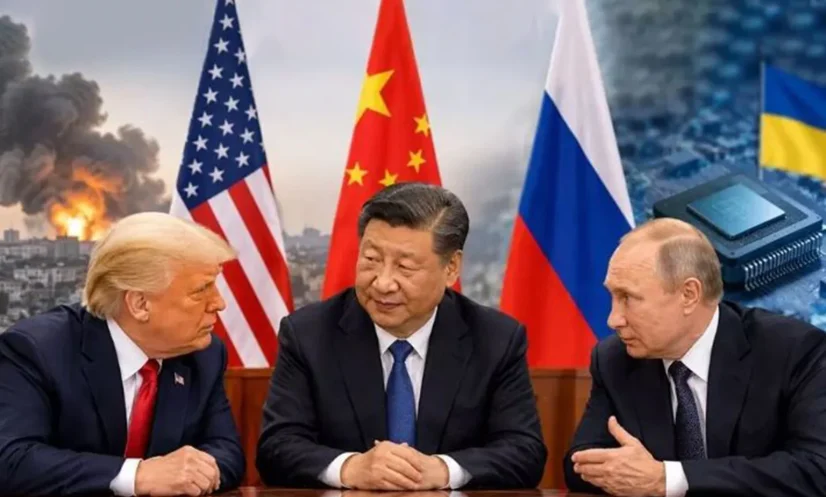
European countries are increasingly concerned that a possible trilateral meeting between Chinese President Xi Jinping, US President Donald Trump and Russian President Vladimir Putin could lead to a new geopolitical arrangement resembling the 1945 Yalta Conference, where major powers shaped the post-war world order while smaller countries had little say.
The concern is particularly strong over the future of the war in Ukraine and European security, with fears that Washington, Moscow and Beijing could reach an understanding on regional influence and security arrangements without consulting European nations or Ukraine.
The Yalta Conference was held in February 1945, during the final stages of World War II. It brought together then-US President Franklin D Roosevelt, British Prime Minister Winston Churchill and Soviet leader Joseph Stalin.
The three leaders discussed the post-war international order and the future of several countries. However, the conference later attracted criticism because major powers made decisions affecting smaller nations without giving them meaningful opportunities to participate, effectively dividing areas of influence among themselves.
European leaders and policymakers fear that a similar arrangement could emerge if Xi, Trump and Putin hold talks without involving the countries directly affected by their decisions.
Ukrainian President Volodymyr Zelensky has also warned against any attempt to redraw global spheres of influence through what he described as a possible ‘Yalta 2, 3 or 4’.
He fears that major powers could reach an agreement on Ukraine’s future without Ukraine itself being represented at the negotiating table.
Such an arrangement could threaten Ukraine’s sovereignty and territorial integrity, while also undermining Europe’s security architecture and reducing European countries’ influence in international affairs.
The concerns come amid continuing uncertainty over the future of the Russia-Ukraine war and the role major powers may play in determining the terms of any eventual settlement.
However, some political analysts argue that excluding Europe from such discussions could also prove costly for both the United States and China, given the continent’s importance as a major economic partner for both countries.
In an analytical article published by the Center for European Policy Analysis (CEPA), David Abramson and Yevgeny Roshchin argue that Moscow would certainly welcome efforts to sideline Europe. For Washington and Beijing, however, such a move would be unnecessary and potentially more costly than beneficial.
They point out that Europe remains a major economic partner for both the United States and China, making its exclusion from important geopolitical discussions a potentially counterproductive decision.
Analysts warn that any agreement reached among major powers without European participation could have consequences extending far beyond Ukraine. It could reshape the continent’s security environment, alter the balance of international power and weaken Europe’s role in decisions affecting its own future.
As a result, European countries are closely watching the possibility of a Xi-Trump-Putin meeting, wary that an agreement among the world’s major powers could once again determine the fate of smaller nations without their consent.