Play store

Kenya is facing a growing doping crisis that threatens its long-standing reputation as a global powerhouse in distance running, with more than 140 athletes suspended or banned for doping violations since 2017.
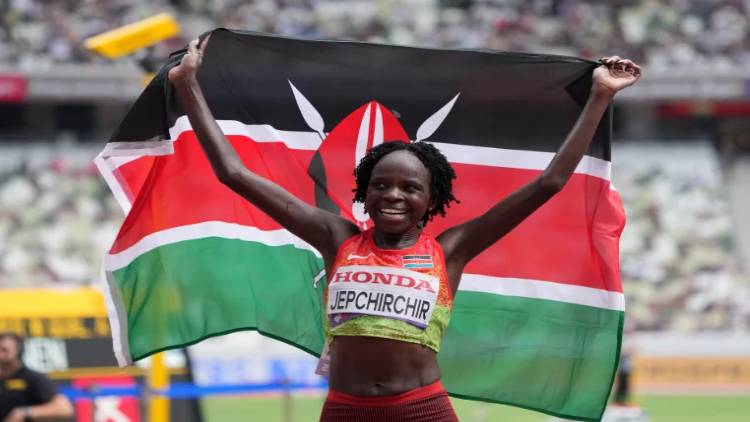
The latest controversy has intensified following a three-year ban imposed on reigning women’s world marathon champion Peres Jepchirchir for using a prohibited performance-enhancing drug.
The Athletics Integrity Unit (AIU) confirmed on Thursday that the 33-year-old Olympic gold medallist had accepted a three-year suspension after testing positive for erythropoietin (EPO), a banned substance that stimulates red blood cell production and improves oxygen delivery to muscles.
Her sample was collected in Kenya before she won the Sydney Marathon in August 2026. She initially denied using the substance but later admitted violating anti-doping regulations.
Her results since July 17, including her Sydney Marathon victory, have been disqualified.
Two other Kenyan runners have also received suspensions. Veronica Loleo, a silver medallist in the half marathon at the 2026 World Road Running Championships, was handed a three-year ban for EPO use.
Meanwhile, Ronald Korir received a six-year suspension after failing to explain irregularities in his Athlete Biological Passport.
The latest cases have raised serious concerns about the integrity of Kenyan athletics, particularly its dominance in long-distance running.
Kenya has traditionally produced world-class distance runners, benefiting from high-altitude training, disciplined lifestyles and a strong running culture.
However, doping scandals have increasingly threatened the country’s sporting reputation.
Experts say the growing number of sanctions does not necessarily indicate a sudden increase in doping.
Rather, expanded testing, particularly outside competition periods, and more effective investigations have helped detect violations that might previously have gone unnoticed.
The problem has also drawn attention to possible networks involved in supplying and distributing performance-enhancing drugs to athletes.
AIU chief executive Brett Clothier acknowledged that Kenyan authorities had made progress in tackling doping over the past five years but stressed that significant challenges remained.
He said the government had committed to strengthening the country’s anti-doping agency and addressing criminal networks facilitating the practice.
The crisis comes at a particularly sensitive time for Kenya, which has been selected to host the 2029 World Athletics Championships — the first African country to stage the prestigious event.
The World Anti-Doping Agency (WADA) has urged Kenya to adopt a zero-tolerance approach and strengthen its anti-doping enforcement system to protect clean athletes and restore international confidence.
Kenya’s ability to address the problem will be crucial not only to its athletics legacy but also to its credibility as a future host of major international sporting competitions.