Play store


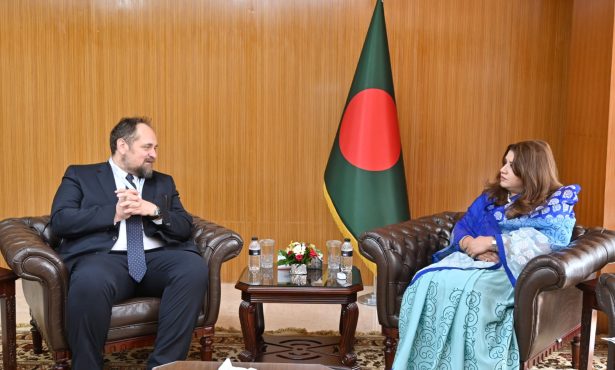
Bangladesh and Montenegro have significant opportunities to strengthen bilateral relations through political engagement, trade, investment and cooperation in the energy sector, particularly as both countries seek to expand their economic horizons.
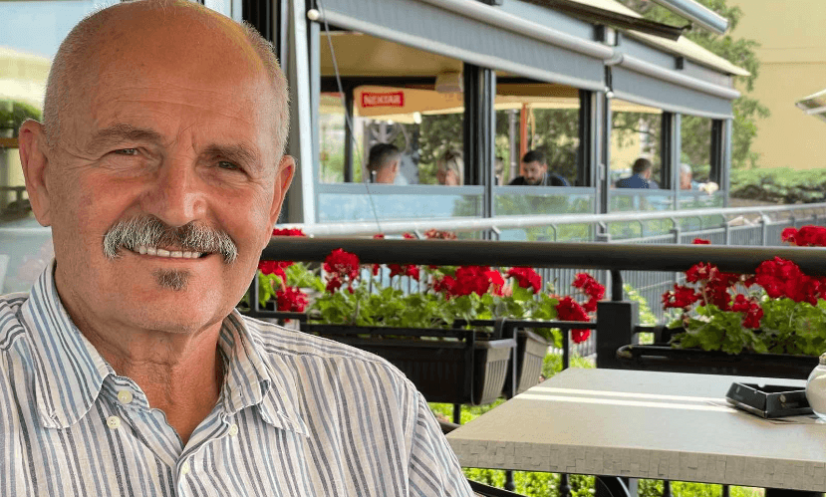
Miljan Vuksanovic, Honorary Consul of Bangladesh in Montenegro, is optimistic that relations between Dhaka and Podgorica will grow under the leadership of Bangladesh Prime Minister Tarique Rahman and Montenegrin President Jakov Milatovic.
Having spent more than two years in Bangladesh as Regional Manager of Malaysia-based Pendekar Power Company, Vuksanovic said he had witnessed remarkable development in the country’s power sector and remained confident about its economic future.
“I see the development of Bangladesh as very dynamic and can predict an even better future. I was in Bangladesh for a little over two years and witnessed the rapid development of its power sector,” he said.
In an interview, Vuksanovic discussed the prospects for bilateral relations, economic development, renewable energy, trade, the business environment and employment opportunities for Bangladeshis in Montenegro.
Question: Mr Tarique Rahman is the Prime Minister of Bangladesh’s new BNP-led government. How do you see Dhaka-Podgorica relations developing in the coming days? Do you anticipate high-level visits between the two countries?
Miljan Vuksanovic: I see no obstacles to developing good relations between Bangladesh and Montenegro, although Montenegro is a small country, covering approximately 14,000 square kilometres and having a population of slightly over 600,000. Most of its population is Greek Orthodox, while around 20 per cent are Muslims.
The President of Montenegro is Jakov Milatovic, and I believe he and Mr Tarique Rahman can develop a long-lasting relationship.
Question: Bangladesh has made significant economic progress over the past 54 years. How do you assess the country’s development journey?
Miljan Vuksanovic: I see the development of Bangladesh as very dynamic and can predict an even better future. I was in Bangladesh for a little over two years as Regional Manager of Pendekar Power Company, and I witnessed rapid development in its power sector.
Question: The conflict in the Middle East has once again exposed the vulnerability of global energy supplies. The present government has placed emphasis on renewable energy. How can Bangladesh and Montenegro cooperate in this sector?
Miljan Vuksanovic: I believe the Government of Bangladesh has a good energy policy, although it faces numerous challenges in implementing it.
The country’s orientation towards green energy is a prudent choice. However, there are many challenges to overcome in achieving this goal.
Bangladesh has a young and well-educated workforce, which is a significant advantage today. Having worked as a manager with people of many different nationalities, I can confirm that Bangladeshi engineers are of the highest standards.
Question: What is the current volume of bilateral trade between Bangladesh and Montenegro? What target should the two countries set for expanding trade over the next five years?
Miljan Vuksanovic: The current trade volume between Bangladesh and Montenegro is very small, largely because of the overall size of the Montenegrin market and its production capacity.
Although the two countries have yet to establish substantial trade relations, Montenegro’s economic outlook offers a potential context for exploring new business opportunities.
The International Monetary Fund (IMF), in its October 2026 World Economic Outlook, projected that Montenegro’s economy would grow by 3.0 per cent in 2026, up from an estimated 2.7 per cent in 2025. Growth is expected to moderate slightly to 2.8 per cent in 2027.
The World Bank has also raised its forecast for Montenegro’s economic growth in 2026 to 3.3 per cent, from 2.9 per cent projected in April, while expecting growth to ease to 3.0 per cent in 2027. The European Bank for Reconstruction and Development (EBRD) likewise revised its 2026 growth forecast upwards to 3.1 per cent, citing progress towards European Union membership and infrastructure investment.
These projections indicate continued economic activity and investment opportunities in Montenegro, although the relatively small size of its market remains a constraint on bilateral trade.
Question: The present BNP government is working to improve Bangladesh’s business environment. What is your assessment of the country’s investment and business prospects?
Miljan Vuksanovic: My assessment is that the potential for new business development in Bangladesh is significant.
Obviously, the new government is serious about this issue. Despite the challenges Bangladesh is currently facing, I see good prospects for business development in the country.
Question: Montenegro’s population is relatively small and declining. Do you see opportunities for skilled Bangladeshi workers to find employment there in the coming days?
Miljan Vuksanovic: Indeed, Montenegro has a small population, and the nature of its main business sector, tourism, does not allow for greater participation of workers from Bangladesh.
This is mainly because the tourism season lasts only a few months of the year, limiting employment opportunities for foreign workers.
Question: How many Bangladeshis are currently living and working in Montenegro, and how do you evaluate their contribution to the country?
Miljan Vuksanovic: For this reason, very few Bangladeshis are employed in Montenegrin businesses.
However, Montenegro is at the doorstep of the European Union, and if and when it joins the EU, the situation might change.