


 Play store

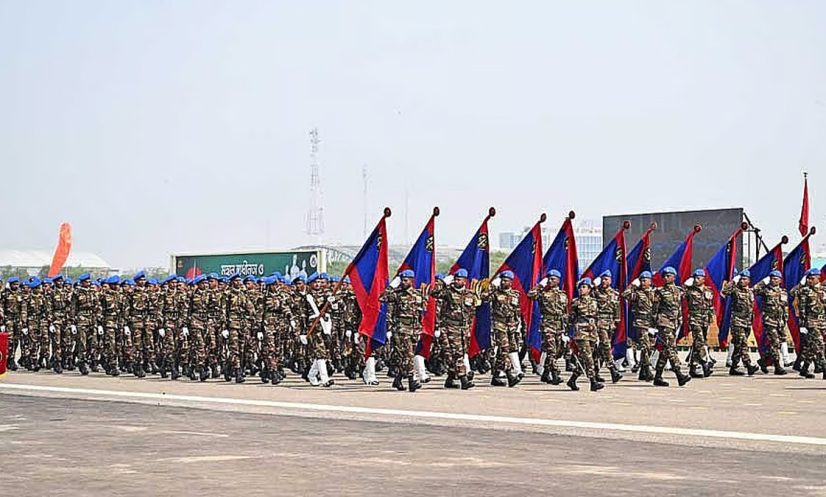
The basic salary of members of Bangladesh’s armed forces has been set at Tk21,400 under the new pay structure, compared with the minimum Tk20,000 proposed in the national pay scale. The amount will gradually rise to a maximum of Tk51,900 through annual increments.
Meanwhile, the basic salary of the chiefs of the armed forces has been fixed at Tk172,000.
Following implementation of the national pay scale, the government issued Joint Services Instructions 01/2026 (JSI 01/2026) on 15 November.
A review of the published gazette shows that the minimum basic salary for armed forces personnel has increased from Tk9,000 to Tk21,400, representing a 137.78% rise. In comparison, the basic salary of service chiefs has doubled from Tk86,000 to Tk172,000.
Previously, salaries and allowances for armed forces personnel were determined under JSI 01/2016, issued 10 years ago. The new structure largely follows the same system.
According to relevant sources, although lower-ranking soldiers have received a higher percentage of salary increases than senior officers, some quarters are highlighting alleged pay disparities and spreading misleading information that could create confusion and dissatisfaction within the armed forces.
Claims of an “officer versus soldier” pay gap have circulated on social media and in some media outlets. However, sources familiar with the matter say the new instructions largely maintain continuity with the previous pay structure.
Under the revised structure, the starting basic salary has been fixed at Tk23,500 for lance corporals, Tk28,000 for corporals, Tk44,000 for warrant officers, Tk44,500 for senior warrant officers and Tk45,500 for master warrant officers.
The basic salary of master warrant officers has risen from Tk22,500 to Tk45,500, an increase of 102.22%. Honorary lieutenants and honorary captains will receive basic salaries of Tk76,960 and Tk85,750, respectively.
The implementation process has also given priority to soldiers and lower-paid personnel. In the first phase, 40% of the revised salary was implemented for senior officers, compared with 50% for soldiers and sergeants.
The new instructions have also introduced four additional allowances, while existing allowances for serving and retired armed forces personnel have been increased. However, some groups have circulated misleading information about the changes, according to sources familiar with the matter.
Changes have also been made to retirement benefits. The minimum net pension has been set at Tk10,000, while medical allowances have been fixed at Tk3,000 to Tk4,000, depending on age.
Sources said the government’s recommendation committee proposed a common classification system after receiving reports from the National Pay Commission 2025 and the Armed Forces Pay Committee 2025. The proposal is currently under review.
Meanwhile, longstanding demands among soldiers and lower-paid personnel include addressing disparities between horizontal and vertical pay scales, differences in ranks and other structural inconsistencies. Although these issues have been discussed at various levels, no final resolution has yet been reached, sources said.
In the civilian administration, employees in the 20-grade pay structure can move to the full vertical pay scale of the next grade through promotion, selection grade or higher-grade benefits. Promotion to Grade 9, in particular, brings significant changes in basic salary, housing allowance, pension and institutional status.
The armed forces, however, have a different career structure. Promotions from soldier to master warrant officer are subject to vacancies and structural limitations. Personnel who do not receive promotions may have to rely on 19-20 horizontal annual increments while remaining in the same rank.
This has raised concerns that senior soldiers and junior commissioned officers (JCOs) serving for extended periods in the same positions may fall behind financially.
Questions have also been raised about the absence of alignment between the pay structure of warrant officers, senior warrant officers and master warrant officers — despite their gazetted status and important field-level responsibilities — and the vertical pay scale of Grade 9 in the civilian administration.
A military officer said the armed forces had a different career structure and command hierarchy from the civilian administration. Promotions were based on vacancies and qualifications to maintain discipline and the chain of command.
However, he said the system of 19-20 annual increments ensured that salaries did not stagnate even when personnel were not promoted. Under this arrangement, a soldier’s basic salary could rise from Tk21,400 to Tk51,900 while remaining in the same rank.
Similarly, personnel promoted to honorary lieutenant and honorary captain could receive basic salaries of Tk76,960 and Tk85,750, respectively, he added.
To address longstanding structural inconsistencies, the Armed Forces Pay Committee has reportedly recommended introducing vertical pay scales at all levels.
It has also suggested forming a service commission to review existing pay-related inconsistencies and personnel demands and recommend necessary reforms.