


 Play store

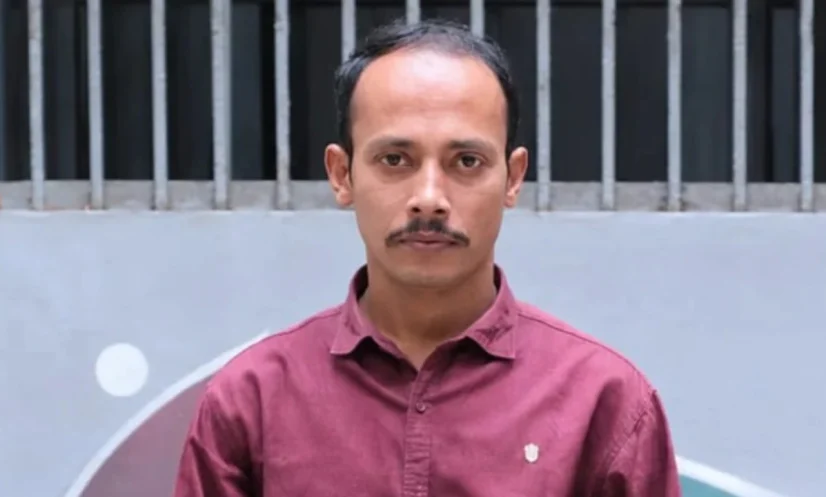
Badal Farazi, a Bangladeshi man who spent nearly 18 years in prison after being wrongly convicted in a murder case in India due to mistaken identity, was released on four-week parole on Tuesday.
Farazi, originally from Mongla in Bagerhat, was released from Gazipur’s Kashimpur High Security Central Jail at around 8:15am and handed over to police.
He is being taken under police escort to Bagerhat District Jail, where officials will complete the necessary formalities before handing him over to his family.
Senior Jail Superintendent of Kashimpur High Security Central Jail Mohammad Abdullah Al Mamun confirmed the release, saying Farazi was handed over to a police team for transportation to Bagerhat.
According to prison sources, another prisoner, identified as Saidul alias Afzal of Morelganj in Bagerhat, was also transferred to Bagerhat District Jail for release on four-week parole under the same arrangement.
The Delhi High Court approved Farazi’s parole application on 29 September and directed that the release be carried out in accordance with the applicable laws. Following the order, the Bangladesh government initiated the necessary legal and administrative procedures.
The Home Ministry’s Prison-2 section issued instructions on 16 November, followed by a directive from the Gazipur District Magistrate’s office on 17 November to arrange their four-week parole.
Farazi was arrested in India in 2008 after travelling there on a tourist visa to visit the Taj Mahal. He was mistakenly identified as Badal Singh, an accused in the murder of 71-year-old Nirmala Madan in Delhi’s Lajpat Nagar.
He consistently maintained that he was not the person involved in the murder.
However, a Delhi court convicted him on 21 July 2015 and sentenced him to life imprisonment the following month. The Delhi High Court later upheld the sentence.
Farazi spent around 10 years in India’s Tihar Jail, where he completed his secondary, higher secondary and undergraduate studies.
On 6 July 2018, he was transferred to Bangladesh under the India-Bangladesh prisoner transfer agreement. He was initially held at Dhaka Central Jail before being moved to Kashimpur High Security Central Jail.
Despite repeated efforts by human rights activists, lawyers and journalists to secure his release, he remained behind bars in Bangladesh.
His case received renewed public attention after writer Rahitul Islam published a novel about his imprisonment, titled Badaler Karabas, through Prothoma Prokashan in February this year.
During Farazi’s long imprisonment, his father, S H Khalek Farazi, died. His elderly mother is now ill and unable to move around independently.
His temporary release after nearly 18 years has brought relief to his family and relatives.