


 Play store

The Ministry of Food has taken an initiative to increase the country’s food grain storage capacity to 3 million tonnes by 2030 from the existing 2.293 million tonnes.
To this end, a comprehensive assessment of food warehouses across the country has been recommended, with suggestions to inspect ageing and unusable facilities and decommission those that are no longer fit for operation. New warehouses may be built where necessary.
Emphasis has also been placed on maintaining proper moisture levels during grain procurement, installing mechanical ventilation systems and strengthening pest control measures to reduce the risk of fungal contamination.
The possibility of using environmentally friendly prefabricated structures instead of traditional brick construction for future warehouses is also under consideration.
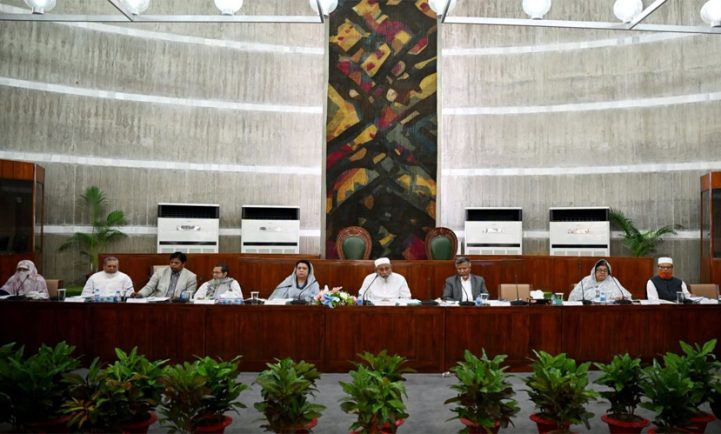
These issues were discussed at the second meeting of the Parliamentary Standing Committee on the Ministry of Food under the 13th Jatiya Sangsad at the Parliament House on Tuesday.
The meeting, chaired by committee chairman Md Abdus Salam Pintu, approved the minutes of its first meeting and reviewed progress in implementing earlier decisions.
The ministry informed the committee that recruitment processes for the Ministry of Food, the Directorate General of Food and the Bangladesh Food Safety Authority were underway.
The meeting also discussed amendments to the guidelines of the Food Friendly Programme to ensure smooth distribution of allocated rice.
Under the revised guidelines, one dealer will be appointed for every 250 beneficiaries, replacing the previous provision of one dealer for every 500 beneficiaries.
The committee was also informed about a special Open Market Sale (OMS) programme launched on November 13 to provide affordable rice to garment workers and reduce their food expenses.
Under the programme, each worker can buy up to 10 kg of rice at Tk 30 per kg. Initially, rice is being sold through 73 truck-sale outlets every Friday in different areas of Dhaka city, Savar, Dhamrai, Gazipur, Narayanganj and Chattogram city.
The meeting also discussed proposed amendments to the Safe Food Act, 2013. Among the key proposals is a provision for imposing administrative fines of up to Tk 1 million on individuals found responsible for serious violations following complaints or detection by the authorities.
Another proposal suggests giving complainants 25 per cent of the collected fine.
Food Minister Afroza Khanam, an MP and member of the committee, stressed the need to procure paddy directly from farmers to ensure they receive fair prices.
She urged the authorities to remain vigilant so that middlemen could not deprive farmers of their rightful earnings.
Emphasising food safety, she called for stronger enforcement of existing laws and greater vigilance to ensure that consumers receive safe, quality and adulteration-free food. She also raised the possibility of introducing stricter penalties, including capital punishment where necessary, for serious food safety violations.
In his remarks, committee chairman Abdus Salam Pintu called on government officials and employees to discharge their duties with the highest standards of transparency, accountability and integrity.
He instructed the authorities to take strict action against any syndicates or irregularities at the field level and work together to protect the legitimate interests of farmers and consumers.
Other committee members present included State Minister for Food Md Abdul Bari, and MPs Abul Kalam, Khondaker Abu Ashfaq, Eliza Jaman, Md Abu Taleb Mondal, Md Abdul Karim and Shamsunnahar Begum.
The Food Ministry secretary, heads of departments and agencies under the ministry, senior officials and representatives of the Parliament Secretariat also attended the meeting.