Play store

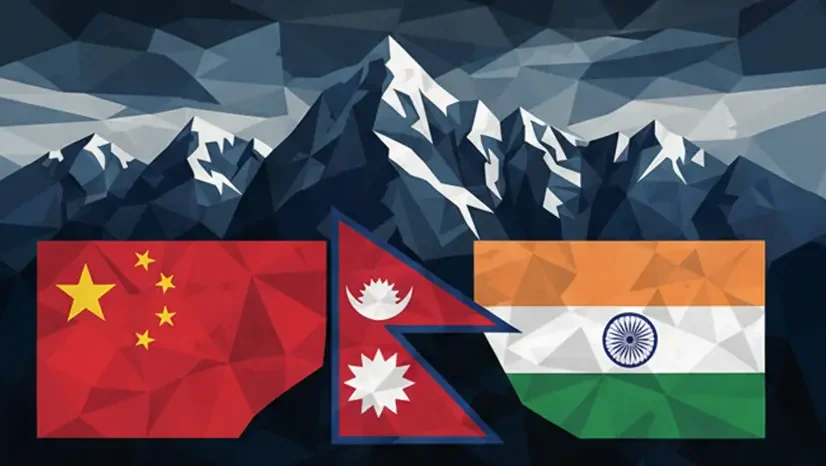
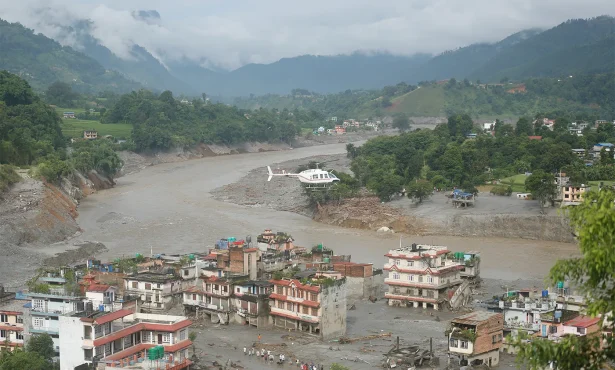
India is stepping up financial assistance and reconstruction support to Nepal following devastating floods earlier this year, seeking to strengthen its influence as Prime Minister Balendra Shah’s Gen Z-backed government faces major challenges.
Relations between the two neighbours have deteriorated over the past decade due to border disputes and resentment over a 2015 blockade that many Nepalis blamed on New Delhi. India has denied responsibility for the blockade, which severely disrupted fuel and other essential supplies.
Meanwhile, China has expanded its presence in Nepal through growing trade, infrastructure investment and cooperation in health and education.
Landlocked Nepal, situated between China and India in the Himalayas, has long been a focus of strategic competition between the two Asian powers. China’s growing economic influence has given Kathmandu greater room to balance its relations with its powerful neighbours.
The devastating floods in August have provided Indian Prime Minister Narendra Modi with an opportunity to regain some lost ground.
India was the first foreign government to respond to one of Nepal’s worst recorded disasters, sending relief supplies and helping restore communications.
On Monday, New Delhi announced a $1.62 billion package of grants and credit for reconstruction, infrastructure and energy projects during Shah’s first bilateral visit to India since taking office in March.
Nepal needs around $5 billion to rebuild damaged infrastructure, equivalent to nearly a tenth of its economy. The Indian package is the largest financial assistance Nepal has ever received, Foreign Minister Shisir Khanal said.
Nepali government data show that India’s aid disbursement to Nepal was more than four times that of China in the 2024-25 fiscal year, which ended in mid-July.
Ashok Mehta, an expert on India-Nepal relations, said the latest package could strengthen Shah’s position at home while helping New Delhi repair ties with Kathmandu.
He compared the initiative with India’s support for Sri Lanka during its economic crisis in 2022, which helped improve bilateral relations.
Michael Kugelman, an analyst at the Atlantic Council, said smaller South Asian countries continued to depend heavily on Indian development assistance, particularly during periods of economic stress.
Despite China’s much greater global financial capacity, India has sought to maintain regional influence through a combination of grants, concessional loans and rapid emergency assistance.
India-China rivalry
For New Delhi, the challenge is increasingly about preventing China’s expanding economic presence in Nepal from translating into greater political influence rather than simply keeping Beijing out.
Chinese trade with Nepal has more than tripled over the past decade, largely driven by Chinese exports. China’s cultural influence has also grown, with the Confucius Institute at Kathmandu University having trained around 50,000 secondary-level students since 2007.
China also provided cash assistance and five batches of relief supplies following the August floods, along with more than 20 rescue and forensic experts. It shared weather, water and geological data with Nepal, Chinese Foreign Ministry spokesperson Guo Jiakun said on Monday.
Shah’s visit to India, however, highlighted New Delhi’s importance to his new administration.
Describing India as a “dependable and trusted neighbour”, Shah invited Indian investment and signed agreements to expand cooperation in education, satellite communications and sustainable urban development.
Former Nepali Times editor Kunda Dixit said India was seeking to build goodwill with Nepal’s new prime minister, whose foreign policy orientation New Delhi was still assessing.
He suggested India might be seeking to prevent Shah from moving too close to China while resetting its relations with Kathmandu.
Shah said rebuilding trust would be central to improving bilateral relations after years of fluctuating ties.
“May the friendship between Nepal and India be one where trust stands as tall as the Himalayas,” he said.