Play store

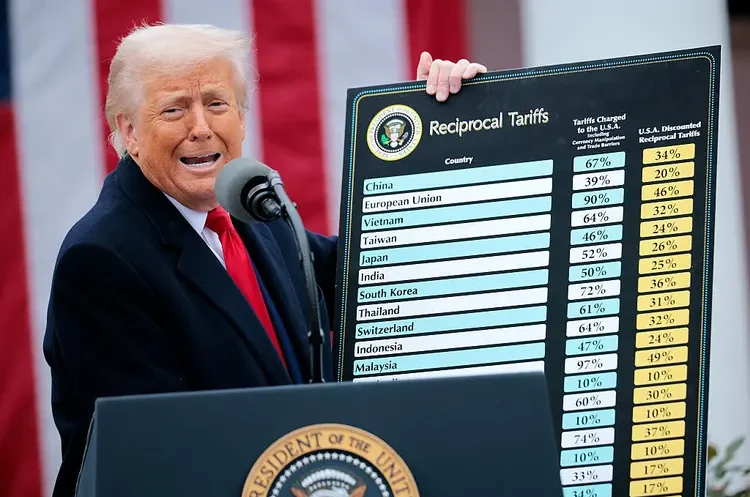
US President Donald Trump’s latest tariff offensive against 14 major trading partners has triggered fresh international backlash, with Brazil rejecting what it called an unacceptable threat, China accusing Washington of political manipulation and the European Union urging the United States to honour its existing trade commitments.
The reactions came after the Trump administration announced new tariff rates targeting countries it accused of engaging in unfair trade practices and maintaining market-distorting policies that undermine US manufacturing.
Brazil’s government said on Wednesday it would not yield to the US pressure, warning that the unilateral tariff decision was unacceptable while bilateral negotiations remained underway.
Brazil voiced particular concern over proposed higher duties on raw and refined sugar and a new 10 per cent tariff on aircraft, which would affect Embraer, the country’s largest aircraft manufacturer.
Brasilia said it would continue negotiations with Washington but did not rule out retaliatory measures against what it described as illegal and unjust tariffs. The two countries have been engaged in trade negotiations for more than a year.
China also strongly opposed the proposed measures. Foreign Ministry spokesperson Guo Jiakun said the alleged problem of industrial overcapacity was being used as a pretext for political manipulation.
He urged Washington to resolve trade differences through dialogue, warning that a tariff or trade war would serve neither country’s interests.
Beijing’s response came as China faced a proposed tariff increase of up to 20 per cent. For some Chinese products, the additional duties could bring the combined tariff burden to 45 per cent. However, Washington has proposed broad exemptions for about $30 billion worth of Chinese goods under an existing trade arrangement.
The European Union also rejected the US allegations, saying it expected Washington to honour the trade agreement reached last year.
European Commission spokesperson Olof Gill said the EU shared concerns about global industrial overcapacity, much of which was state-driven and concentrated in third countries. He regretted the lack of joint action between Washington and Brussels to address the issue.
Switzerland also rejected the allegations arising from the US investigations, according to Al Jazeera.
The new tariff proposals cover 14 major trading partners, including China, the European Union, Japan, India, South Korea, Bangladesh, Taiwan, Vietnam, Singapore, Indonesia, Malaysia, Cambodia, Thailand and Switzerland.
Under the proposed rates, China faces duties of up to 20 per cent, while India could face up to 25 per cent and Vietnam up to 35 per cent. Bangladesh, Cambodia, Indonesia, Malaysia and Thailand could face tariffs of up to 18 per cent. The proposed rate for the European Union is 15 per cent, while Japan, South Korea, Switzerland and Taiwan also face proposed rates of 15 per cent.
The Trump administration has defended the measures under Section 301 of the Trade Act of 1974, which allows Washington to impose trade penalties against countries found to engage in unreasonable or discriminatory practices that harm US commerce.
US Trade Representative Jamieson Greer said many trading partners had adopted market-distorting policies that tilted trade balances in their favour while undermining America’s manufacturing base.
The proposed duties are not yet final. The administration plans to seek feedback from affected industries and hold public hearings on January 25, with the measures potentially taking effect in February or March.
The announcement has also drawn criticism within the United States. Democratic Senator Ron Wyden said he would use every available means to challenge Trump’s tariff policies, describing the latest move as another attempt to restore sweeping global tariffs.
Small-business advocacy group We Pay the Tariffs also criticised the proposals, warning that additional import taxes could push up prices for consumers and increase pressure on small businesses.
The latest move follows a US Supreme Court ruling in February that struck down Trump’s earlier sweeping tariffs imposed under emergency powers. The administration is now using Section 301 as the legal basis for the proposed measures.