


 Play store

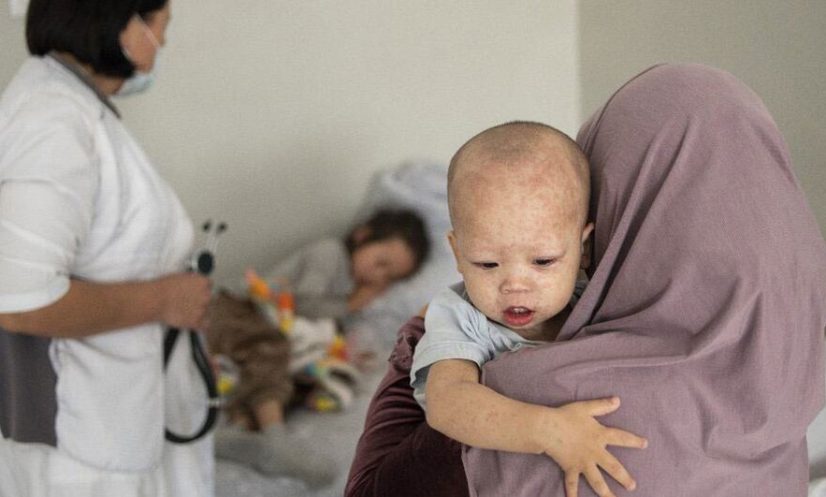
Measles deaths have fallen to their lowest level on record, largely due to widespread vaccination, but declining immunisation coverage and renewed outbreaks have undermined efforts to eliminate the highly contagious disease in several countries.
Bolivia, Mexico and the United States lost their measles elimination status this month, highlighting the growing threat posed by vaccination gaps, the World Health Organization (WHO) said on Friday.
“Measles deaths have never been lower, thanks to the extraordinary life-saving power of vaccines,” WHO Director-General Tedros Adhanom Ghebreyesus said.
“But measles does not forgive complacency. Countries that had eliminated it are now losing that status,” he warned.
An estimated 72,000 people died from measles in 2025, representing a 91 per cent decline since 2000, according to a new WHO report. Vaccination against the disease has saved more than 60 million lives over the same period.
Nearly 10 million people contracted measles in 2025, among the lowest levels reported, although infection trends varied considerably across regions.
The Americas have experienced a particularly concerning resurgence, with measles cases rising eightfold since 2000 to reach 73,000 in 2025.
The region, the only one to have achieved measles elimination, lost that status for a second time after endemic transmission was re-established in Canada in October 2025.
Immunisation coverage in the region has also declined from more than 90 per cent before the COVID-19 pandemic.
According to the WHO report, large outbreaks among clusters of unvaccinated people in North America, fuelled by the high mobility of groups hesitant about vaccination, subsequently spread across the wider region.
WHO data show that 92 countries have now been verified as having eliminated measles, down from 95 at the end of 2025.
Meanwhile, nearly half of all measles cases occurred in the Southeast Asia Region, despite the region having the highest first-dose vaccination coverage globally, at 96 per cent.
The WHO said the figures demonstrate how high regional averages can conceal significant inequalities in vaccination coverage between and within countries.
Globally, vaccination coverage remained largely unchanged in 2025, with 84 per cent of children receiving their first dose and 77 per cent completing the second dose.
The situation was considerably worse in low-income countries, where coverage stood at just 69 per cent for the first dose and 57 per cent for the second. In high-income countries, the corresponding rates were 93 and 91 per cent.
More than 29 million children worldwide remained unvaccinated or under-immunised in 2025, with children living in conflict zones and humanitarian crisis settings particularly vulnerable.
During the year, 59 countries experienced large or disruptive measles outbreaks. These included 18 low-income, 34 middle-income and seven high-income countries. Eleven of the outbreaks occurred in countries that had previously been declared free of measles.
The WHO also warned that measles can cause severe and lifelong complications, including blindness, pneumonia and encephalitis, which can lead to brain damage and death, even in countries with better nutrition and healthcare facilities.
“Elimination is not a finish line,” Tedros said. “It must be defended, with two doses of vaccine for every child, everywhere.” Source: UN News