


 Play store

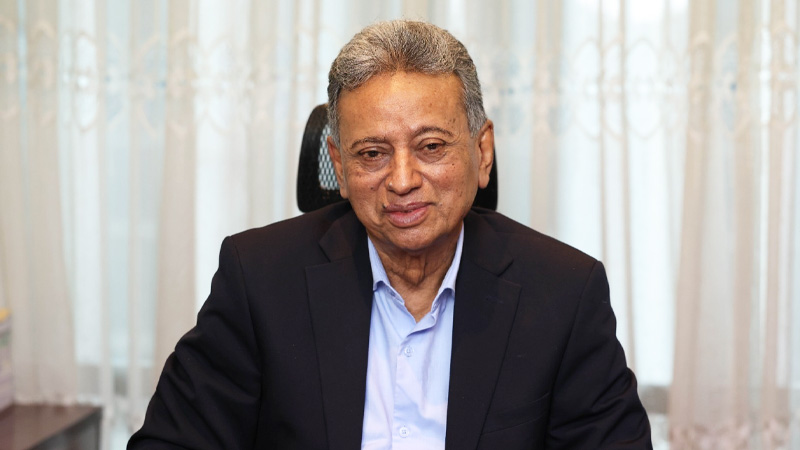
Finance and Planning Minister Amir Khosru Mahmud Chowdhury on Sunday said restoring economic stability was the government’s top priority, acknowledging that economic growth could remain subdued for some time as the country moved through a recovery and stabilisation phase.
“We are now at the recovery stage and moving towards stabilisation. Our first step at this moment is stability. Growth will remain low for some more time, and we have to accept this reality,” he said.
He made the remarks while inaugurating a workshop on the Five-Year Strategic Framework for Reform and Development at the National Economic Council (NEC) Conference Room in Dhaka.
The Planning Commission’s General Economics Division (GED) organised the workshop.
State Minister for Planning Md Zonayed Abdur Rahim Saki attended as the special guest, while GED Member (Secretary) Dr Monzur Hossain chaired the programme.
Khosru said the government was facing significant financial pressure due to higher import costs of essential commodities, including fuel, gas and fertiliser.
“We are firefighting every day. We have to purchase a lot of oil and gas, and the government exchequer is bleeding. We are buying these commodities at higher prices, which is putting enormous pressure on public finances,” he said.
He said higher international prices were also contributing to imported inflation, which the government had little control over, although it could take measures to contain domestic price pressures.
The government had reduced taxes on some essential commodities to ease the burden on consumers, but further efforts were needed to bring inflation down, he added.
Describing the first year as particularly challenging, the minister said the government would focus on recovery and stabilisation during this period. However, he expected stronger economic performance in the fourth and fifth years.
“The fourth and fifth years must be our take-off period. We definitely have to take off,” he said.
Khosru stressed the importance of transparency in economic management, saying the government would not hide problems or use misleading statistics to create an impression of progress.
He said some economic indicators might remain weak during the recovery period, but the government must explain the situation and demonstrate corrective measures within specific timelines.
On the banking sector, he said the government was dealing with huge liabilities accumulated over the years and would pursue a gradual recovery process.
Restoring depositors’ confidence was the immediate priority, he said, assuring them that their deposits were guaranteed and would be repaid without any haircut.
“We have assured depositors that their money is guaranteed and they will get it back. There will be no haircut. They need to have some patience,” he said.
He added that banks were experiencing an increase in net deposits following the government’s assurances.
Regarding the capital market, Khosru said the government was working to restore credibility after years of irregularities and manipulation. He described the previous market as a “casino” controlled by a group of people, which discouraged quality companies from listing.
The government had reformed the regulatory system and formed an independent, non-political commission, he said, adding that investors were gradually returning to the market.
He also pointed to growing international investor interest, referring to Prime Minister Tarique Rahman’s recent meeting with leading global fund managers on Wall Street.
Representatives of 17 major investment management companies, managing combined assets of around US$36 trillion, attended the meeting, he said.
“This is confidence in Bangladesh. They believe that Bangladesh has a future and that its capital market has potential,” he added.
Explaining the background of the five-year framework, Khosru said it was rooted in the party’s long-term policy vision, including Vision 2030 formulated in 2016 under the leadership of Begum Khaleda Zia. Subsequent political consultations, including the 27-point and 31-point programmes, also contributed to its development.
He said the framework had undergone extensive consultations and reflected the government’s development priorities.
The country’s major development partners, including the World Bank, Asian Development Bank, International Monetary Fund, Islamic Development Bank, Asian Infrastructure Investment Bank and Japan International Cooperation Agency, were aligned with the framework, he said.
However, he stressed that development partners’ support alone would not ensure success without the active involvement of government officials and other stakeholders.
“The framework provides a roadmap and strategic direction. But, the biggest question is how we will implement it,” he said, urging officials to identify implementation gaps, potential obstacles and coordination requirements.
The minister said the government’s target of creating one crore jobs would require strategic planning, substantial investment and coordinated efforts by the private sector, government and foreign investors.
He outlined four criteria for selecting development projects: value for money, economic returns, employment generation and environmental impact.
Government spending must generate measurable economic benefits and jobs rather than simply increase expenditure, he said, stressing the need to evaluate completed projects to assess their actual outcomes.
Khosru also called for greater independence and transparency in economic statistics, directing the Bangladesh Bureau of Statistics (BBS) to present an accurate picture of the economy without government influence.
He said a research facility had been established at BBS to provide researchers with access to information, while initiatives were underway to make data more accessible online.
Emphasising broader participation, the minister said the government alone could not implement the five-year framework and achieve all development goals.
He called for active engagement of the private sector, NGOs, academics and professionals, urging Planning Ministry officials to draw on expertise beyond their own institutions.
“We do not want to remain in a government bubble. We are regularly engaging the private sector, NGOs and academics because no government can move forward in isolation from the people,” he said.
Khosru expressed confidence that Bangladesh had the human resources, institutional capacity and economic potential to achieve the framework’s objectives through collective efforts and timely implementation.
He said the framework should remain a living document, allowing stakeholders to identify gaps and make necessary adjustments during implementation.