Play store

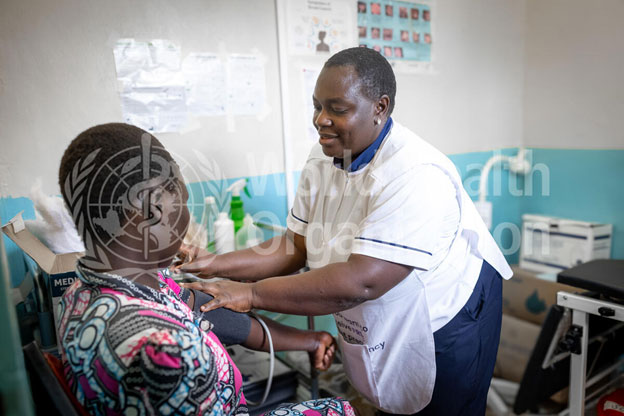
The World Health Organization (WHO) has called for urgent global action to strengthen cancer prevention, diagnosis, treatment and care, warning that cancer cases are projected to surge sharply over the coming decades, particularly in low- and middle-income countries.
The warning comes in the Global Status Report on Cancer 2026, published on July 8 in collaboration with the International Agency for Research on Cancer (IARC).
Described as the most comprehensive assessment of global cancer care to date, the report highlights widening inequalities in access to prevention, diagnosis, treatment and palliative care.
According to the report, one in five people will develop cancer during their lifetime. When the impact on families and caregivers is taken into account, an estimated 92 percent of the world’s population will be affected by cancer at least once in their lives.
WHO estimates that cancer claimed nearly 10 million lives in 2024, equivalent to more than 26,000 deaths every day, while 20.6 million new cases were diagnosed worldwide.
Without urgent and accelerated action, annual cancer cases are projected to rise to 35 million by 2050, according to Stéphane Dujarric, Spokesperson for the UN Secretary-General, citing the report.
The report warns that the sharpest increases in cancer cases will occur in low- and middle-income countries. By 2050, cancer incidence is projected to rise by 133 percent in low-income countries and 86.5 percent in lower-middle-income countries, placing enormous pressure on already fragile health systems.
The report also reveals stark disparities in cancer survival rates. In high-income countries, the five-year survival rate for breast cancer exceeds 85 percent, compared with less than 45 percent in low-income countries.
For childhood leukemia, only 54 percent of countries have achieved the WHO Global Initiative for Childhood Cancer’s minimum target of a 60 percent five-year survival rate. Survival remains as low as 19 percent in parts of Africa and the Eastern Mediterranean and 26 percent in some South-East Asian countries.
“Our experience of cancer and our chances of surviving now depend less on the stage or biology of our disease than on where we live and our economic circumstances,” the report states.
Limited treatment infrastructure remains a major obstacle. The report notes that 23 low- and middle-income countries have no operational radiotherapy facilities, leaving more than 197 million people without local access to this essential cancer treatment. Existing facilities often face equipment failures, high operating costs, shortages of trained personnel and delays in obtaining replacement parts.
Beyond its health impact, cancer continues to impose a heavy financial burden on families. The report estimates that 45 to 60 percent of cancer patients face catastrophic healthcare expenses, often pushing households into poverty, causing food insecurity and disrupting children’s education. Even in countries with universal health coverage, indirect costs remain substantial, with women caregivers disproportionately affected through lost employment and reduced productivity.
The WHO identifies prevention as the most effective yet underutilised strategy for reducing cancer. In 2022, 38 percent of cancer cases were linked to 30 modifiable risk factors, including tobacco use, infections, alcohol consumption and excess body weight. However, only 30 percent of national cancer control plans include evidence-based cancer prevention measures.
To address the growing global burden, the WHO recommends three strategic priorities: building stronger health system capabilities, expanding financial protection for patients and improving the value of cancer care.
The organisation also stresses the need for greater investment in health workers, early detection, equitable access to diagnosis and treatment, and a stronger focus on patients’ quality of life alongside survival.
The report concludes that the world’s greatest challenge is no longer a lack of scientific knowledge but a failure to implement proven solutions.
“The primary gap is no longer a gap in knowledge, but a gap between what we know and what we do, between what we plan and what we implement,” the report says.
WHO Director-General Dr Tedros Adhanom Ghebreyesus said future cancer policies “must be shaped by more than data and scientific research; they must also reflect the voices and lived experiences of people impacted by the disease.”