Play store

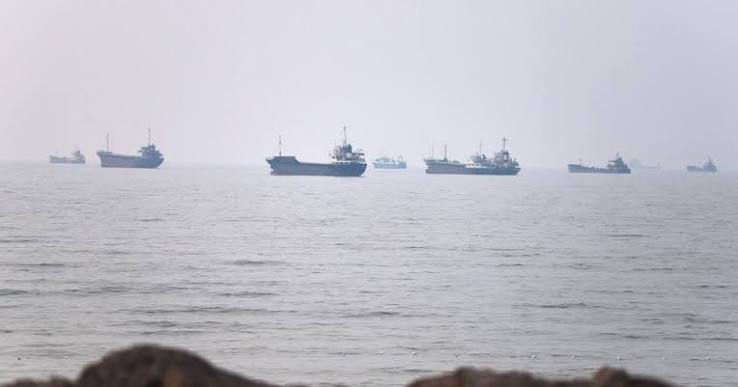
A foreign container ship ran aground in the Strait of Hormuz after failing to follow a shipping route approved by Iran, Iranian state television reported on Wednesday, underscoring renewed tensions over navigation through one of the world’s most critical maritime chokepoints.
Iranian state media said the vessel entered shallow waters after deviating from what Tehran describes as its authorised navigation corridor, causing it to run aground. The report did not identify the ship, disclose its nationality or provide details about its cargo or crew.
According to Iranian state television, the vessel “ran aground with its cargo because of shallow waters along the route it had chosen and was unable to continue sailing.”
The report said ships transiting the strait should follow the directions of Iran’s paramilitary Islamic Revolutionary Guard Corps (IRGC) Navy, warning that vessels using routes other than the so-called “Route of Authority” risk serious incidents.
The incident comes amid heightened regional tensions following the recent U.S.-Iran conflict and renewed diplomatic efforts to reach a permanent agreement between the two countries.
The Strait of Hormuz, through which roughly one-fifth of the world’s oil and liquefied natural gas supplies pass during normal times, has become a major point of contention in negotiations between Tehran and Washington.
Under a temporary agreement, Iran and the United States reportedly agreed to allow ships to transit the waterway without charge for 60 days. However, Tehran has insisted that it should regulate shipping routes and eventually impose transit fees, a proposal rejected by the United States and several Gulf Arab states, which maintain that the strait is an international waterway.
Recent efforts by Oman and a United Nations agency to establish an alternative shipping route closer to Omani waters were followed by attacks on vessels in the region last weekend, highlighting the fragile security situation.
Meanwhile, U.S. Middle East envoy Steve Witkoff and Jared Kushner, son-in-law of U.S. President Donald Trump, are in Doha for talks aimed at securing a lasting agreement following the conflict.
According to two regional officials familiar with the discussions, technical negotiations involving diplomats began on Wednesday to address outstanding issues before any high-level political agreement can be finalised. The officials spoke on condition of anonymity because the talks are being held behind closed doors.
Iran has not officially acknowledged that negotiations have begun, although Iranian Parliament Speaker Mohammad Bagher Qalibaf indicated that diplomatic efforts were continuing.
“We are engaged in dialogue, but if they refuse to implement what has been agreed through dialogue, we are prepared for war,” Qalibaf said in remarks carried by Iranian state television.
Qatar’s Foreign Ministry confirmed that its Foreign Minister, Sheikh Mohammed bin Abdulrahman Al Thani, met Witkoff and Kushner on Wednesday. According to the ministry, the discussions focused on implementing the interim agreement and advancing regional security and stability through diplomacy.
The talks also covered Lebanon, another major point of disagreement. Iran has demanded an end to hostilities between the Iranian-backed Hezbollah movement and Israeli forces and has called on Israel to withdraw from southern Lebanon. Israel has insisted it must retain freedom of military operations against Hezbollah and maintain its current positions.
Despite recent attacks that temporarily reduced commercial shipping through the Strait of Hormuz, several countries reported that most of their vessels have now exited the waterway safely.
Thailand said 10 of its 11 affected vessels had departed the strait, while South Korean authorities reported that all but two of their 26 stranded ships had safely cleared the area.
Separately, Iraqi security forces shot down a small surveillance drone over Baghdad’s heavily fortified Green Zone early Wednesday. Officials said the drone was unarmed and no group immediately claimed responsibility.
The incident marked the first reported security breach in Baghdad since the United States and Iran agreed to a ceasefire, raising fresh concerns over the region’s fragile security environment.