


 Play store

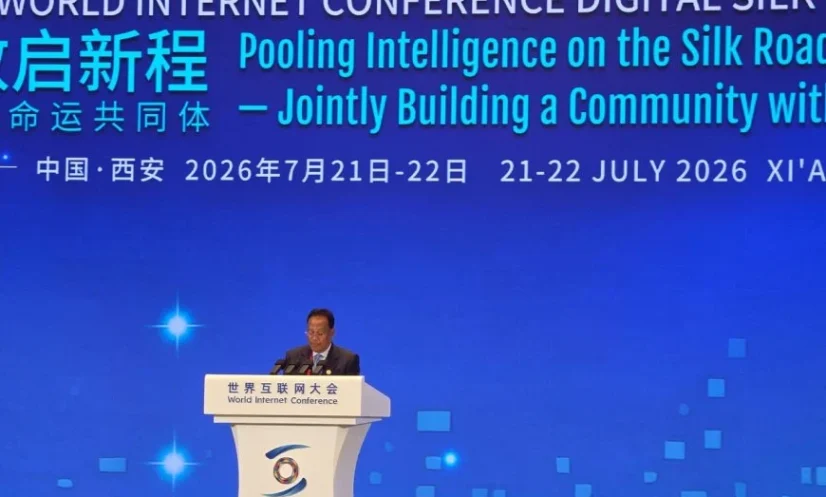
Bangladesh has called for breaking technological monopolies and building a trust-based global digital partnership to ensure inclusive technological development.
Addressing the World Internet Conference Digital Silk Road Development Forum in Xi’an, China, Minister for Posts, Telecommunications and Information Technology and Science and Technology Fakir Mahbub Anam said, “We cannot build or travel this path alone”.
”With our connectivity, youthful population and innovative spirit, Bangladesh is fully prepared to become a reliable and trusted partner in this global digital journey.”
Speaking at the two-day international forum on Wednesday (22 July), the minister said the Digital Silk Road is not an abstract concept for developing countries like Bangladesh; rather, it has become a key driver of economic growth, innovation and inclusive development.
He highlighted Bangladesh’s successful application of Artificial Intelligence (AI) and Machine Learning (ML) in flood forecasting and the use of drone technology in delta-region agriculture, describing these initiatives as practical examples of technology improving disaster preparedness and agricultural productivity.
On cyber governance, the minister said cyberspace is a “dual-edged sword” that promotes innovation while also creating risks such as cybercrime, disinformation and data polarization. He stressed that global cyber governance must be multilateral, transparent, consistent with international law and respectful of national sovereignty.
Minister Anam proposed three key priorities for the future digital economy: strengthening international cooperation to develop skilled human resources alongside digital infrastructure; establishing joint platforms for technology, cybersecurity and innovation knowledge-sharing; and treating AI models, intellectual property and data as global public goods to ensure equitable access to technology.
He also emphasized that technology transfer and digital resources must remain affordable so that the global digital divide does not widen further.
According to the minister, the digital revolution should not remain under the exclusive control of a few countries or corporations. Instead, international cooperation and mutual trust should form the foundation of a secure, inclusive and technology-driven shared future.
More than 20 countries participated in the forum, bringing together ministers, government officials, diplomats, academics, technology leaders and representatives of international organizations. Discussions focused on artificial intelligence, digital trade, Silk Road e-commerce, cultural heritage preservation, intelligent healthcare and global digital cooperation.
Senior representatives from leading technology companies including Qualcomm, Lenovo, ZTE, 360, Sugon, Waterdrop, Keeson Technology and Penghua Fund also attended the conference.