Play store

WASHINGTON, July 23 — US President Donald Trump has approved a landmark civilian nuclear cooperation agreement with Saudi Arabia, paving the way for the kingdom to develop nuclear reactors with US technology under a 30-year partnership that has drawn criticism over nuclear proliferation risks.
The agreement, signed by US Energy Secretary Chris Wright and Saudi Energy Minister Prince Abdulaziz bin Salman, would allow Saudi Arabia to enrich uranium for civilian nuclear fuel — a significant departure from previous US non-proliferation standards applied to regional allies.
Saudi Arabia says the programme is intended to diversify its energy mix and support its long-term economic development plans. US officials also describe the pact as a strategic move to strengthen bilateral ties and expand opportunities for American nuclear companies.
However, the deal has alarmed nuclear experts and some US lawmakers because it does not require Riyadh to adopt the International Atomic Energy Agency’s Additional Protocol, which permits more intrusive inspections of nuclear facilities. Critics argue that the absence of the safeguard could increase the risk of future weapons development.
Saudi Crown Prince Mohammed bin Salman has previously stated that the kingdom would seek nuclear weapons if Iran acquired one, adding to concerns that the agreement could fuel a regional arms race.
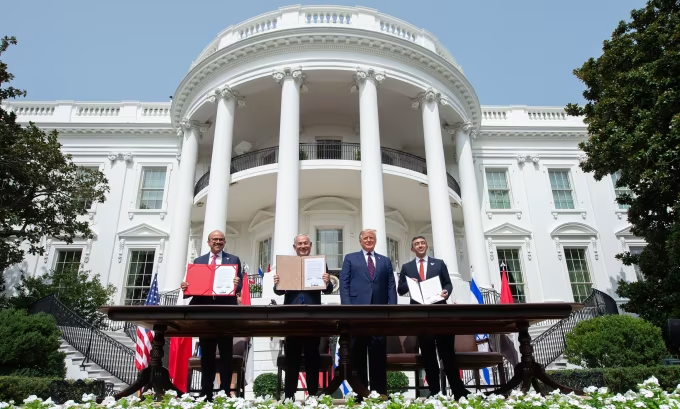
Trump also indicated that any broader strategic arrangement with Saudi Arabia, including the civilian nuclear programme, would require the kingdom to normalise relations with Israel under the Abraham Accords.
The agreement will now undergo congressional review, where lawmakers could attempt to block it, although doing so would require a two-thirds majority if the president vetoes any resolution of disapproval.