


 Play store

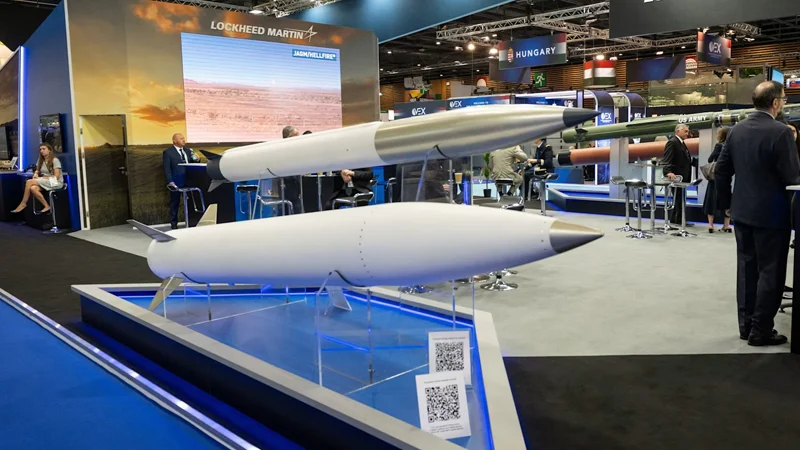
The ongoing conflict involving Iran has prompted the United States to significantly increase spending to replenish its missile stockpiles. As a result, America’s leading defense contractors have reported sharp increases in sales and new orders, while also expanding production capacity to meet rising demand.
According to U.S. media reports and company financial disclosures, Lockheed Martin, Northrop Grumman, and RTX (formerly Raytheon Technologies) recorded record-breaking order volumes during the second quarter of the year. The companies have also raised their profit forecasts in anticipation of sustained defense spending.
Lockheed Martin announced that revenue from its Missiles and Fire Control division rose 19% year-over-year to $4.1 billion in the second quarter. The growth was driven by increased production of Patriot and Precision Strike Missiles, both of which have been used in recent U.S. military operations involving Iran.
The company also secured a $35 billion contract from the U.S. Missile Defense Agency to expand production of the Terminal High Altitude Area Defense (THAAD) missile defense system by fourfold. As a result, Lockheed Martin’s total order backlog has grown to $230 billion.
In a May analysis, the Center for Strategic and International Studies (CSIS) estimated that the United States used between 1,000 and 1,400 Patriot missiles during the conflict involving Iran. The report noted that U.S. missile inventories had already been depleted due to years of military assistance to Ukraine, and rebuilding supplies could take until mid-2029.
RTX also reported an 18% increase in second-quarter sales. The company manufactures Tomahawk cruise missiles, which have been extensively used in U.S. military operations involving Iran. While the Pentagon purchased an average of 86 Tomahawk missiles annually over the past decade, its proposed fiscal year 2027 budget calls for the acquisition of 785 Tomahawk missiles in a single year.
Scott Mikus, an analyst at investment research firm Melius Research, said the Iran conflict would further reduce missile and defense inventories, creating new business opportunities for companies such as RTX. He added that 48% of RTX’s current orders come from international customers, driven largely by demand for Patriot, AIM-120 AMRAAM, and GEM-T missiles.
Meanwhile, Northrop Grumman reported a record order backlog of $105 billion. During the second quarter, the company secured $20 billion in new contracts, including a $7.6 billion contract for the U.S. Sentinel intercontinental ballistic missile (ICBM) program.
The Pentagon has acknowledged that prolonged military support for Ukraine, combined with the Iran conflict, has significantly reduced U.S. ammunition and missile inventories. To address the shortfall, the Department of Defense is encouraging contractors to expand production and is introducing seven-year long-term procurement contracts to provide greater certainty for industry investment.
To meet increasing demand, Lockheed Martin began construction of a new missile production facility in Alabama in May. Northrop Grumman, RTX, and L3Harris are also investing billions of dollars to expand their manufacturing capabilities.
RTX Chief Executive Officer Christopher Calio said the proposal to increase the U.S. defense budget beyond $1 trillion sends a strong signal to the defense industry. According to him, long-term procurement plans indicate that demand for advanced weapons systems is expected to remain strong for years.
Lockheed Martin CEO Jim Taiclet added that the new long-term contracting framework allows defense manufacturers to invest in production capacity, infrastructure, and technology before contracts are formally awarded, enabling faster delivery when demand arises.