Play store

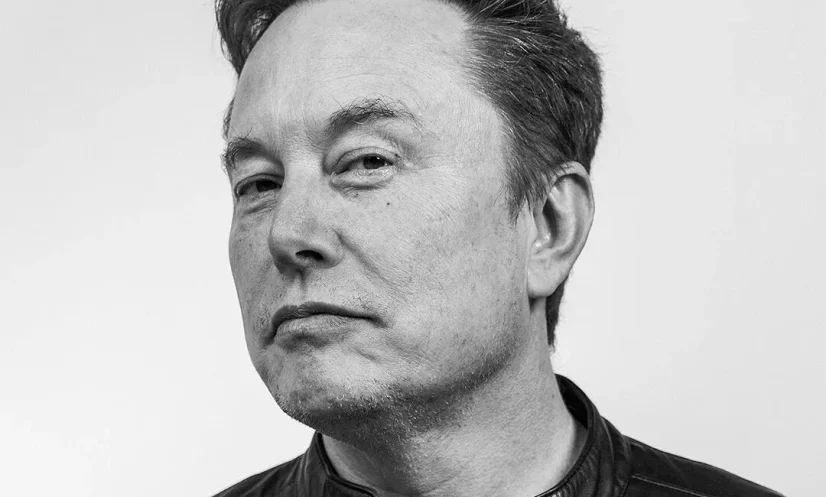
Artificial intelligence has become the new battleground for global technological supremacy, and Elon Musk is determined to be one of its dominant players.
According to a recent analysis by The Economist, the question is no longer simply whether Musk is an influential entrepreneur, but whether his growing control over AI, digital infrastructure and online platforms should concern governments and society.
The magazine argues that Musk’s influence has expanded well beyond Tesla and SpaceX. Through xAI, his artificial intelligence company, he is competing directly with OpenAI, Google DeepMind, Anthropic and other leading AI developers in a race to build increasingly powerful models.
Unlike traditional technology companies, Musk controls a unique combination of AI assets. He owns X (formerly Twitter), which provides vast amounts of real-time data for training AI models; xAI, which develops large language models such as Grok; and Colossus, one of the world’s largest AI supercomputing systems.
Combined with Tesla’s fleet of connected vehicles and Optimus humanoid robots, Musk has access to enormous volumes of real-world data that could accelerate AI development.
The Economist notes that this combination gives Musk advantages that few rivals can match. AI systems improve through access to computing power, high-quality data and capital—areas where Musk is investing billions of dollars.
The publication also highlights the paradox surrounding Musk’s approach to AI. Years ago, he warned that artificial intelligence could pose an existential threat to humanity and repeatedly called for stronger regulation.
Today, however, he is among the industry’s biggest investors, racing to build frontier AI models while advocating an open and highly competitive AI ecosystem.
Supporters argue that Musk’s entry into AI increases competition, reducing the dominance of a handful of companies and encouraging faster innovation.
They believe competition could lead to more transparent AI systems and prevent excessive concentration of power in any single firm.
Critics, however, see growing risks. They argue that AI is becoming increasingly concentrated among a small number of billionaires and technology companies with access to massive computing resources.
As AI systems become more capable, concerns are mounting over misinformation, cybersecurity, labour market disruption, autonomous weapons and the possibility that regulation may lag behind technological progress.
Another concern is Musk’s ownership of X. The platform not only serves as a distribution channel for AI-powered products but also generates enormous amounts of user-generated content that can be used to improve AI models.
Critics argue that combining a major social media platform with a leading AI company creates significant influence over both information and the technology used to generate it.
The Economist stresses that the central issue is not whether Musk himself is inherently dangerous.
Instead, it asks whether democratic institutions are prepared for a future in which a handful of private technology leaders possess the computing power, data and financial resources needed to shape artificial intelligence—technology that is expected to transform economies, national security, education, healthcare and everyday life.
The magazine concludes that the debate over Elon Musk is ultimately a debate about governance.
AI is becoming one of the most powerful technologies ever developed, and ensuring that its development remains transparent, competitive and accountable may prove more important than the ambitions of any single entrepreneur.