


 Play store


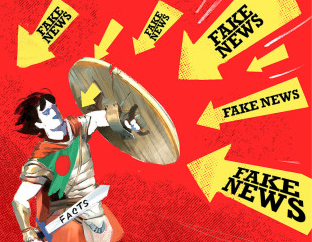
Across global public discourse and modern digital platforms, India and its official state narratives face an unprecedented wave of global scrutiny, skepticism, and pushback. Beyond the worldwide social media discourse, the international perception of the country has undergone a striking shift over the past decade. From diplomatic friction with Western Powers and complex border disputes with neighbors to Indian vessels being targeted by the US, Iran and Russia, that led to the reported deaths of multiple Indian sailors, Indians can only “keep a very close eye on the situation.” The grand narrative of a dominant regional power is increasingly hitting the wall of hard global reality. Accusations of state-linked assassination plots against Sikh human rights advocates in Canada and the United States, have further strained India’s relations with key Western allies.
At the absolute center of this disconnect lies the Indian news media. Far from serving as a pillar of objective journalism, investigative vigor, or balanced strategic analysis, much of the mainstream media landscape in India has surrendered to hyper-sensationalism and aggressive nationalism. Loud studio shouting matches, sensationalist red-banner graphics, and state-aligned propaganda have systematically replaced rigorous news gathering. The Indian government spends all its time denying accusations made by foreign governments and manufacturing what they think are “smart” one-line sound bites and headlines—no doubt the questions are set up beforehand.
This is not merely a domestic phenomenon; it has international implications. The EU Disinformation Lab previously exposed extensive, network-level operations linked to coordinated influence campaigns. In 2019, the EU Disinformation Lab uncovered a vast network of 265 coordinated fake local media outlets in 65 countries serving Indian interests, as well as multiple dubious think tanks and NGOs. These fake media outlets had the complete outfit—social media accounts, legitimate-looking domains, and substantial website content. A subsequent investigation revealed a 15-year operation targeting the EU and UN, with objective to spread influence. Indian online “news” outlets are churning out hundreds of articles every day to flood Facebook news feeds so that no actual news gets through—news that would burst the delicate bubble of illusion and dreams that Indians live in.
This dynamic illustrates a classic political paradox: the desire to project an illusion of strength to mask underlying structural vulnerabilities, while television anchors daily beat the drums of hyper-nationalism—frequently posturing against major nuclear-armed neighbors—official foreign policy tells a far more cautious and restrained story. While the Indian media screams that India will invade and annihilate China, the Indian government sends out notices to Bollywood to not criticize China. While Indian “news outlets” and “journalists” are printing stories and shouting on TV about how India will shoot down Chinese fighter jets, Indians are in Shenzhen and Guangzhou spending millions of dollars on products made in China to take back and sell to Indians in India. The irony escapes only the Indians alone.
Behind closed doors, New Delhi regularly navigates delicate trade realities with China, managing supply-chain dependencies in technology and manufacturing that starkly contrast with the chest- thumping rhetoric heard on prime-time news. The endless loop of aggressive studio debates is therefore less about strategic clarity and more about domestic distraction —a mechanism designed to keep a diverse, complex, and politically fragmented population constantly distracted from noticing pressing internal economic and social challenges. A broken mind of a dysfunctional person in a mental asylum—that is how I describe the Indian media. At the end of the day, they cannot call out Iran, Russia or the USA for sinking their ships that resulted in the deaths of Indian sailors.
For Bangladesh, the cross-border fallout from this sensationalized Indian media machine is direct, persistent, and consequential. The saturation of Bangladeshi digital spaces—particularly social media news feeds—with inflammatory reporting and targeted misrepresentation is not an accidental byproduct. In 2025 alone, 73 Indian news outlets published 140 reports across 38 incidents containing false or misleading information involving Bangladesh. Evidence shows that in at least 10 incidents, Indian media outlets published communal disinformation involving Bangladesh. Indian “news” outlets and the meida functions as a deliberate disinformation campaign aimed at keeping Bangladesh psychologically dependent and firmly within a specific geopolitical orbit.
This strategy of narrative pressure is not entirely new. In the mid-1990s, when my father served as the Press Minister at the Bangladesh High Commission in New Delhi, he repeatedly raised official diplomatic concerns regarding fabricated and biased stories published in the Indian press targeted directly against the elected government of Prime Minister Begum Khaleda Zia, the family of President Ziaur Rahman, and the Bangladesh Nationalist Party (BNP). The standard response from New Delhi officials back then was one of practiced deflection—citing press freedom as a shield while intentionally shifting the responsibility onto the elected BNP government of Prime Minister Begum Khaleda Zia for failing to manage public sentiment in India.
However, the defining turning point in this media dynamic occurred during the 1/11 political crisis of 2007. The era ushered in by the military-backed interim government effectively opened the floodgates for Indian media penetration into the heart of Bangladesh’s domestic sphere. What was once a niche cable offering quickly transformed into the default media consumption for millions across the country. Over the subsequent decade, Indian television networks began aggressively framing how Bangladeshis understood their own national reality. Achievements in garment exports, remittance growth, and disaster resilience were often glossed over or ignored, while internal political events were filtered through a patronizing lens that routinely magnified border friction and partisan division.
Tragically, parts of our own domestic media ecosystem—financially constrained and increasingly dependent on foreign content partnerships and corporate advertising—began echoing those external editorial priorities. Over time, the national discourse was subtly redirected. A Bangladeshi citizen watching prime-time television could easily hear more about Indian electoral contests, domestic Indian political grievances, and regional posturing than about the direct economic needs of our own farmers protesting the Rampal Power plant in Khulna, the developments of our ports, or the preservation of our national sovereignty.
The pre‑1/11 era was not perfect, but it was ours. Before 1/11, we had a fighting chance to build a media ecosystem that prioritized Bangladeshi voices, Bangladeshi language and culture, and a foreign policy not dictated from South Block. Returning to that moment means more than nostalgia – it means a deliberate, strategic uncoupling. Banning Indian channels that do not meet basic standards of factual reporting, capping Indian content on our digital platforms, and reviving state support for independent Bangladeshi journalism are not radical steps. They are survival steps. A nation that cannot tell its own story will soon find itself living inside someone else’s.
To safeguard national sovereignty in the modern digital age, Bangladesh must adopt clear, systematic, and pragmatic policy measures:
• Strict Regulatory Oversight: Establishing firm regulatory guidelines that restrict or ban foreign news outlets that consistently fail to meet basic international standards of factual reporting, balanced coverage, and journalistic ethics. Indian TV channels must be banned, except for credible Indian news outlets; the rest must be blocked.
• Content Quotas and Platform Regulation: Enforcing strict broadcasting quotas on foreign media and regulating digital platforms to ensure that local news, culture, and educational programming retain primary visibility across the national information grid.
• Strategic Investment in Independent Journalism: Providing institutional support, professional development, and financial independence for local media houses to foster robust, credible, and investigative Bangladeshi journalism capable of holding power accountable.
• National Information Security: Treating cross-border disinformation and coordinated online campaigns as serious challenges to national stability, requiring proactive counter-messaging and public digital literacy initiatives.
Finally, let us speak plainly about what severing ties with India’s media empire would achieve. It would break the psychological chains that tell Bangladeshis we are peripheral, that our success depends on Indian approval, that our internal conflicts are only worth reporting when framed by Delhi. It would force our own journalists to raise their standards—not to compete with Indian flash and noise, but to serve Bangladeshi truth. And it would send a message to India: Bangladesh is no longer a passive receiver of propaganda.
By demanding higher standards, rejecting external sensationalism, and actively investing in the integrity of local journalism, Bangladesh can ensure that its identity, priorities, and democratic future are defined by its own citizens. It will also send a clear message to the Indian Media: We remember 1/11, we remember what was taken. And we have taken Bangladesh back!
The views expressed in this article are the author’s own and do not necessarily reflect Sarabangla English Edition’s editorial stance.