Play store

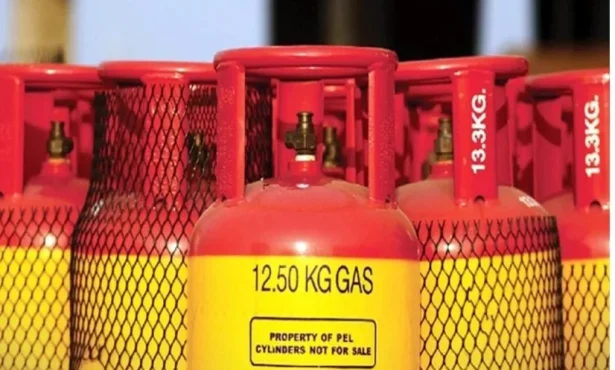
The Bangladesh Energy Regulatory Commission (BERC) today on Thursday ( 2 July) announced a significant reduction in the prices of liquefied petroleum gas (LPG) and auto gas, lowering the retail price of a 12kg LPG cylinder by Tk 357 and reducing the price of auto gas by Tk 16.53 per litre.
Under the revised rates, the retail price of a 12kg LPG cylinder has been fixed at Tk 1,528, down from Tk 1,885, while the price of auto gas has been reduced to Tk 70.40 per litre from the previous rate of Tk 86.93.
BERC Chairman Jalal Ahmed announced the revised prices at a press briefing, stating that the new rates would take effect from 6:00 pm today (July 2) and must be implemented by all licensed LPG marketing companies across the country.
According to the commission’s decision, the retail price of privately marketed LPG has been set at Tk 123.55 per kilogram, inclusive of Value Added Tax (VAT), compared to the previous rate of Tk 153.31 per kilogram.
The price of LPG supplied through privately operated reticulated gas systems has also been reduced to Tk 274.50 per cubic metre from Tk 340.70.
BERC has revised the prices of other LPG cylinder sizes accordingly. Under the new pricing structure, a 12.5kg cylinder will retail at Tk 1,591; a 15kg cylinder at Tk 1,910; a 16kg cylinder at Tk 2,037; an 18kg cylinder at Tk 2,291; a 20kg cylinder at Tk 2,546; a 22kg cylinder at Tk 2,801; a 25kg cylinder at Tk 3,183; a 30kg cylinder at Tk 3,819; a 33kg cylinder at Tk 4,201; a 35kg cylinder at Tk 4,456; and a 45kg cylinder at Tk 5,729.
In a separate notification, BERC said the National Board of Revenue (NBR) has withdrawn Value Added Tax (VAT) at the domestic LPG production stage and introduced VAT at the import stage, a move that contributed to the latest price adjustment.
The latest reduction in LPG and auto gas prices is expected to provide relief to households, businesses and transport users who rely on these fuels amid ongoing efforts to stabilize energy costs.