Play store

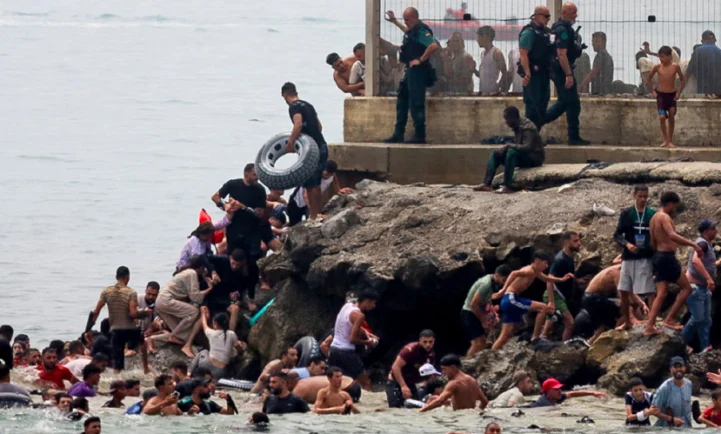
At least 15 migrants have drowned while attempting to reach the Spanish enclave of Ceuta from neighbouring Morocco, as thousands of people surged toward the North African border, triggering a humanitarian and security crisis.
According to the BBC, Spain announced on Thursday that it would deploy troops to reinforce security after thousands of migrants gathered at the border.
The government of Ceuta said between 1,500 and 2,000 migrants had entered the enclave over the past 10 days, with hundreds more believed to have arrived on Thursday.
The recent rise in attempted crossings had prompted local authorities to seek urgent assistance from Madrid. However, border controls collapsed on Thursday as large crowds rushed toward the enclave, creating chaotic scenes.
Regional President Jesus Vivas declared the situation an “extreme humanitarian and social emergency” and urged the Spanish government to send troops to restore control of the border.
Spain’s Interior Ministry said 60 members of the armed forces would be deployed to strengthen border surveillance and support security operations.
Earlier this month, Spain’s Supreme Court ruled that migrants intercepted at sea while attempting to reach Ceuta or the Spanish enclave of Melilla cannot be immediately returned to Morocco.
The Interior Ministry accused human trafficking networks of exploiting the ruling to encourage a surge in undocumented migration.
“The armed forces will assist the Civil Guard in maintaining security in Ceuta and provide any additional support required,” the ministry said.
Located on Morocco’s northern coast, Ceuta is separated from mainland Spain by the Strait of Gibraltar and has long been a key entry point for migrants seeking to reach Europe.
The number of migrants attempting to reach Ceuta had been rising for several days. On Thursday, thousands climbed over concrete sea barriers and entered the water to swim around the border jetty.
Video footage showed some migrants shouting “Viva España” as they reached Ceuta. Many crossed the water using inflatable boats, plastic rafts or rubber rings.
On the Spanish side, beaches were littered with rubber rings and flippers after the crossings. While some migrants celebrated their arrival, at least 15 others drowned during the dangerous journey.
The reason behind the sudden surge in illegal crossings from Morocco remains unclear, as does the extent of efforts by Moroccan authorities to prevent them. At one stage, a Spanish official said the border had “completely collapsed.”
Spain’s Interior Ministry said it is working closely with Morocco to manage the influx of irregular migrants while blaming human trafficking gangs for exploiting the Supreme Court ruling to encourage illegal migration.
Spanish Prime Minister Pedro Sánchez is expected to visit Ceuta on Friday to assess the situation.