Play store

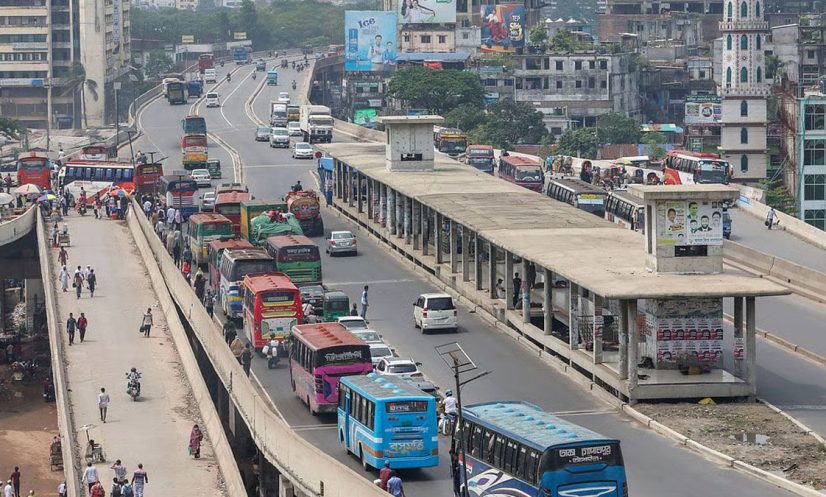
Urban planners, architects and transport experts have questioned the government’s decision to scrap the Dhaka-Gazipur Bus Rapid Transit (BRT) project after spending nearly Tk 2,800 crore on its infrastructure, arguing that the dedicated bus service should be launched after addressing technical and operational problems.
At a press conference titled ‘We Want Implementation of Dhaka-Gazipur BRT’ at the National Press Club in Dhaka on Wednesday, experts said cancelling the project without procuring buses or launching the service was questionable, particularly when around 97 per cent of the infrastructure work had been completed.
The press conference was jointly organised by the Bangladesh Institute of Planners (BIP), the Institute of Architects Bangladesh (IAB), Works for a Better Bangladesh Trust (WBB Trust) and Gazipur Heritage and Development.
Presenting the keynote paper, BIP President and urban planner Dr Mohammad Ariful Islam said the Cabinet decided on October 18 to abolish the dedicated BRT bus lanes and convert the corridor into a conventional six-lane highway, with three lanes on each side.
He argued that financial or operational failures should be attributed to the individuals and institutions responsible for implementing the project, rather than blaming the BRT system itself.
Ariful Islam called for preserving all project documents and forming an independent investigation commission comprising experts without conflicts of interest. He also demanded a white paper disclosing the findings and the rationale behind the government’s decision.
He said the government should assess construction and operational costs, passenger travel-time savings, environmental benefits and the potential economic losses caused by traffic congestion before taking a final decision.
Engineer Shamsul Haque, president of Gazipur Heritage and Development, questioned why the project was being cancelled after 14 years of construction and nearly 97 per cent completion. He demanded accountability from those responsible for the prolonged delays.
He noted that the 28-kilometre BRT system in Peshawar, Pakistan, had been completed in just two years, contrasting it with Bangladesh’s experience.
Architect and IAB General Secretary Professor Dr Masudur Rashid said the project could contribute not only to improving public transport but also to the development and quality of life in surrounding areas. He suggested resolving technical problems through necessary engineering modifications.
Transport expert Engineer Dr Mahbubul Bari described the project as financially and technically viable, citing feasibility assessments conducted by BUET and other institutions.
He said introducing BRT services could improve road safety and environmental conditions along the busy corridor, which carries a large number of bus passengers. He also warned that the cancellation could jeopardise plans to integrate six bus routes with the BRT system.
The experts placed an eight-point set of demands, including reconsideration of the October 18 decision, comprehensive financial and environmental assessments, an independent investigation into alleged irregularities and the publication of a white paper.
They also called for declaring the Airport-Gazipur corridor an ‘urban artery’, introducing BRT services in Dhaka and other parts of the country, strengthening the Dhaka Bus Rapid Transit PLC and holding direct discussions with the prime minister.
The experts urged the government to prioritise long-term public transport planning and ensure accountability for the shortcomings in the project.