


 Play store

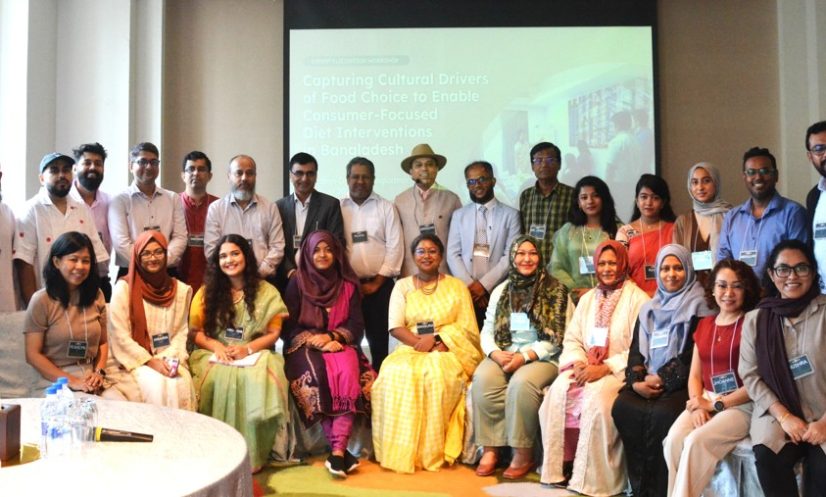
Food and nutrition experts from across Bangladesh gathered in the capital on Wednesday to examine why people choose the foods they eat, aiming to generate evidence that can help design more effective nutrition interventions and promote healthier, more sustainable diets.
The Expert Elicitation Workshop, organised by the International Rice Research Institute (IRRI) at the Sheraton Dhaka, brought together 39 specialists from government agencies, universities, research organisations, civil society, the food industry, youth organisations and the CGIAR global research partnership.
The workshop sought to identify the cultural, social, economic and behavioural factors that shape food choices in Bangladesh under the Gastronomic Systems Research (GSR) framework.
Participants included representatives from the Bangladesh Agricultural Research Council, Bangladesh Agricultural University, BRAC James P Grant School of Public Health, Dhaka University, Daffodil International University, Noakhali Science and Technology University, GAIN Bangladesh, SAJIDA Foundation, Bangladesh Diabetic Network Ltd., BRAC Health Programme, Alive & Thrive, the International Food Policy Research Institute (IFPRI), restaurant businesses and youth organisations.
Food historians and food vloggers also joined the discussions, providing perspectives on Bangladesh’s traditional cuisine, changing food culture and evolving dietary habits.
Using a structured expert elicitation process, participants explored the factors influencing food choices, including commonly consumed foods, eating occasions, affordability, seasonal food availability, purchasing behaviour, cultural practices and barriers to adopting healthier diets.
The discussions also focused on identifying practical opportunities for nutrition interventions that reflect people’s daily food habits and local realities.
Opening the workshop, Dr Arindam Samaddar, Project Leader at IRRI, said improving nutrition requires more than increasing food production.
“Improving diets is not just about producing more food. It is about understanding why people choose the foods they eat,” he said.
He noted that food choices are influenced by culture, affordability, availability, convenience and personal preferences.
“If diets are culturally shaped, interventions must also be culturally designed,” Dr Samaddar added.
Dr Humnath Bhandari, IRRI Representative for Bangladesh, said health and nutrition have become central components of the institute’s new strategy, reflecting its commitment to promoting rice-based food systems that ensure not only food security but also improved nutrition and healthier diets.
Dr Hafizur Rahman Bhuiyan, Associate Professor at the Department of Food Engineering and Technology of Bangladesh Agricultural University, said the Gastronomic Systems Research framework offers a practical and sustainable approach to tackling complex nutrition challenges.
“The GSR framework is simple, effective and sustainable. It provides a practical way to address complex nutrition challenges through interventions grounded in people’s everyday food choices,” he said.
Israt Jahan Dorin, Chief Dietitian at Bangladesh Diabetic Network Ltd., stressed the importance of understanding cultural influences on food habits in addressing the country’s growing burden of diet-related diseases.
“Understanding the cultural drivers of food choice is fundamental to designing effective diabetes prevention and nutrition interventions. By recognising how culture, traditions and everyday food practices influence dietary decisions, we can develop interventions that are practical, culturally appropriate and more likely to improve health outcomes,” she said.
Experts noted that rapid urbanisation, changing lifestyles, rising incomes and the increasing availability of processed foods are reshaping dietary patterns in Bangladesh. They said evidence-based policies that consider cultural preferences and local food environments will be essential for improving nutrition and reducing the growing burden of malnutrition and non-communicable diseases.
Organisers said the findings from the workshop will contribute to future research and help policymakers design nutrition programmes that are culturally relevant, scalable and better aligned with the country’s evolving food systems.