


 Play store

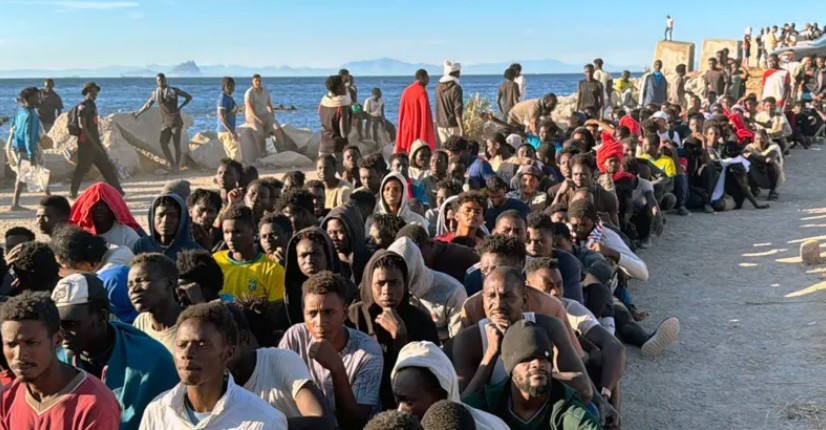
Spain has imposed temporary border controls on air and sea travel from Italy, escalating a diplomatic dispute between the two EU members over Italy’s decision to reintroduce checks on travellers arriving from Spain following a surge in irregular migration to the Spanish enclave of Ceuta.
The Spanish measures took effect at midnight local time and will remain in force for one month, until September 7, unless changing circumstances prompt Madrid to modify the decision.
The move came a week after Italy introduced similar restrictions, following the arrival of about 78,000 migrants from Morocco in Ceuta, a Spanish territory on the North African coast.
Madrid had demanded on Friday that Rome withdraw its checks by Sunday. Italy rejected the demand, saying its measures would remain in place until at least August 15, citing security concerns and what it described as the possibility of another migration surge in Ceuta.
The dispute has brought Spanish Prime Minister Pedro Sánchez, a socialist, into direct confrontation with Italian Prime Minister Giorgia Meloni, whose government has consistently advocated tougher migration controls across the European Union.
Italy does not share a land border with Spain. Rome has argued that temporarily suspending the border-free Schengen arrangements for third-country nationals arriving from Spain is necessary to prevent migrants who entered Ceuta from moving onward to Italy.
Madrid has rejected that argument as unfounded, saying migrants who entered Ceuta had no practical route into the Schengen area and describing Italy’s justification as based on “spurious arguments”.
Responding to Madrid’s demand on Friday, the Italian government said it would not accept “ultimatums” and had no intention of reconsidering its decision before August 15. Rome said the measures would remain until security and terrorism-related risks to Italy had been fully addressed.
Italian officials have maintained that authorities conducting the checks are seeking to minimise disruption for Spanish and other European travellers arriving from Spain. Spanish citizens are exempt from the additional checks, which apply primarily to non-EU nationals.
However, Spanish newspaper El País reported that several Italian airport terminals have experienced long queues and delays in recent days, with passengers arriving from Spain directed to designated lines for additional screening.
Under Spain’s countermeasures, passengers arriving from Italy will face checks of passports, nationality and visas. The Spanish government said the measures were necessary because of “persistent irregular migratory pressure”.
The temporary suspension of Schengen rules is not unprecedented. Italy already maintains border controls with Slovenia, while similar measures have been used by EU countries in response to security and migration concerns.
Italy’s decision to suspend Schengen arrangements was backed by Finland and Denmark, while the Czech Republic went further by calling for Spain’s membership in the border-free arrangement to be temporarily suspended.
Most of the migrants who crossed into Ceuta last week were returned to Morocco within days. However, nearly 1,400 minors, including some described as very young children, remain in the Spanish enclave.
Spain has not formally announced that it expects another major influx from Morocco. Reports of a possible second wave have largely been fuelled by social media posts by Moroccan users allegedly discussing another attempt to cross into Ceuta.
The Spanish prime minister’s office told El País that authorities were monitoring the situation but did not expect a repeat of last week’s mass crossings.
The reasons behind the sudden arrival of tens of thousands of migrants remain unclear. EU Migration Commissioner Magnus Brunner has suggested that criminal networks may have used disinformation to encourage the crossings, an assessment supported by the Spanish government.
The crisis also followed a ruling by Spain’s Supreme Court that migrants intercepted at sea while attempting to reach Ceuta or Melilla cannot simply be returned to Morocco without due process.
Morocco has blamed the court ruling for the surge, with an unnamed government source telling local media that the ruling had weakened the deterrent effect of the border system.
The scale of the crossings has also raised questions over why Moroccan border forces appeared unable to prevent such large numbers of people from reaching Ceuta.
The latest dispute between Madrid and Rome highlights the growing strain that irregular migration is placing on Europe’s border-free travel system. With both governments refusing to back down, the temporary border controls risk adding another layer of tension to already difficult debates within the EU over migration, security and responsibility-sharing. Source: BBC News