


 Play store

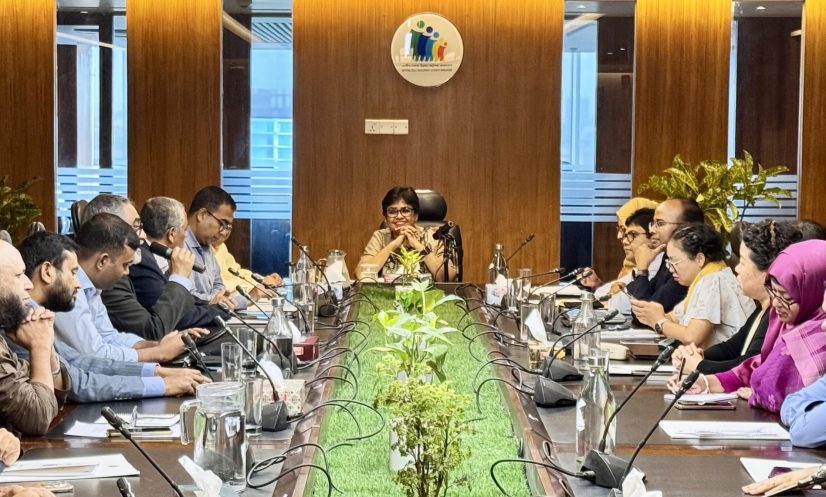
The National Skills Development Authority (NSDA) has completed, for the first time in Bangladesh, a task analysis and occupational mapping of the Chinese Language occupation involving local and international experts.
The initiative aims to make the country’s skills development programmes more responsive to domestic and international labour-market needs and more focused on employment.
The initiative comes amid growing trade, economic and diplomatic ties between Bangladesh and China, as well as rising demand for workers with Chinese-language skills in various sectors. Under the initiative,
Chinese language proficiency is being structured not merely as a language skill but as a distinct occupation linked to employment and professional competencies.
A workshop discussed the potential tasks and responsibilities associated with the Chinese Language occupation, along with the knowledge, skills and competencies required and the demands of the relevant labour market.
The NSDA plans to hold a four-day development workshop from 16 to 19 August, followed by a validation workshop on 25 August, to develop the competency standards. The process will pave the way for finalising a training curriculum and eventually introducing Chinese-language courses at NSDA-registered training institutions.
NSDA Executive Chairman and Bangladesh Government Secretary Dr Naznin Kawsar Chowdhury chaired the closing session of the workshop. NSDA members, directors and relevant consultants were also present.
In her remarks, Dr Naznin said skilled human resources must be developed for new and promising occupations in line with changing labour-market demands.
“Developing proficiency in Chinese can create new employment opportunities for young people in both domestic and international labour markets,” she said.
She said task analysis and occupational mapping help identify the specific skills, knowledge and competencies required to perform a particular occupation. This, in turn, can make training and skills assessment more standardised, labour-market-oriented and responsive to industry needs.
She also noted that demand for Chinese-language professionals exists not only in international labour markets but also within Bangladesh. Therefore, it is important to create opportunities for developing skilled workers in the occupation as well as for formally recognising and certifying their skills.
The workshop also discussed the possibility of signing memoranda of understanding with several Chinese universities for joint certification.
The NSDA is also working to develop a competency framework for the Chinese Language occupation aligned with Levels 2 and 3 of the Bangladesh National Qualifications Framework (BNQF), corresponding to Chinese Language Test-HSK Levels 1 and 2.
Experts and representatives from universities and institutions involved in Chinese language education, research and training participated in the workshop.
Participants included retired Lieutenant Colonel Shahadat Hossain, General Secretary of We Speak Language Club; Dr Md Sadi, Principal of the Eday Yilu Chinese Institute in Dhaka; Md Mahiuddin Taher, Director of Shanto-Mariam University of Creative Technology; Dr Rafiqul Islam, a Chinese language and culture teacher at BRAC University; Dr Md Rakibul Haque, Professor and Director of the Centre for China Studies at the University of Dhaka; Dr Md Altab Hossain, Professor at Chengdu University in China and a high-level foreign expert; Dr Yang Hui, Chinese Director of the Confucius Institute at the University of Dhaka; Dr Mohammad Abdul Hamid, Associate Professor at Bangladesh Open University; Md Rozibul Islam, Adjunct Faculty at Shahjalal University of Science and Technology; Jannatun Nahar, Assistant Professor at the Institute of Modern Languages (IML), University of Dhaka; Nilu Akter, Chinese language teacher at the University of Dhaka’s Confucius Institute; Md Shariful Hasan, Chinese language teacher at North South University; Yin Xiaohua, a teacher at the University of Electronic Science and Technology of China; Agha Mostafizur Rahman Chowdhury, Lecturer at the IML, University of Dhaka; and Ma Zhiqiang, Chinese Director of the Confucius Institute at North South University.