


 Play store

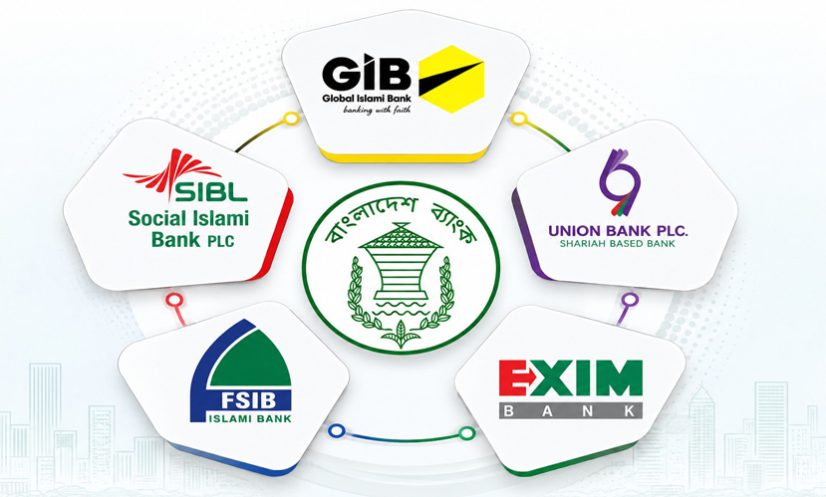
Bangladesh Bank has completed the withdrawal of administrators and administrator teams appointed to oversee the merger of five Islamic banks.
The central bank has most recently withdrawn its administrators from Global Islami Bank and Union Bank, meaning none of the five banks involved in the merger process now has a Bangladesh Bank-appointed administrator or representative.
Bangladesh Bank spokesperson Arif Hossain Khan confirmed the development on Thursday (August 13).
He said the administrators were withdrawn in phases after new managing directors, chairmen and independent boards of directors were appointed to the banks.
“Keeping administrator teams in place after appointing managing directors, chairmen and independent boards would have created a situation of dual control,” he said.
Initially, Bangladesh Bank appointed an administrator-led team to each of the five banks to facilitate the merger process. The central bank and the government subsequently coordinated the appointment of new managing directors and the formation of independent boards, with chairmen also being selected.
The administrator teams were first withdrawn from EXIM Bank, followed by First Security Islami Bank and Social Islami Bank (SIBL). The process was completed with their withdrawal from Global Islami Bank and Union Bank.
Arif said the banks would now operate under their new managing directors and independent boards, with the focus shifting to achieving the objectives of the merger.
He said the primary purpose of merging the five banks was to protect small depositors. The government took ownership of the banks and provided financial support to help them resume operations.
According to him, the government initially provided around Tk20,000 crore, while total funding from the Bangladesh Bank and other sources subsequently reached about Tk35,000 crore.
Part of the funds has been used to meet some of the demands of small depositors, although the supply of funds remains inadequate compared with their overall needs, he said.
Arif said the government had nevertheless established an important point: the state is now the owner of the bank, which is gradually creating confidence among depositors that their funds will remain protected under state ownership.
He said confrontations and other unwanted incidents had previously occurred at bank branches when depositors were unable to withdraw their money. Such situations are no longer being seen, he added.
Under the initial scheme, depositors were allowed to withdraw limited amounts. The withdrawal facility was later expanded for people facing special circumstances.
Arif said some depositors were suffering from serious illnesses, including those undergoing kidney dialysis or chemotherapy for cancer, and were unable to meet treatment expenses despite having money deposited with the bank.
Considering such cases, special withdrawal facilities were introduced for critically ill depositors. The facility was later extended to cases involving serious illness of family members and special needs such as children’s education abroad.
He said the initial limit for such special withdrawals was Tk10,000 and would gradually be increased. However, no decision had yet been made to raise it to Tk20,000.
The Bangladesh Bank spokesperson said allowing depositors to withdraw money when necessary would help restore public confidence in the bank.
“Trust is the foundation of banking,” he said, adding that a bank would struggle to survive if public confidence was lost, while even a financially fragile bank could recover if it regained and maintained customers’ trust.
He cited several banks that are now considered top-rated institutions but had gone through difficult periods in the past. Their ability to maintain and restore public confidence had helped them expand their businesses and strengthen their financial positions, he said.
Arif expressed hope that as depositors of the newly merged bank gain access to their funds when needed, confidence would gradually spread among other depositors as well.
People would then begin to believe that the institution was no longer a crisis-hit bank, but a state-owned bank where their deposits were protected, he said.