


 Play store

Bangladesh is facing renewed uncertainty over its gas supply as none of the four LNG cargoes scheduled for August under direct purchase agreements had arrived by Monday, with no firm delivery dates yet confirmed.
The government had awarded the cargoes without tendering to ensure faster supplies. However, the delays have raised concerns that the country’s gas shortage may persist.
In response, authorities have launched an emergency tender to procure five additional LNG cargoes. Bids were received for only two of them, while no company submitted offers for the remaining three.
Petrobangla oversees LNG imports under the Energy Division, while its subsidiary Rupantarita Prakritik Gas Company Ltd (RPGCL) is responsible for procurement. Officials involved in LNG supply said the failure of the directly purchased cargoes to arrive had aggravated the situation.
Normally, Bangladesh imports around 10 LNG cargoes a month. Due to a terminal outage, nine cargoes were scheduled for August—three through tenders, one under a long-term contract, one under a short-term agreement and four through direct purchase.
Two of the three tendered cargoes have already supplied gas, while the third is expected to arrive on August 20. Bangladesh has also received a cargo from Qatar under a long-term contract.
Another cargo under a short-term agreement with Saudi Aramco reached the Bay of Bengal, but the terminal operator declined to receive it over concerns about transfer risks.
Two of the four directly purchased cargoes were to be supplied by Hong Kong-based Zhenyu Shipping. The company recently provided details of a vessel, but officials said the ship was on the UK sanctions list. The government rejected the vessel over concerns that accepting it could create complications in future transactions with other vessels and international companies.
The delivery schedules for the other three cargoes have also yet to be confirmed. The suppliers may seek permission to defer deliveries until September.
State Minister for Power, Energy and Mineral Resources Anindya Islam Amit said the suppliers awarded contracts through direct purchase had yet to complete the necessary documentation and formalities.
He said the government had already invited fresh tenders to secure replacement cargoes and that gas supplies could be maintained without major disruption.
The government decided earlier this month to directly purchase six LNG cargoes—two each from UK-based BlackCube International, Oman-based Maxwell International SPC and Hong Kong-based Zhenyu Shipping.
The suppliers offered prices significantly below the prevailing international market rate. LNG was trading at more than $20 per million British thermal units (MMBtu), reaching around $22 on Monday. BlackCube quoted $15.50 per MMBtu, while Zhenyu offered $14.95.
Industry officials said such unusually low bids should have prompted more extensive scrutiny of the suppliers, cargo sources and proposed vessels.
They also warned that allowing delayed deliveries could benefit suppliers if international prices change, while contracts generally require suppliers to forfeit security deposits for failing to deliver on schedule.
An emergency tender was issued Monday for five additional cargoes—three for delivery in August and two in the first week of September.
Bids were received for cargoes scheduled for August 23-24 and September 4-5, with British Petroleum emerging as the lowest bidder at around $22 per MMBtu. No bids were submitted for the other three cargoes, prompting the authorities to consider retendering them.
Bangladesh normally imports LNG through long-term contracts and the spot market. It has long-term supply agreements with Qatar and Oman, but deliveries from the two countries have been disrupted intermittently since the outbreak of war in the Middle East.
The country also has a government-to-government short-term agreement with Saudi Aramco. In addition, Petrobangla purchases LNG from the spot market through tenders among listed suppliers. The government recently updated the list and approved 29 companies.
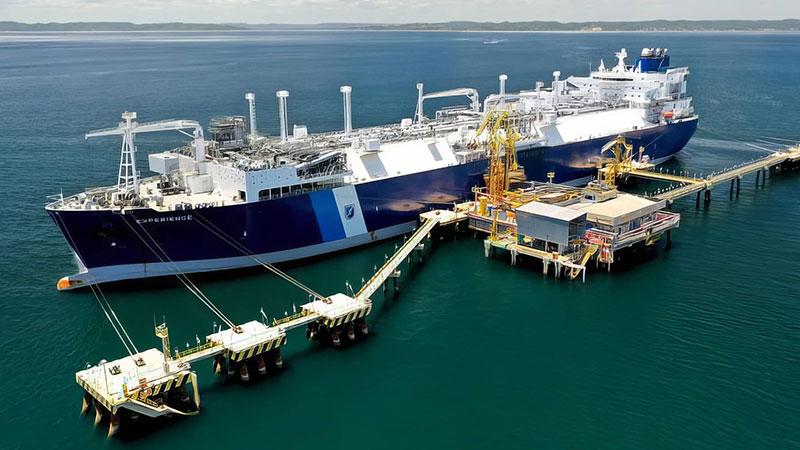
Bangladesh has two floating LNG terminals at Maheshkhali in Cox’s Bazar. US-based Excelerate Energy operates a terminal with a daily capacity of 600 million cubic feet, while local company Summit operates another with a capacity of 500 million cubic feet.
Excelerate’s terminal was shut down following a fire on July 21, triggering a severe gas shortage that lasted for 25 days. Supplies improved after Summit’s terminal resumed full operations and Excelerate’s facility partially restarted last Saturday.
However, gas supplies from Excelerate’s terminal have fallen over the past two days due to the absence of new cargoes, and officials fear supplies could stop altogether if another vessel does not arrive soon.
Overall gas supply dropped to 1.64 billion cubic feet per day last Friday before rising to 2.42 billion cubic feet on Saturday night. It fell to 2.40 billion cubic feet on Sunday and further to 2.28 billion cubic feet on Monday. LNG accounted for 660 million cubic feet of Monday’s supply.
The improvement in gas pressure prompted several factories in Narayanganj, Gazipur, Savar and Habiganj to resume production on Sunday, although conditions remain uneven across industrial areas.
Kamrul Hasan, executive director of ACI Ltd, said gas supplies had improved and production was now largely stable.
Mohammad Hatim, president of the Bangladesh Knitwear Manufacturers and Exporters Association (BKMEA), said gas pressure in Narayanganj was satisfactory and supplies had also improved in Narsingdi, although some areas of Gazipur continued to face shortages.
The situation remained difficult at Little Star Spinning Mills in Savar. Its chairman, Khorshed Alam, said the factory normally received gas pressure of 5 PSI during the day and 10 PSI at night, but the required pressure was unavailable on Monday.
Energy expert M Tamim said the purpose of direct procurement was to ensure rapid supplies, particularly during a crisis. Suppliers that fail to deliver on time should not be given extensions, he said, calling for their security deposits to be confiscated and the companies blacklisted.
He also urged the government to secure LNG through urgent tenders, even at higher prices, to ensure uninterrupted gas supplies.