


 Play store


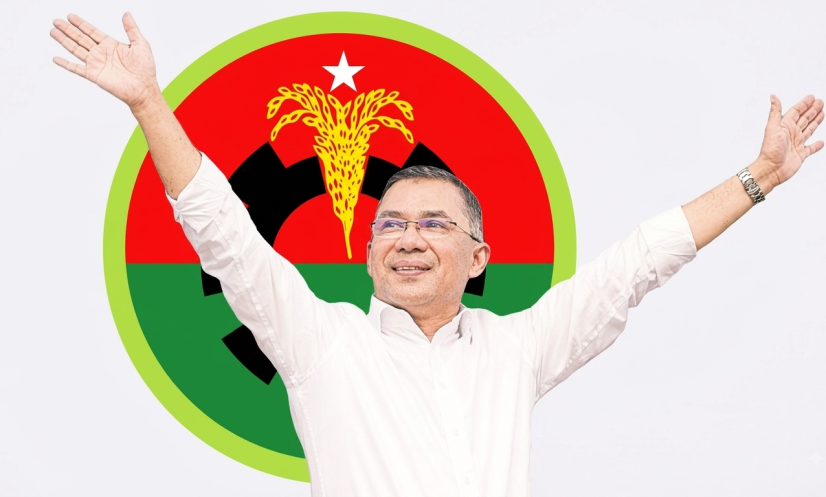
When a new government takes office, public expectations naturally rise. So does the volume of discussion at tea stalls, drawing rooms and roadside cafés. Some say, “This time the country will change.” Others respond, “Governments have come before. What really changed?” Both views contain a measure of truth.
The government led by Prime Minister Tarique Rahman assumed office on 17 February 2026 after the 12 February election, in which the BNP won 212 of the 299 elected seats. It came to power after years of political turbulence, the 2024 mass uprising and a period of interim rule, carrying a substantial electoral mandate. That makes the first six months important, but also difficult to judge in simplistic terms.
Six months is not enough to transform a state. Yet it is long enough to reveal a government’s direction, priorities and governing style. The main question, therefore, is not whether the government has solved Bangladesh’s problems. It clearly has not. The more relevant question is whether it has started moving the country in the right direction. On that measure, the first six months can reasonably be described as a promising beginning, but an unfinished test.
The government has announced and initiated a substantial number of measures. During its first two months, it highlighted around 60 significant steps, while an e-book published by the Prime Minister’s Office after the first 100 days referred to nearly 200 initiatives and projects whose implementation had begun. These have covered social protection, agriculture, health, education, investment, energy, infrastructure, environmental restoration and foreign policy. But the number of initiatives is not, by itself, evidence of good governance.
A hundred projects that remain on paper are worth less than ten that genuinely improve people’s lives. The real test of the government will therefore be implementation.
The government inherited an economy under considerable pressure. Inflation has remained painfully high, while the banking sector, investment climate, employment and public finances all require structural attention.
Inflation eased to 9.16 per cent in June 2026 from 9.42 per cent in May. This is encouraging, but hardly enough to make ordinary households feel comfortable. For a family struggling to buy rice, lentils, fish, vegetables and medicines, a small statistical decline in inflation does not necessarily translate into a meaningful reduction in the cost of living.
The government’s 2026-27 budget sets a growth target of 6.5 per cent and aims to bring inflation down to 7.5 per cent. The targets are ambitious. But the real test of the budget will not be in Parliament or in official documents. It will be in the marketplace. If an economist says inflation is falling while a rickshaw puller says his daily expenses are still rising, neither necessarily has to be wrong.
Statistics describe one dimension of reality; people’s lived experience describes another. The government must therefore intensify its efforts to address market manipulation, excessive margins, extortion, supply-chain weaknesses and artificial shortages.
There are, however, encouraging signs.
Remittances reached $35.56 billion in 2025-26, up 17.3 per cent from the previous year. Foreign-exchange reserves have also strengthened.
Bangladesh Bank’s decision on 30 July to reduce the repo rate from 10 per cent to 9.5 per cent was aimed at encouraging private-sector credit and investment.
In simple terms, the economy may still have a fever, but the thermometer is showing a slightly lower temperature.
The recovery of allegedly laundered or illicitly acquired assets is another area where the government has shown determination. Efforts to trace and recover money transferred abroad, including through international cooperation, are important. But such actions must always be grounded in due process. Asset seizure alone cannot establish guilt.
The state must ensure transparency, evidence and judicial scrutiny. If the economy is the government’s biggest test, energy is arguably its most immediate one. Industry cannot operate without gas. Production cannot continue without electricity. And without production, employment and household incomes suffer.
The government has taken steps to expand LNG capacity, improve gas supplies and encourage renewable energy. Plans for additional LNG infrastructure, solar panels on government buildings and domestic production of solar inverters and lithium batteries point towards a broader energy transition. Yet the continuing gas and electricity shortages demonstrate that the problem is far from solved.
The recent crisis in Chattogram, where gas supplies were sharply reduced and hundreds of thousands of residential and industrial consumers were affected, is a reminder that energy insecurity can quickly become an economic crisis.
Bangladesh needs a transparent, long-term energy roadmap. How much gas will come from domestic sources? How much LNG will be imported? What share will renewables contribute? How will industry, households and agriculture be prioritised? These questions require clear answers.
The government should also publish information on the performance of existing energy infrastructure. Projects such as terminals, refineries, pipelines and other facilities should be assessed not only by how much money has been spent but by how much economic value they are generating.
Among the government’s social initiatives, the Family Card and Farmer Card programmes deserve particular attention. If properly implemented, such programmes could reduce the role of intermediaries and deliver support directly to vulnerable households and farmers. Subsidised food assistance for millions of low-income families is similarly significant.
However, these programmes carry a serious risk. If beneficiary selection becomes politically influenced, a social protection programme can quickly turn into a political patronage system.
The government should therefore establish a transparent, data-driven system for identifying beneficiaries. Aggregate information should be regularly published while protecting personal privacy: how many families have received cards, how many are women-headed households, how many beneficiaries live below defined poverty thresholds and how many are in each district.
The Farmer Card must also go beyond subsidised fertiliser or seed. Farmers need irrigation, machinery, affordable credit, technology, storage, market access and fair prices. Agriculture policy must address the entire value chain.
The plan to excavate and re-excavate thousands of kilometres of canals and plant hundreds of millions of trees is potentially important for both environmental protection and economic resilience. But digging canals is not synonymous with restoring waterways. If canals are occupied again, polluted or blocked by unplanned construction, public money will simply be spent repeatedly on the same problem.
Dhaka’s canals, rivers and wetlands require an integrated approach involving eviction of illegal occupiers, waste management, drainage improvement and proper urban planning.
Tree planting requires similar scrutiny. Planting a sapling for a photograph is easy. Ensuring that it survives for three years is the real achievement.
For a country as vulnerable to climate change as Bangladesh, environmental policy cannot be treated as an optional green agenda. It is directly connected to food security, public health, urban liveability and economic productivity.
The government’s performance in health and education will ultimately determine how ordinary citizens experience the state.
The government has discussed expanding healthcare facilities, recruiting health workers and doctors and improving district and upazila-level services. These are necessary steps. But the health system needs deeper reform.
A poor patient should not have to borrow or sell land to receive treatment. Government hospitals should have medicines. Doctors should be available during working hours. Emergency services should function at upazila level. Patients should not have to negotiate with brokers simply to see a doctor.
Education faces a similar challenge. Digital curricula and new technologies can help, but they cannot replace good teachers, functioning schools and regular classes.
The real measure of educational reform will be whether the child of a poor farmer can receive an education comparable in quality to that available to the child of a senior government official.
Governments can change overnight. Administrative culture does not. Bangladesh has many capable and dedicated public servants, but the bureaucracy has long faced allegations involving political influence, transfers, postings, lobbying and informal networks.
The government’s decision to review ministerial and parliamentary performance, project implementation, allegations of corruption and administrative interference is therefore welcome. But one danger must be avoided.
Replacing one system of political favouritism with another would not constitute reform. The test is whether competent people are placed in competent positions regardless of political affiliation. If the government succeeds in creating that culture, it will have achieved something far more valuable than merely changing personnel.
Few issues generate greater public expectations than the fight against corruption. The government has taken steps involving financial-sector discipline, asset recovery and anti-corruption measures. Yet the long-term success of the campaign will depend on institutions rather than headlines.
Someone whose assets have been frozen is not automatically guilty. Equally, a powerful individual who escapes scrutiny simply because of political connections destroys public confidence. Anti-corruption efforts must therefore be evidence-based, politically neutral and subject to judicial oversight.
Transparency International Bangladesh’s concerns about the absence of a sufficiently clear institutional roadmap for accountability and anti-corruption reform should be treated as constructive criticism rather than hostility. A government confident in its reform agenda should welcome scrutiny. Foreign policy needs realism, not emotion Bangladesh’s foreign policy faces a complex balancing act.
India is an important neighbour. China is a major economic power. The United States remains a crucial trading and strategic partner. The Middle East is vital for Bangladesh’s labour market and energy security.
The answer is neither dependency nor confrontation. Bangladesh should pursue relations with all major powers on the basis of national interest, sovereignty and mutual benefit. Friendship should not mean surrendering national interests, while disagreement should not automatically become confrontation.
The simplest formula is perhaps this: Bangladesh can have many friends without becoming dependent on any one of them. A survey conducted in June among 3,000 adults reportedly found that 75.3 per cent supported Prime Minister Tarique Rahman’s performance, while 17.5 per cent expressed dissatisfaction and 7.2 per cent offered no opinion.
Such figures are undoubtedly encouraging for the government. But public approval after six months should not be mistaken for a final verdict.
New governments initially enjoy what might be called an “expectation dividend”. People give them the benefit of the doubt. After a year, they expect results. After two years, they begin asking for an account. At the end of the term, they deliver the final judgement.
That is why the government should treat today’s support as a responsibility, not a certificate of success.
A chance to do things differently
The previous Awami League government delivered major infrastructure projects, including the Padma Bridge, metro rail and Karnaphuli Tunnel. These changed aspects of Bangladesh’s physical connectivity. At the same time, serious questions emerged over project costs and delays, corruption allegations, financial-sector weaknesses, money laundering and institutional accountability.
The interim government played an important role in institutional reform and creating conditions for an election, but it did not possess the same long-term political mandate as an elected government.
The Tarique Rahman government now has an opportunity to learn from both periods.
It should not dismantle every project simply because its predecessor initiated it. Nor should it continue every project simply for the sake of continuity.
Good projects should continue. Bad projects should be reviewed or cancelled. Public institutions should be strengthened. Competence should matter more than political loyalty.
Development should belong to the country, not to any particular party. So, how should we judge the first six months?
The fairest description is this the government has made a hopeful start, but the difficult part is still ahead.
There are positive signs in social protection, agriculture, environmental restoration, project management, economic recovery and administrative oversight. Public opinion also suggests that people remain willing to give the government time.
However citizens are asking very simple questions-
Will food prices come down?
Will electricity remain available?
Will gas supplies be reliable?
Will young people find jobs?
Will patients receive treatment in public hospitals?
Will farmers receive fair prices?
Will citizens need political connections to obtain government services?
Will people have to pay bribes to get routine work done?
These questions are more important than the number of initiatives announced.
Bangladesh’s people are no longer satisfied with grand promises. They want small but dependable improvements in everyday life: a cheaper market basket, reliable electricity, functioning hospitals, fair agricultural prices, employment for young people and dignity in government offices.
A state is ultimately judged not by the grandeur of its projects but by how an ordinary citizen feels when dealing with it. If that citizen feels safer, respected, better served and more confident about tomorrow, then the government will have achieved something profound. Six months, therefore, is not the end of the story. It is the beginning of the real test. And perhaps that is where the greatest hope lies.
The views expressed in this article are the author’s own and do not necessarily reflect Sarabangla English Edition’s editorial stance.