


 Play store

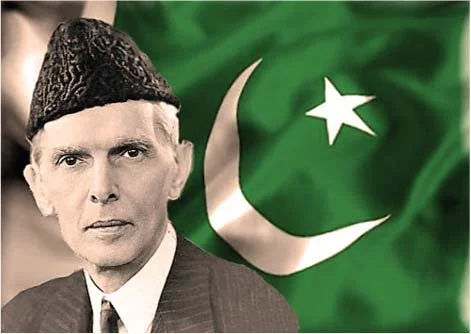
Pakistan has decided to posthumously confer its highest civilian honour, the Nishan-i-Quaid-i-Azam, on two doctors who treated the country’s founder, Muhammad Ali Jinnah, and kept his serious illness confidential.
Dr Jal Ratanji Patel and radiologist Dr Jal Debu have been named for the award in Pakistan’s 2026 civilian honours list under the category of “Services to Pakistan.”
They are set to receive the honour at a ceremony on Pakistan Day, March 23, 2027.
According to Larry Collins and Dominique Lapierre’s 1975 book Freedom at Midnight, Patel and Debu examined Jinnah’s X-ray in Bombay in June 1946 and discovered that tuberculosis had severely affected his lungs. They reportedly believed he might have only one or two years to live.
At Jinnah’s request, the doctors kept his condition secret. His illness remained largely unknown until the early 1970s, when Patel shared confidential medical records with the authors of Freedom at Midnight. The records reportedly revealed the extent of Jinnah’s tuberculosis.
Historians have said Jinnah’s health had been deteriorating for years. He suffered from respiratory problems, including bronchitis and pneumonia, while continuing his political activities despite doctors’ advice to rest.
Jinnah reportedly feared that disclosure of his condition could weaken his political position and allow his opponents to wait for his death. He therefore continued working while receiving treatment in secret.
Jinnah’s health deteriorated further after Pakistan was established in August 1947. He died of pulmonary tuberculosis on September 11, 1948, at the age of 71.
The decision to honour his doctors has renewed interest in the secrecy surrounding Jinnah’s illness and its possible impact on the history of the partition of India. Freedom at Midnight suggested that if British and Indian leaders had known the severity of Jinnah’s illness before 1947, the course of partition might have been different. Historians, however, do not regard that claim as an established fact.
Dr Patel had previously received India’s Padma Bhushan, the country’s third-highest civilian award, in 1962.