


 Play store

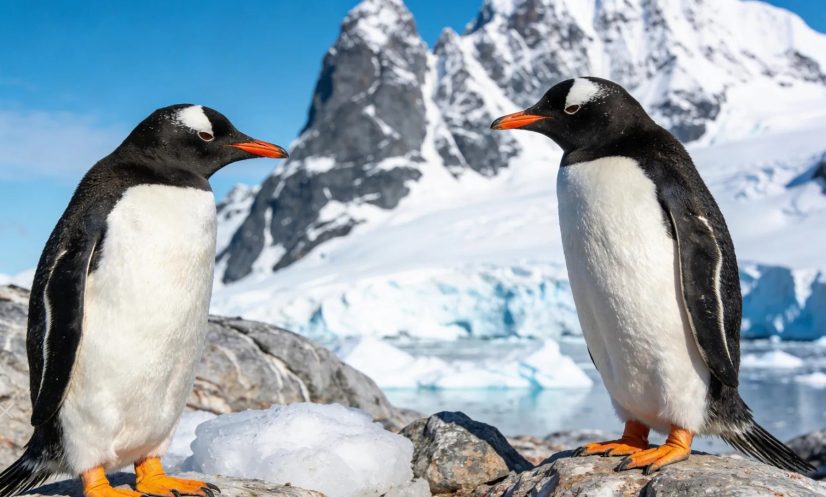
An international team of scientists has identified a previously unrecognised species of gentoo penguin on the remote Kerguelen Islands, making it the first new penguin species formally named in more than 100 years.
The findings, published in Communications Biology, show that gentoo penguins previously considered a single species actually comprise four genetically distinct species.
The newly recognised southeastern gentoo penguin, Pygoscelis kerguelensis, lives on the Kerguelen Islands, also known as the Desolation Islands, nearly 2,000 miles from the nearest permanently inhabited landmass.
The species closely resembles other gentoo penguins, with a black back and white underside, and differences in appearance and vocalisations are relatively subtle. Genetic analysis, however, revealed clear distinctions, leading researchers to classify it as a separate species.
The study also found that three gentoo populations previously regarded as subspecies should instead be recognised as full species. They are the southeastern gentoo, the southern gentoo (Pygoscelis ellsworthi), and two other populations separated by their genetic and geographic characteristics.
Researchers analysed whole-genome sequences from 64 penguins collected from 10 breeding colonies, covering nearly the entire geographic range of gentoo penguins. They also examined physical characteristics, vocalisations, breeding patterns, diet and feeding behaviour.
“There’s probably no species of penguin where the taxonomy has been more debated than the gentoo penguin,” said Rauri Bowie, a professor of integrative biology at the University of California, Berkeley and a co-senior author of the study.
For more than a century, scientists have disagreed over whether different gentoo populations should be classified as separate species or subspecies.
Juliana Vianna, a senior author and professor at Andrés Bello National University in Santiago, Chile, said the new classification was particularly important for conservation efforts in the sub-Antarctic region.
The researchers warned that three of the newly defined gentoo species could face conservation challenges as climate change alters the Antarctic and sub-Antarctic ecosystems.
The southern gentoo, which lives in Antarctica, may be less affected by warming and could potentially expand its range. The newly recognised southeastern gentoo and another sub-Antarctic species, however, may be more vulnerable.
The researchers said the findings could help conservation authorities in the several countries that govern sub-Antarctic islands better protect the newly recognised species.
The study also sheds light on how penguins spread across the Southern Hemisphere. Previous research by Bowie and Vianna suggested that penguins originated near Australia and New Zealand about 22 million years ago before spreading across the Southern Ocean.
The development of the Antarctic Circumpolar Current about 12 million years ago helped penguin lineages reach remote islands and archipelagos across the sub-Antarctic, as well as parts of Africa and South America.
Gentoo penguins have also benefited from a relatively flexible diet. Unlike species that depend heavily on particular prey, gentoos can eat a wide range of marine animals.
That adaptability may become increasingly important as climate change affects food supplies, including krill. While some penguin species with narrower diets, such as emperor and Adélie penguins, are declining in certain areas, gentoo populations on the Antarctic Peninsula have increased.