


 Play store

For people trying to lose weight, the usual advice is familiar: eat smaller portions, count calories and resist the temptation to snack. But new research suggests there may be another approach — changing what is on the plate rather than simply reducing how much is on it.
A low-fat vegan diet may help people consume fewer calories while still eating satisfying amounts of food, according to a new study published in JAMA Network Open. Researchers found that participants following the diet reduced the energy density of their food by about 30% and lost weight without being told to restrict calories.
The findings come from a 16-week randomized clinical trial involving adults who were overweight. Participants were assigned either to an ad libitum low-fat vegan diet, based mainly on fruits, vegetables, whole grains and legumes, or to a control group that continued eating their usual diet.
Importantly, neither group was given a calorie target or instructed to eat smaller portions.
The secret may be in energy density
Energy density refers to the number of calories contained in a gram of food. Foods such as meat, dairy products, eggs, oils and other calorie-dense items can provide a large amount of energy in relatively small portions.
By contrast, many fruits and vegetables contain substantial amounts of water and fibre. This means people can eat a relatively large volume of these foods without consuming as many calories.
In the study, the amount of food participants ate by weight did not change significantly. Yet those following the vegan diet consumed about 357 fewer calories per day on average.
At the same time, the energy density of their diets fell by roughly 30%, while it remained largely unchanged in the control group.
Researchers also found that people who experienced larger reductions in dietary energy density tended to lose more weight. The association remained even after accounting for changes in calorie intake.
More food on the plate, fewer calories
The findings highlight a simple idea: a full plate does not necessarily mean a high-calorie meal.
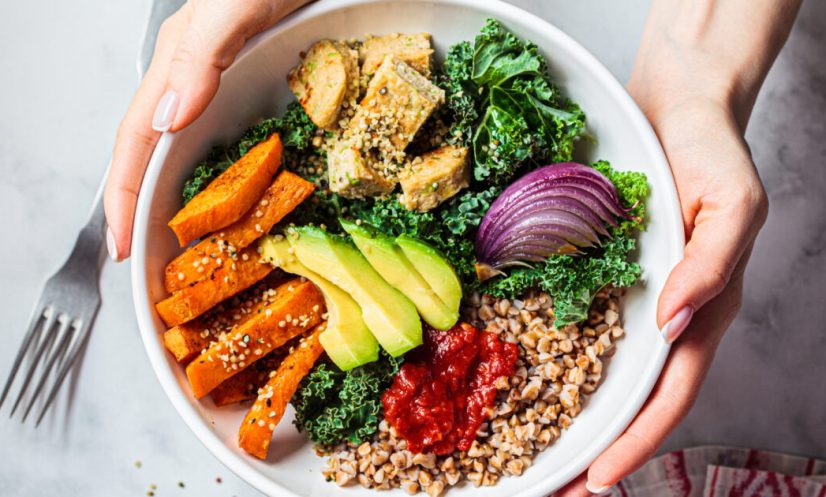
Replacing calorie-dense animal products with vegetables, legumes, whole grains and other minimally processed plant foods can increase the physical volume of meals while reducing the calories consumed.
For example, a meal built around vegetables, beans and whole grains may take up considerably more space on the plate than a meal dominated by high-fat animal foods, while providing fewer calories per gram.
That difference could make weight management feel less restrictive.
“This isn’t about willpower or smaller portions,” said Hana Kahleova, MD, PhD, director of clinical research at the Physicians Committee for Responsible Medicine and lead author of the study. Instead, she said, the focus is on choosing foods that naturally contain fewer calories in every bite.
Why fullness matters
Traditional weight-loss diets often rely on restricting calories or reducing portion sizes. While such approaches can work, they may leave some people feeling hungry or deprived.
Lower-energy-density foods offer a different possibility. Because they tend to contain more water and fibre, they can provide greater physical volume and help people feel satisfied.
The study therefore suggests that weight management may not always require eating dramatically less food. For some people, it may be easier to eat differently rather than simply eat less.
What this could mean for everyday meals
The findings do not mean that every vegan food is automatically low in calories. Plant-based diets can also include calorie-dense foods such as oils, nuts, seeds and highly processed vegan products.
Instead, the research points toward emphasizing foods that are naturally rich in water and fibre.
A practical plate might therefore include plenty of vegetables, beans or lentils, fruit and whole grains, while limiting foods that pack a large number of calories into small portions.
For people considering a vegan diet, nutritional balance is also important. A well-planned diet should provide adequate protein, vitamins, minerals and other essential nutrients.
Ultimately, the research offers a potentially less restrictive perspective on weight management. Rather than constantly asking, “How much less should I eat?”, people may benefit from asking, “Can I make my meals more filling without making them more calorie-dense?”
For many, that small change in thinking could make healthy eating feel more satisfying — and potentially more sustainable over the long term.