


 Play store

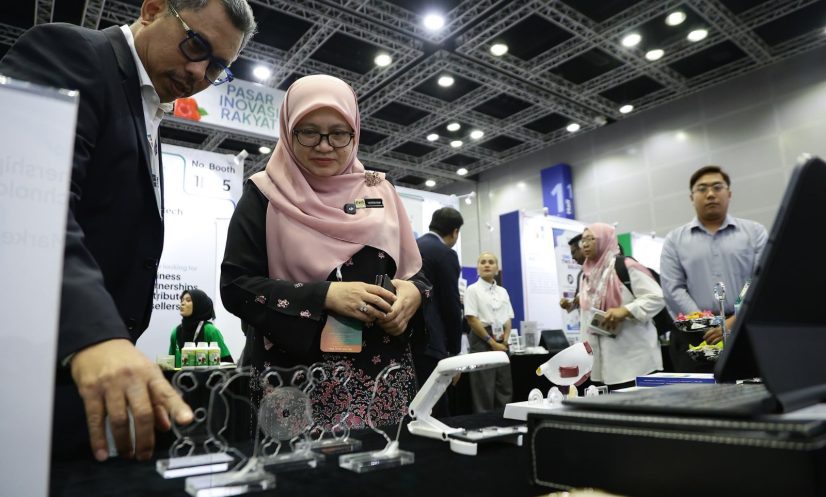
Ahmadul Kobir, Kuala Lumpur: Malaysia’s three-day National Innovation and Commercialisation Expo (NICE) 2026 has opened in Kuala Lumpur, bringing together innovators, businesses, investors and policymakers to accelerate the transformation of research and new technologies into market-ready products and services.
Held at the Kuala Lumpur Convention Centre under the theme “Mission to Market, Malaysia to the World,” the expo focuses on strengthening the link between research and industry while creating new opportunities for technology adoption, investment and international market expansion.
The event seeks to move Malaysian innovations beyond laboratories and research institutions and into practical applications that can generate economic value, create jobs and strengthen the country’s competitiveness in global markets.
Norsham Abdul Latip, Deputy Secretary-General (Technology Development) of the Ministry of Science, Technology and Innovation (MOSTI), attended the opening ceremony and delivered welcoming remarks on behalf of MOSTI Secretary-General Dato’ Ts. Dr Nagulendran Kangayatkarasu.
In her address, Norsham said the success of NICE 2026 should not be judged simply by the number of agreements or memoranda signed during the event.
Instead, she said, the real measure of success would be whether partnerships forged through the expo lead to tangible projects, wider adoption of new technologies and sustainable economic opportunities.
Her remarks underscored a key challenge facing innovation-driven economies: ensuring that research outcomes do not remain confined to laboratories or academic publications but are successfully converted into products, services and businesses that can reach consumers.
Norsham stressed that bringing research and innovation outcomes to the market is essential to generating tangible value for the national economy.
Achieving that objective, she said, requires stronger collaboration among innovators, industry players, investors and government agencies.
The expo features a broad programme over three days, including conferences, interactive innovation exhibitions, business-matching sessions and award presentations.
Commercialisation Year (MCY) Awards and MySTI Awards, which recognise innovation and commercialisation achievements while creating opportunities for Malaysian technologies to secure investment, partnerships and access to new markets.
Following the opening ceremony, Norsham toured exhibition booths featuring technologies and products developed by Malaysian innovators.
She viewed innovations at different stages of development and learned about products with potential for commercialisation, technology adoption and international expansion.
The range of exhibits reflects Malaysia’s efforts to build a stronger innovation ecosystem capable of connecting research institutions with industry and investors.
For innovators, such platforms can provide access to potential commercial partners, financing and technical expertise. For businesses, they offer opportunities to identify new technologies that can improve productivity or create new products and services.
The organisers describe NICE 2026 as more than a conventional exhibition. It is designed as a strategic platform for strengthening Malaysia’s innovation and commercialisation ecosystem by connecting ideas with investment and markets.
The expo’s broader vision is captured in the phrase “From Ideas to Impact, From Innovation to Market.”

That approach places commercialisation at the centre of the innovation process. Rather than treating research and invention as the final goal, it emphasises the importance of developing technologies that can be adopted, scaled and used to generate measurable economic and social benefits.
The focus on international markets is also significant as Malaysia seeks to strengthen its position in the global technology and innovation landscape.
Successful commercialisation can help Malaysian companies expand beyond the domestic market, attract international investment and build partnerships with global technology firms.
At the same time, stronger links between universities, research institutions and industry can help ensure that research priorities are aligned with real-world economic and social needs.
NICE 2026 therefore provides a meeting point for several parts of Malaysia’s innovation ecosystem. Researchers and inventors can showcase their work, businesses can explore technology solutions, investors can identify commercial opportunities, and policymakers can assess the conditions needed to support innovation-led growth.
The emphasis on moving from the laboratory to the market also reflects a wider global shift in science and technology policy, where governments increasingly focus on converting research investment into economic and societal outcomes.
For Malaysia, the challenge is not simply to generate more innovations but to build the financing, business networks, intellectual property systems, skills and market access needed to scale them.
NICE 2026 is intended to contribute to that process by creating opportunities for direct engagement among those involved in the innovation-to-market journey.
As the three-day event continues, conferences and business-matching sessions are expected to facilitate new connections between technology developers and potential commercial partners, while the exhibitions will provide visitors with a closer look at emerging Malaysian technologies.
The organisers hope these interactions will translate into collaborations that continue beyond the expo itself.
Ultimately, the success of NICE 2026 will depend on what happens after the exhibition closes: whether promising technologies secure investment, whether partnerships become operational projects, and whether Malaysian innovations reach customers at home and abroad.
With its emphasis on commercialisation and global market access, the expo aims to help Malaysia move beyond simply producing innovative ideas to building an economy capable of turning those ideas into lasting economic impact.