Play store

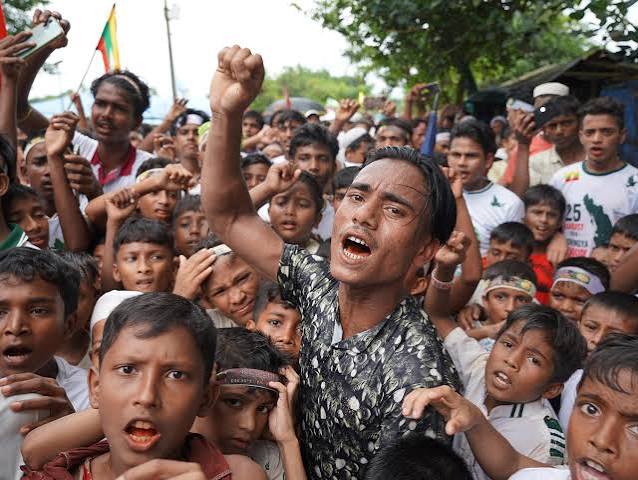
The human rights situation in Myanmar has “plummeted to a new low”, the United Nations said, warning of worsening abuses against civilians and the Rohingya minority, as well as the devastating consequences of illicit economies, including illegal rare-earth mining.
In a report published Tuesday, the UN Human Rights Office said the Myanmar military’s pursuit of control and legitimacy since seizing power in a 2021 coup had deepened the suffering of civilians across the country.
The military has used tactics including airstrikes, arson, forced displacement and denial of humanitarian assistance as it battles ethnic armed groups and militias for control of the resource-rich country, the report said.
An estimated 8,075 civilians, including 1,074 children, have been killed since the coup, with at least 1,241 deaths recorded over the past year alone.
The UN cautioned that the actual toll could be significantly higher. Open-source information suggests that as many as 15,731 civilians may have been killed since the coup, including about 3,102 during the past year.
The prolonged conflict has also driven the number of internally displaced people to 3.6 million. Around 12.4 million people are facing acute hunger, while some 400,000 young children and mothers are suffering from acute malnutrition, according to the report.
In western Rakhine State, widespread and systematic violations against the mostly Muslim Rohingya minority have continued, with both the military and the Arakan Army accused of abuses.
The renewed violence comes nine years after a military crackdown forced around 700,000 Rohingya to flee to Bangladesh.
The UN report accused the Arakan Army of arbitrary arrests, torture, sexual and gender-based violence, forced labour and recruitment, as well as the destruction of villages and religious sites.
Rohingya attempting to escape forced recruitment have reportedly been detained and subjected to severe ill-treatment. Former detainees described beatings and other forms of torture.
The collapse of the rule of law has also contributed to the expansion of illicit economic activities and transnational criminal networks, the UN said.
Illegal rare-earth mining has expanded significantly in northern Kachin and northeastern Shan states. Satellite imagery identified Kachin State as the country’s main rare-earth mining region, with 302 new mining sites established since 2021—a 149 percent increase.
The environmental consequences have also been severe. Mining runoff has contaminated the environment and affected maternal and reproductive health, with the report citing sharp increases in miscarriages and other pregnancy complications linked to exposure to heavy metals and chemicals.
UN High Commissioner for Human Rights Volker Türk described the findings as deeply troubling.
“This report depicts a picture of suffering, misery, and cruelty on multiple levels and across the country that is heartbreaking,” Türk said.
He urged governments, companies and investors to reconsider their involvement with Myanmar’s state and to examine the consequences of their actions—or inaction.
“I call on all states, companies and investors to undertake serious soul-searching with respect to their actions – or inaction; to ask: is this fair and just for the people of Myanmar?” he said.