Play store

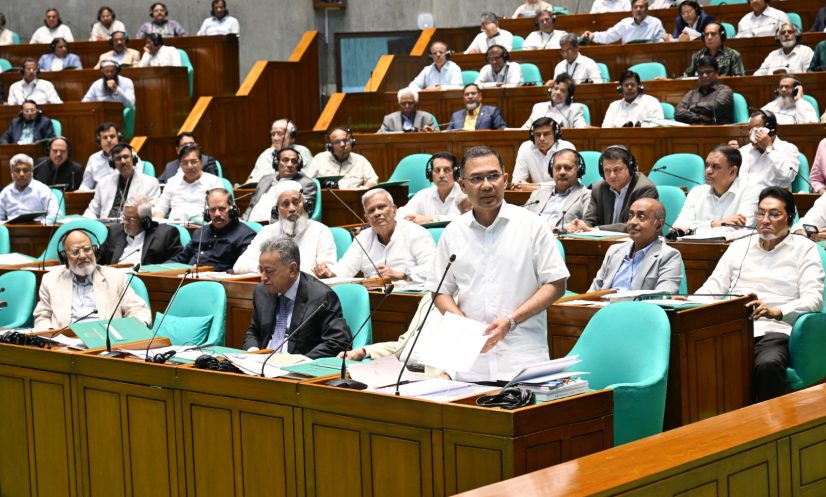
Prime Minister Tarique Rahman on Monday reaffirmed his government’s commitment to implementing the long-awaited Teesta Barrage Master Plan, declaring that the project would be carried out “at any cost” as part of a broader strategy to ensure water security, strengthen agricultural productivity and improve the livelihoods of millions of people in northern Bangladesh.
Speaking during the general discussion on the proposed FY2026-27 national budget in Parliament, the Prime Minister said the government considers integrated water resource management a national priority and is undertaking large-scale investments in rivers, canals, irrigation systems and flood-control infrastructure.
“On the basis of national priority, this government will implement the Teesta Barrage Master Plan at any cost, InshaAllah,” he told the House.
The Prime Minister said water scarcity has remained one of the most pressing challenges for people living in the country’s northern districts, particularly in the Rangpur and Rajshahi regions, where lawmakers have repeatedly raised concerns over the declining flow of the Teesta and Padma rivers.
He said ensuring year-round water availability for agriculture is central to the government’s development agenda, as millions of farmers continue to face irrigation shortages during the dry season despite abundant water during the monsoon.
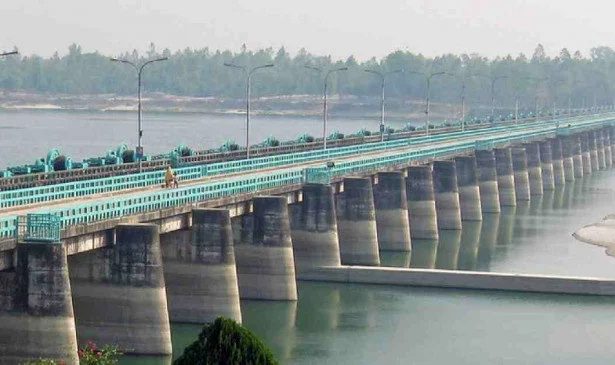
To address the problem, Tarique announced that the government has already initiated work on the proposed Padma Barrage, a major project designed to store excess monsoon water and distribute it during the dry months.
“Through the Padma Barrage, we will preserve surplus water during the monsoon so that it can be supplied to farmers and other users throughout the dry season and the rest of the year,” he said.
The Prime Minister observed that Bangladesh has long suffered from the absence of an integrated approach to river management, water conservation, flood control and inter-river connectivity, resulting in reduced navigability, declining irrigation capacity and inefficient water distribution.
Recalling his visits to different parts of the country, he said he had witnessed situations where vast areas remained submerged during the rainy season while nearby farmland suffered from severe water shortages because there was no effective system to conserve or divert water.
“I have seen places where there is water everywhere during the monsoon, yet farmers just a short distance away cannot irrigate their land because of water shortages,” he said.
As part of a nationwide water management initiative, Tarique said the government has launched an extensive programme to dredge rivers and re-excavate canals to restore natural water flows and improve irrigation and drainage systems.
He announced that the government plans to excavate or re-excavate 20,000 kilometres of canals over the next five years, describing the initiative as one of the country’s largest water infrastructure programmes.
According to the Prime Minister, nearly 900 kilometres of canals have already been excavated or re-excavated during the past three months.
He acknowledged that complaints had emerged from some areas regarding the implementation of the programme.
“We have received complaints from certain areas. We are reviewing those issues and will take further action wherever necessary,” he said, assuring Parliament that the quality of work would be closely monitored.
Highlighting the government’s efforts to strengthen the agriculture sector, Tarique said one of the first major decisions taken after assuming office was the waiver of agricultural loans of up to Tk 10,000, including accrued interest, to provide immediate relief to small farmers.
He said around 1.3 million farmers benefited from the initiative.
The Prime Minister also announced the introduction of a Farmers’ Card, aimed at ensuring direct delivery of government assistance and agricultural services.
Under the programme, about 4.3 million farmers are expected to receive financial support and access to at least ten government services during FY2026-27.
“We promised to stand beside our farmers, and we are fulfilling that commitment,” he said.
The Prime Minister said creating employment opportunities for young people remains one of the government’s highest priorities.
He said the administration is expanding vocational and technical training programmes to develop a more skilled workforce capable of meeting both domestic and international labour market demands.
To increase overseas employment, the government is working to send more skilled workers abroad while strengthening services for expatriate Bangladeshis.
As part of that effort, Tarique announced plans to introduce a Probashi Card, which will allow expatriates to access a range of government services more easily and reduce administrative hassles while living and working overseas.
Turning to the energy sector, the Prime Minister described energy security as essential for both economic development and national security.
He criticised what he called years of corruption, weak planning and policy failures in the sector, alleging that domestic gas exploration had been neglected while excessive dependence was placed on imported fuel and foreign energy companies.
The government, he said, is now pursuing a diversified energy strategy focused on expanding domestic gas exploration, promoting renewable energy and improving energy efficiency to reduce reliance on imports.
“The recent crisis in the Middle East has once again shown how vulnerable import-dependent energy systems can be,” he said.
He added that building a resilient and self-reliant energy sector is crucial to sustaining Bangladesh’s long-term economic growth.
Concluding his speech, Tarique underscored the importance of education, saying an educated, skilled and morally grounded population remains the country’s greatest asset.
He alleged that the education system had been weakened under the previous administration and stressed the need for comprehensive reforms to equip future generations with the knowledge, skills and values needed to compete in a rapidly changing global economy.
The Prime Minister said the government’s broader objective is to build a stronger, more resilient and inclusive Bangladesh through investments in water security, agriculture, infrastructure, education, employment and energy, laying the foundation for sustainable economic growth and improved living standards.