


 Play store

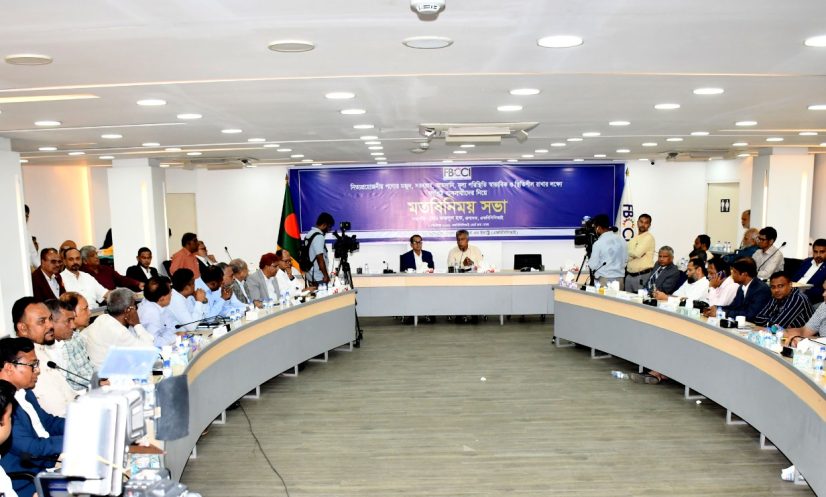
Prices of essential commodities should not rise if supply remains normal, representatives of wholesale and retail traders and major corporate importers said on Tuesday.
However, they warned that maintaining stability in the essential commodities market could become difficult unless the government urgently resolves the fuel crisis, removes obstacles in the supply chain and curbs the influence of intermediaries.
The observations came at a consultation meeting between the Federation of Bangladesh Chambers of Commerce and Industry (FBCCI)** and traders involved in the essential commodities market at the organisation’s Motijheel office.
FBCCI Administrator Md Fazlul Hoque chaired the meeting. In his opening remarks, he sought information from businesses on the current supply, stock, imports and prices of essential commodities.
Wholesale and retail traders said prices of sugar, edible oil, pulses, flour, refined flour and other essential commodities would remain stable if supplies could be maintained in line with demand.
They also called for uninterrupted fuel and energy supplies to production-oriented factories to ensure normal production and prevent disruptions in the supply chain.
Representatives of mill owners said they were trying to maintain the supply and prices of essential commodities in the domestic market despite the ongoing fuel crisis.
They said international prices of raw sugar had increased, but domestic sugar prices had so far remained unchanged.

Ghulam Mawla, general secretary of the Moulvibazar Business Association, said the essential commodities market could not remain stable unless imports and production at mills continued normally.
He called for the government to resolve the fuel crisis and complications related to opening letters of credit (LCs) as quickly as possible.
Saifur Rahman Sujon, general secretary of the Kawran Bazar Raw Materials Wholesale Traders Owners’ Association, urged the authorities to bring roadside vendors and unregistered traders under proper monitoring to help control commodity prices.
Meanwhile, Md Zakir Hossain, general secretary of the Bangladesh Supermarket Owners Association, suggested reducing the number of times goods change hands along the supply chain to help keep prices stable.
Leaders of several traders’ associations called for law enforcement agencies to intervene where necessary to prevent harassment and other obstacles at different stages of the supply chain.
They also demanded stronger monitoring of commodity prices at wholesale and retail markets as well as at mill gates.
Md Abul Kalam Azad, organising secretary of the Consumers Association of Bangladesh (CAB), called for greater responsibility from both the government and the private sector to ensure uninterrupted supply and curb the activities of intermediaries.
Mill owners’ representatives said shortages of gas and electricity in recent weeks had disrupted production. They also raised concerns over complications related to LCs and urged the government to take immediate steps to resolve the problems.
A representative of the Trading Corporation of Bangladesh (TCB) said the organisation was selling essential commodities at subsidised prices to around 10 million families through the Family Card programme.
A representative of the Directorate General of Food said the government was also distributing rice at subsidised prices to low-income people under the Food Friendly Programme.
Officials said the programmes were having a positive impact on efforts to contain the prices of essential commodities.
Business representatives, however, said the TCB should strengthen its capacity to import commodities directly or source them from alternative suppliers rather than relying primarily on domestic companies to procure goods for subsidised sales.
In his closing remarks, FBCCI Administrator Md Fazlul Hoque said the valuable suggestions and recommendations made by business leaders at the meeting would be documented and presented to policymakers.
He also urged businesses at all levels to cooperate in ensuring that the government’s newly announced pay scale did not lead to an unjustified increase in the prices of essential commodities.
FBCCI Secretary General Md Alamgir, leaders of various chambers and trade associations, representatives of corporate companies and officials from the Ministries of Commerce, Industries and Food, TCB, the Bangladesh Trade and Tariff Commission, Bangladesh Competition Commission, Directorate of National Consumer Rights Protection, CAB and the Bangladesh Food Safety Authority, among others, attended the meeting.