


 Play store

The Election Commission (EC) has issued separate but largely similar codes of conduct for elections to union parishads, municipalities, city corporations, upazila parishads and district councils.
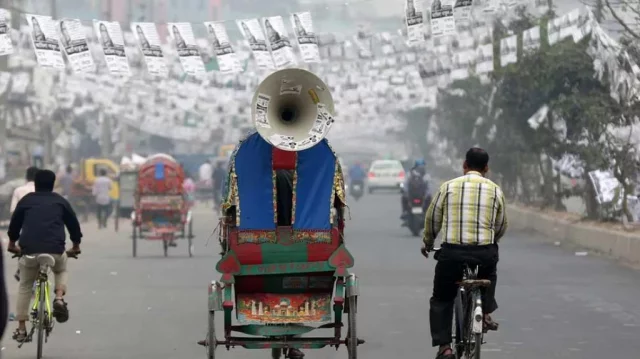
Under the new rules, posters have been banned for election campaigns, while candidates will be allowed to use banners, leaflets, festoons and a limited number of billboards. The use of loudspeakers and campaign vehicles has also been restricted to specific hours.
The separate gazettes were published on Monday, signed by EC Secretary Akhtar Ahmed.
The elections will be held using non-party symbols after more than a decade of party-based local government polls. The EC has introduced new codes of conduct for all five tiers of local government, replacing the rules issued in 2016.
Posters Banned, Billboard Use Restricted
The new rules prohibit the use of posters in election campaigns. Candidates may use banners, leaflets, festoons and billboards, subject to specified size and usage limits. Banners may not exceed 10 feet by 4 feet; leaflets and handbills must be A4 size—8.27 inches by 11.69 inches, festoons may not exceed 18 inches by 24 inches, and the campaign portion of a billboard may not exceed 16 feet by 9 feet.
In city corporation and union parishad elections, candidates may use one billboard per ward.
For upazila parishad elections, one billboard may be used per union or municipal ward, with a maximum of 20 billboards across the entire electoral area.
For district council elections, one billboard may be used in each police station or upazila area.
Campaign materials must be black and white and carry the date of printing. Festoons and handbills cannot be covered with polythene or made using PVC.
The length, width and height of election symbols may not exceed six feet. The use of live animals in campaigns is also prohibited.
Loudspeakers, Campaign Vehicles and Social Media
Loudspeakers or sound-amplifying devices may be used from noon until sunset, with no more than one microphone allowed at a time.
Campaign caravans and other mobile vehicles may also be used during the same period. However, loudspeakers will not be permitted in district council elections.
Candidates may campaign through social media, but related expenses must be included in their election expenditure. The rules also prohibit the use of artificial intelligence (AI) to spread false information, manipulated images or misleading content.
Restrictions on Collecting NID and Mobile Numbers
The code prohibits candidates and their supporters from collecting voters’ personal National Identity Card (NID) numbers or those of their family members for the purpose of influencing them to vote for or against a candidate.
Collecting voters’ mobile phone numbers for mobile financial service (MFS) transactions is also prohibited.
The EC had earlier taken precautionary measures following allegations of collecting voters’ NID and mobile financial service numbers during the 13th parliamentary election. Such practices have now been explicitly prohibited under the local government election rules.
Top Officials Barred from Campaigning
The new code prohibits “very important persons” from campaigning for candidates in local government elections.
The list includes the prime minister, speaker, deputy speaker, ministers, chief whip, opposition leader, deputy leader of the House, deputy opposition leader, state ministers, whips, deputy ministers or persons of equivalent status, lawmakers and city mayors. Acting mayors and administrators are also covered by the restriction.
Except for candidates themselves, chairmen, mayors, administrators and other officials serving in local government bodies will not be allowed to participate in election campaigns.
Fines, Jail for Violations
The new rules provide for up to six months’ imprisonment and fines for violations.
For violations of the union parishad election code, the existing provision of up to six months’ imprisonment and a fine of Tk10,000 has been retained.
Rules for Five Types of Elections
Union Parishad: One billboard may be used per ward. Social media campaign expenses must be included in election expenditure. Loudspeakers may be used from noon until sunset.
Upazila Parishad: One billboard may be used per union or municipal ward, with a maximum of 20 across the electoral area. The number of campaign offices is also restricted—one central office, one in each union and no more than one for every three municipal wards.
Municipality: One billboard may be used per ward. Loudspeakers, caravans and mobile campaign vehicles may operate from noon until sunset.
District Council: One billboard may be used per police station or upazila. Loudspeakers will not be allowed.
City Corporation: One billboard may be used per ward. Posters are prohibited, while the size of banners, leaflets, festoons and billboards has been specified.
How the New Code Was Finalised
The EC published draft codes of conduct in June for elections to the five tiers of local government and invited opinions from registered political parties and citizens.
The commission later reviewed the feedback and finalised the rules, which were issued after vetting by the Law Ministry.
Election Commissioner Abdur Rahmanel Masud said the local government election code had been prepared in line with the laws and rules governing parliamentary elections.
The commission plans to begin holding local government elections toward the end of this year, with preparations currently underway for the first phase of union parishad elections.
The EC is preparing to hold elections in phases for various posts in 4,581 union parishads, 61 district councils, 495 upazila parishads, 330 municipalities and 13 city corporations across the country.