Play store

Bangladesh’s Constitution is set to be amended to establish a balance of power between the president and the prime minister, with the issue receiving priority in discussions of the parliamentary special committee on constitutional amendments.
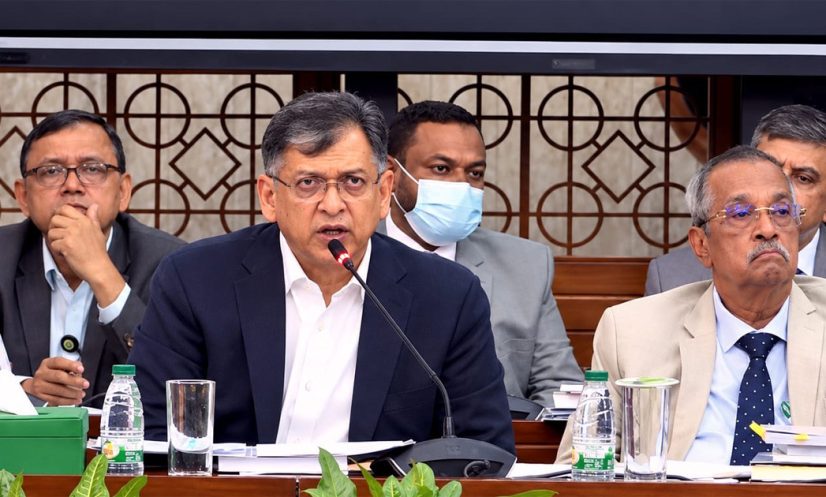
The committee discussed the distribution of executive powers, judicial independence, the caretaker government system and greater freedom for lawmakers to express their views in parliament at a meeting on Saturday.
Home Minister Salahuddin Ahmed, chairman of the special committee, briefed journalists after the meeting, saying that discussions were ongoing on several fundamental issues concerning the country’s governance structure and accountability.
One of the key issues under consideration is how to establish a more balanced relationship between the president and the prime minister.
The discussions also focused on ensuring full independence for the judiciary and making parliamentary standing committees more effective and empowered.
The committee also discussed proposals on how a potential upper house of parliament could play a role in forming a caretaker government.
However, Salahuddin said no final decision had been reached on the structure or size of the caretaker government.
He urged opposition parties to participate in the committee’s deliberations, saying their proposals could be considered through formal discussions.
He added that the committee remained open to incorporating acceptable suggestions from different political parties.
The proposed reforms are part of broader efforts to implement the July National Charter, which contains recommendations for changes to the country’s constitutional and governance systems.
Earlier, the committee said it aimed to complete consultations with stakeholders by December and submit its recommendations to parliament.
The Ministry of Law, Justice and Parliamentary Affairs is expected to prepare a constitutional amendment bill based on the committee’s report.
The bill may be introduced during parliament’s first session in January 2027.
The proposed changes are intended to reshape the distribution of authority among state institutions.
However, the specific constitutional provisions to be amended and the final scope of the changes will depend on the committee’s recommendations and the subsequent legislative process.