


 Play store

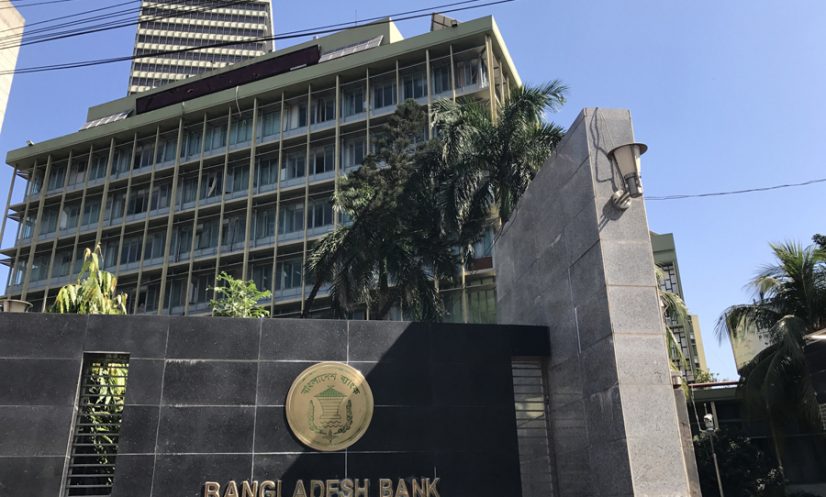
Bangladesh Bank (BB) has issued comprehensive guidelines for scheduled banks to formulate or update their human resource management policies, aiming to strengthen good governance, ensure institutional stability and protect depositors’ interests.
In a circular issued on Monday, the central bank instructed the managing directors and chief executive officers of all scheduled banks operating in Bangladesh to take necessary measures in line with the guidelines.
Under the new rules, banks must formulate policies covering recruitment and employment of permanent and temporary employees, probation and confirmation, training and capacity development, salaries and allowances, employee loans and advances, performance appraisal, seniority, promotion and demotion, posting and transfer, and succession planning for top executives and C-suite officials.
The policies must also address termination, resignation, retirement and reappointment, leave and absence, code of conduct, disciplinary matters, conflicts of interest, confidentiality, whistleblower protection, and restrictions on employees engaging in private business or other professions.
Banks will also have to establish procedures for handling employee complaints and grievances, disciplinary proceedings, appeals and reviews related to misconduct or offences. Policies must ensure workplace diversity and inclusion and provide measures to prevent harassment.
The newly formulated or updated HR policies incorporating these provisions must be approved by the respective bank’s board of directors by March 31, 2027.
The central bank has also issued immediate instructions on employee recruitment and confirmation to promote discipline, transparency and public confidence in the banking sector.
For entry-level positions that do not require prior experience, banks must publish recruitment notices on their websites or job portals and in at least two national dailies to ensure transparency and equal opportunity.
Such positions include management trainee officer, senior officer, probationary officer or equivalent posts, as well as trainee assistant officer, junior officer, trainee cash officer, junior cash officer, cash officer and equivalent positions.
Recruitment for these posts must follow an objective and competitive process involving written and oral examinations, whether conducted physically or online.
For recruitment to higher-level positions from other institutions, banks must also follow a competitive process, including at least an oral examination.
BB has instructed banks to verify the highest educational qualification certificates of newly recruited employees within one year of their joining. For employees recruited before the circular was issued, the verification must be completed by March 31, 2027.
For higher-level recruits from other institutions, separate verification will not be required if their previous employers certify that the educational certificates have already been verified, subject to the conditions set out in the circular.
Banks must preserve verified educational and professional qualification certificates in employees’ personal records, particularly when such qualifications are considered for promotions or financial and non-financial benefits.
Educational certificates of contractual employees, excluding consultants and advisers, must also be verified according to the prescribed procedures.
If an employee’s educational certificate is later found to be forged, the bank must take appropriate administrative action and record the information in its Corporate Memory Management System (CMMS), in line with an earlier BB directive.
The circular was issued under the authority granted to Bangladesh Bank under Section 45 of the Bank-Company Act, 1991.