


 Play store

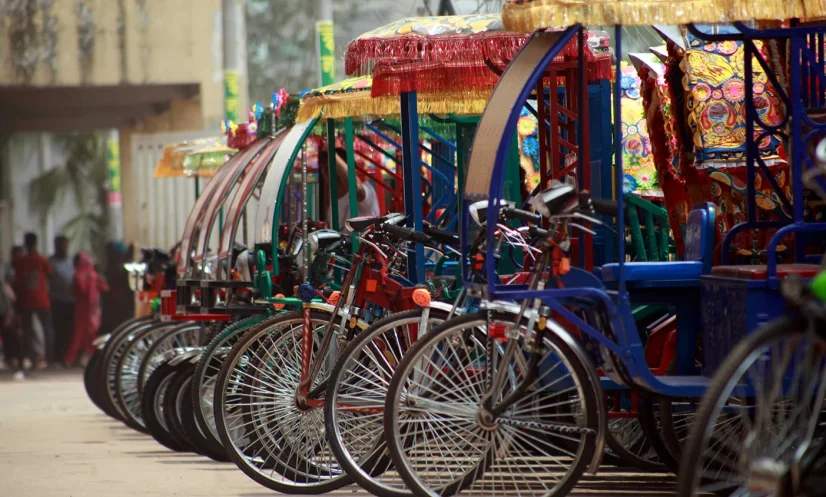
Battery-operated auto-rickshaws and easy bikes are putting increasing pressure on Bangladesh’s power supply, road safety, traffic management, the environment and government revenue, prompting the authorities to bring the rapidly expanding sector under a formal regulatory framework.
Home Minister Salauddin Ahmed disclosed the government’s concerns and proposed measures in Parliament on Monday while responding to an urgent public interest notice raised by lawmaker Rehana Akhter Ranu over the uncontrolled movement of battery-run auto-rickshaws.
According to the minister, an estimated 5 million to 8 million electric three-wheelers are currently operating across the country. Their combined electricity consumption accounts for nearly 5 per cent, or potentially more, of the country’s total power generation.
The unregulated charging network is also causing substantial revenue losses to the state. While there are only around 3,300 legally recognised charging points nationwide, government estimates suggest that more than 48,000 informal or illegal charging points are operating in Dhaka alone.
“The widespread use of illegal power connections for charging these vehicles is costing the government around Tk 4,000 crore in lost revenue annually,” Salauddin Ahmed told the House.
He said the large-scale charging of the vehicles was also putting considerable pressure on transformers and electricity distribution lines, particularly during peak hours, increasing the burden on local distribution systems and contributing to power supply problems.
Ranu, who raised the notice titled “Regarding Uncontrolled Auto-Rickshaw Movement”, said around 300 new battery-run auto-rickshaws were being added to Dhaka’s roads every day. She estimated that charging the vehicles consumes around 1,000 megawatts of electricity daily, adding to pressure on the power system.
Registration and QR codes
The government plans to introduce digital tracking and QR codes to bring the vehicles under a more organised registration and monitoring system.
The Home Minister said the new regulatory framework had been prepared in consultation with the Ministry of Local Government, with the aim of balancing road safety and environmental concerns with the livelihoods of millions of people who depend on the vehicles.
Under the proposed system, each registered vehicle will be identifiable through a QR code and digital tracking mechanism. The move is also intended to prevent registration fraud, including the reported practice of using a single registration for as many as 20 vehicles.
Registered auto-rickshaws will be assigned specific routes, while their operation on major highways will be completely prohibited.
The government will also introduce requirements for safer and more environmentally friendly batteries and strengthen monitoring of charging facilities to curb electricity theft.
Ahmed said modern technologies, including AI-powered traffic cameras already installed at intersections in Dhaka, would continue to be used to monitor traffic violations and improve enforcement.
Traffic enforcement challenges
Ranu pointed out that 50 AI-powered traffic cameras have already been installed at 17 traffic signals in Dhaka to detect violations. However, she said the technology has limited effectiveness against battery-run auto-rickshaws because many of the vehicles do not have registration plates.
As a result, authorities often cannot issue fines even when cameras detect violations such as running red lights, improper lane changes or speeding.
The absence of registration and standard identification has therefore become a major obstacle to enforcing traffic rules against the rapidly growing number of battery-powered three-wheelers.
Road safety concerns
The minister also highlighted the road safety risks associated with the vehicles.
Bangladesh recorded 6,729 road accidents in 2025, resulting in 911 deaths and 14,812 injuries, according to figures presented in Parliament. Battery-operated auto-rickshaws were involved in 13.54 per cent of the accidents.
Ahmed attributed the risks to several factors, including unregistered vehicles, inadequately trained drivers, faulty vehicle designs, defective brakes and lighting systems, excessive speed and the operation of slow-moving vehicles on major highways.
The government’s decision to restrict battery-run vehicles from major highways is aimed in part at reducing the risk of collisions between slow-moving three-wheelers and faster vehicles.
Environmental and health risks
The uncontrolled expansion of battery-run vehicles has also raised concerns over the environmental impact of their batteries and charging systems.
Ranu warned that the widespread use of low-cost lead-acid batteries could create serious health and environmental hazards, particularly when used batteries are discarded or recycled without proper safeguards.
She called for stronger regulation of battery standards and charging facilities rather than simply removing the vehicles from the roads.
Balancing regulation and livelihoods
Despite the growing concerns, the government has indicated that it does not intend to take measures that would abruptly eliminate the sector and disrupt the livelihoods of millions of people.
Instead, the proposed framework seeks to regulate the vehicles through registration, digital identification, route management, battery standards and stricter monitoring of charging facilities.
The measures are expected to address multiple problems at the same time—reducing illegal electricity use and revenue leakage, improving traffic enforcement, strengthening road safety and limiting environmental risks.
The government’s challenge, however, will be to enforce the new rules effectively while ensuring that the large number of drivers and workers dependent on battery-run three-wheelers are not pushed out of employment.