


 Play store

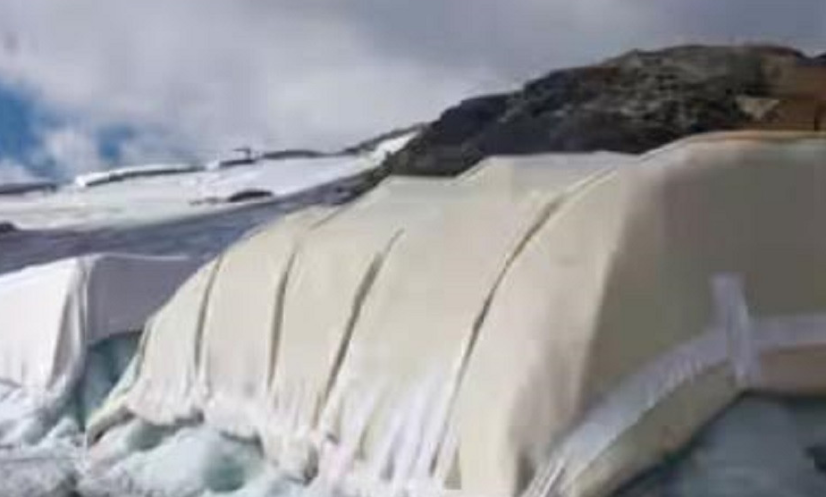
Scientists in Switzerland are testing sheep’s wool as an environmentally friendly alternative to plastic covers used to slow glacier melting caused by climate change.
The experiment, dubbed “Keep It Wool,” covers about 200 square metres of the Tsanfleuron Glacier in western Switzerland with specially made wool blankets. Initial findings suggest the natural material is nearly as effective as conventional synthetic covers at slowing ice melt during summer.
The project was conducted by environmental organisation Summit Foundation and the University of Lausanne. Two 100-square-metre wool blankets were placed on the glacier in June, with researchers monitoring changes in snow and ice every two weeks throughout the summer.
Researchers said the wool coverings have performed better than expected and appear to have reduced melting at a rate comparable to synthetic materials.
The experiment also aims to find a useful purpose for sheep’s wool that would otherwise go to waste in Switzerland. Large quantities of locally produced wool are discarded every year, and researchers believe using it on glaciers could turn an underused natural resource into an environmentally friendly solution.
Synthetic glacier covers typically contain plastic-based materials that reflect sunlight and reduce heat absorption, thereby slowing the melting of the ice beneath them. However, they can release microplastics or microfibres into the environment.
Sheep’s wool, by contrast, is a natural and biodegradable material, making it less likely to leave long-lasting plastic pollution.
The need for such experiments has grown as Switzerland’s glaciers continue to shrink rapidly. Researchers say warmer conditions have caused melting to begin several weeks earlier than usual in some areas this year.
Rapid glacier loss is also increasing the risk of landslides and rockfalls in mountainous regions, prompting researchers to explore temporary, localised measures to protect vulnerable ice.
However, scientists stress that wool blankets are not a long-term solution to climate change. They can only provide temporary protection to selected glacier areas.
Only around 0.02% of Switzerland’s total glacier area is currently covered by protective materials, making large-scale protection impractical. Scientists say the most effective long-term measure remains reducing greenhouse gas emissions, particularly those from fossil fuels.
Despite these limitations, the wool-covering experiment is being viewed as a promising example of nature-based innovation. If further testing confirms the initial results, natural materials could potentially be used to protect ice near tourist sites and critical infrastructure.