Play store

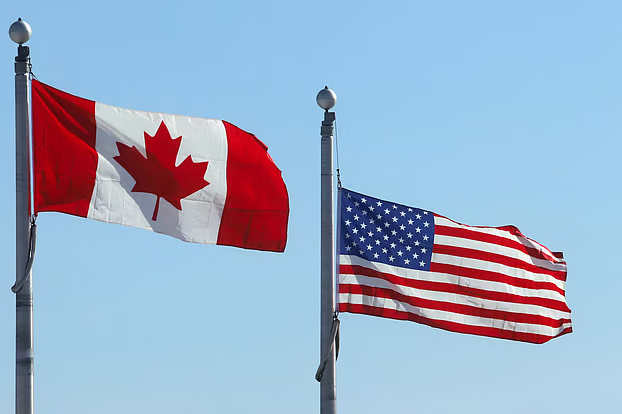
Canada’s new tariffs on around $20 billion worth of goods imported from the United States took effect on Tuesday, escalating the trade dispute between the two neighbours and raising the cost of cross-border commerce.
The new tariffs cover products including clothing, cheese, metal components and wood products. Canada decided to impose the retaliatory duties after trade talks with the United States collapsed last month, following earlier tariff measures imposed by President Donald Trump on some Canadian goods.
The immediate economic impact may be limited because the products covered account for only a small share of the two countries’ total annual trade. However, the broader concern is that escalating tariffs could further worsen relations and increase pressure on households and businesses in both countries.
Canadian Prime Minister Mark Carney has taken a firm stance against Trump’s trade policies, saying Canada is engaged in a “war” with the United States. Canadian officials have said Ottawa will impose matching tariffs if Washington introduces further duties.
Trump and his allies, meanwhile, have mocked Canada’s economy and military capabilities. Trump has also threatened to impose additional tariffs on Canadian-made vehicles. On Friday, he said there was even a possibility that trade between the two countries could be halted completely.
Trump also warned Canadian aircraft maker Bombardier. Hours before Canada’s new tariffs took effect, he wrote on social media that Bombardier would no longer be allowed to sell aircraft in the United States and urged American consumers to avoid certain Canadian products.
Bombardier said the US aerospace industry is an important export sector for the United States and that it operates factories producing wings and other key components in California and Texas, supporting a large number of American jobs.
Brad Wood, senior director for trade and innovation at the National Foreign Trade Council, said retaliatory tariffs would hurt businesses and consumers in both Canada and the United States by creating additional barriers to bilateral trade.
The Trump administration is also preparing new tariffs on goods from several other countries it accuses of overproducing certain products, a situation Washington describes as “overcapacity,” contributing to persistent trade deficits with the United States.
The new tariffs could take effect later this week. The administration is also seeking alternative tariff measures after the US Supreme Court struck down some of Trump’s tariffs in February.
Trump has threatened to halt trade with countries that export more goods to the United States than they import from it. The United States runs large trade deficits with many countries in Europe and Asia.
Tariffs raise the prices of imported goods, making Trump’s global trade war a potential obstacle to efforts to control inflation in the United States. New consumer inflation data are due to be released this week.
The US-Canada trade dispute intensified publicly in July, when Trump accused Canada of discriminating against American industries and threatened to impose 50% tariffs on certain Canadian goods if an agreement was not reached within 30 days.
After months of negotiations, the talks collapsed in August. The United States then imposed tariffs on hundreds of Canadian products, including wine, cheese, clothing and hockey sticks. Canada responded by announcing retaliatory tariffs on similar US goods.
The dispute has continued to deepen. Trump has criticised Canadian political leaders and issued an executive order proposing to rename Lake Ontario “Lake America.”
On Sunday, Trump also criticised the Canadian currency’s exchange rate, saying he would no longer accept what he described as an “imbalance” between the US and Canadian dollars.