Play store

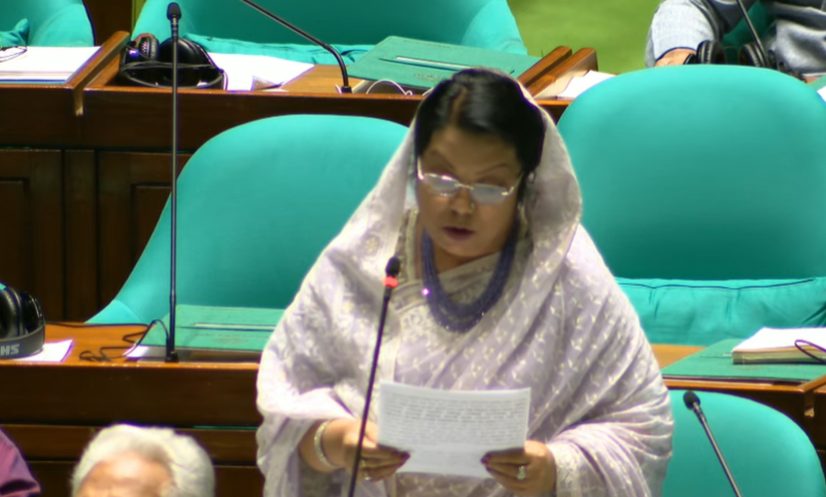
Food Minister Afroza Khanam Rita has said 1,210 food samples were tested between February and August this year as part of regular and risk-based efforts to prevent food adulteration and contamination.
She made the disclosure in Parliament on Tuesday while responding to a notice under Rule 71 of the Rules of Procedure submitted by reserved women’s seat MP Sansila Jebrin during the third session of the 13th Jatiya Sangsad.
The minister said 144 food samples are collected every month through 72 field offices of the Bangladesh Food Safety Authority (BFSA). Samples of essential food items, including bottled water, edible oil, milk and dairy products, yoghurt, powdered spices, baby food and bakery products, are being tested at government-approved laboratories.
Of the samples tested from February to August, 149 bottled water samples were examined for cadmium, arsenic, iron and lead. Tests were conducted on 54 edible oil samples for trans fat, iodine value and saponification value.
A total of 33 milk samples were tested for milk fat, milk protein, lead and melamine, while three yoghurt samples were examined for milk fat, milk protein and sodium cyclamate.
In addition, five baby food samples were tested for lead, while 79 spice samples were examined for lead, chromate and Sudan dyes. Tests were also conducted on 157 bakery product samples for hydrogen peroxide and potassium bromate.
The minister said the BFSA has mini laboratories at its 72 offices and eight mobile laboratories. It also has agreements with 47 government and private approved laboratories for food testing.
“If any food product is found to pose a risk to public health, necessary regulatory measures are taken immediately and public notices are issued,” she said.
She added that mobile courts had been conducted in 17 districts since the incumbent government took office to control unregistered and unsafe baby food. From February to August of the current fiscal year, 756 food businesses were also monitored and provided with necessary directives.
The minister further informed Parliament that initiatives were being taken to monitor food products sold through online marketplaces and social media platforms.
The government is also working on a national action plan to address emerging food safety risks, including food contamination and microplastics.