


 Play store

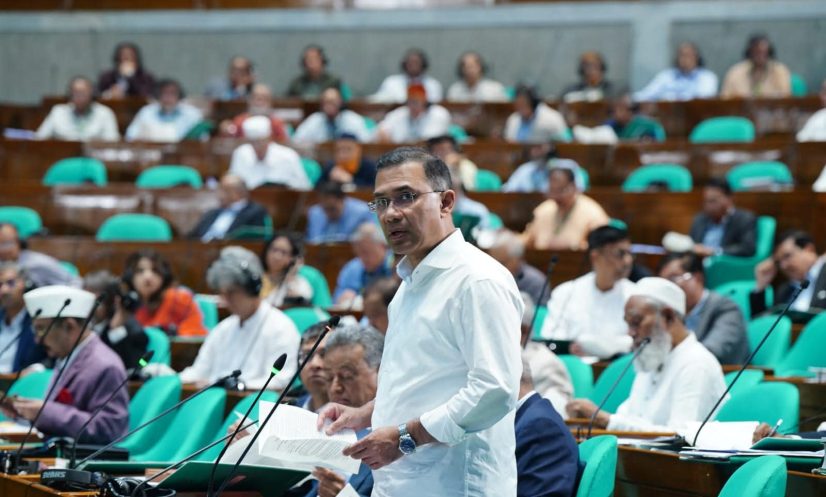
Prime Minister Tarique Rahman on Wednesday told Parliament that the government has taken a series of measures to curb repeated extensions of project deadlines and unjustified increases in the costs of public development projects.
Responding to a question from Cumilla-10 MP Md Mobasher Alam Bhuiyan during the Prime Minister’s Question Hour, he said project delays and cost escalations were generally caused by a combination of weaknesses in project preparation, approval, land acquisition, financing, procurement and management.
The prime minister said the government had identified a number of factors behind the problem, including weak feasibility studies, inaccurate cost estimates, poor project-site selection, delays in land acquisition and utility relocation, slow procurement processes and delays in appointing project directors.
Weak monitoring and accountability, gaps between financing plans and budget allocations, and inadequate coordination among ministries and agencies were also contributing to delays and cost increases, he said.
Tarique Rahman said the government had taken several measures to address these shortcomings. These include ensuring accurate feasibility studies before approving new projects and speeding up implementation preparations after project approval.
He said the government was also revising existing guidelines on project formulation, processing, approval and revision to make them more effective and up to date.
Monitoring of ongoing projects is being strengthened through dashboards at relevant ministries and divisions, along with regular project reviews and closer field-level supervision, the prime minister said.
The government is also strengthening coordination among relevant agencies to expedite land acquisition and utility relocation, he added.
On projects that have already missed their deadlines, Tarique Rahman said ministries had been instructed to review the reasons for delays, irregularities, cost increases and repeated revisions.
Necessary action will be taken under existing rules against individuals and institutions found responsible for delays, he said.
Projects with less than 30 per cent implementation progress will also be reviewed to assess their usefulness and effectiveness. Depending on the findings, the concerned ministries and divisions may restructure such projects, change their scope or decide whether to continue them.
The prime minister said the government had also encouraged authorities to avoid taking up isolated projects and instead implement cluster projects under integrated programmes.
Other measures include expanding the use of electronic government procurement, appointing project directors based on professional qualifications, skills and practical experience, and ensuring continuity in their responsibilities where necessary.
He said the government was updating the relevant policy on appointing project directors and had also placed greater emphasis on taking up projects under the public-private partnership model.
Tarique Rahman added that an initiative had been taken to update the Public Procurement Rules 2025 to make government procurement more competitive and accountable.