Play store


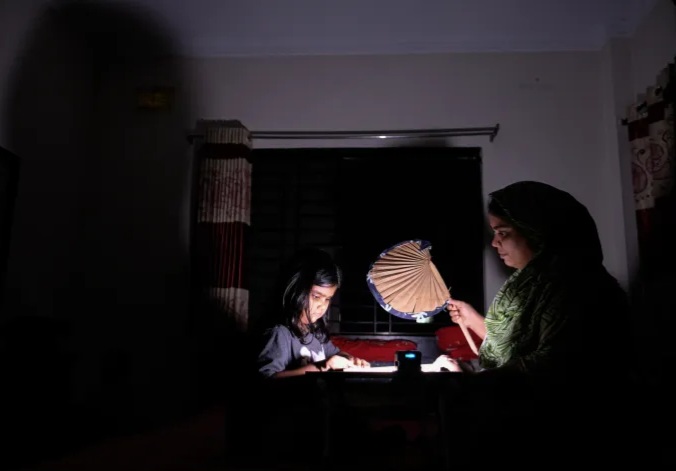
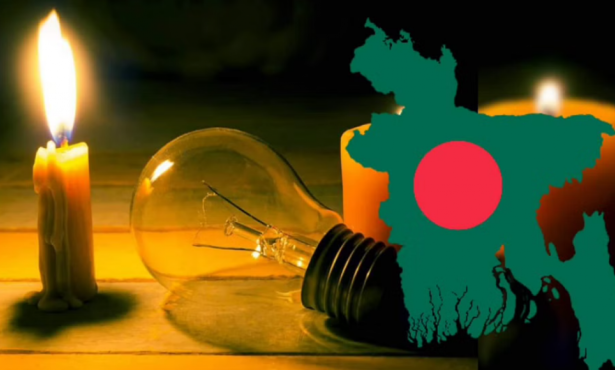
Energy is one of the principal engines of economic growth and national development. In Bangladesh, natural gas in particular has long been deeply woven into economic activity, industrialisation, electricity generation and everyday life. Yet the country is now facing an acute gas and power crisis that reaches from household kitchens to factories, power plants and transport.
The consequences are already being felt across society. Industrial production is being disrupted, exports are coming under pressure, employment is at risk, and inflationary pressures are being reinforced. The crisis is therefore no longer simply an issue for the Ministry of Power, Energy and Mineral Resources. It has become a matter of national economic security.
The government has indicated that it could take at least two years to fully resolve the country’s gas and electricity problems. In the meantime, it is taking measures intended to make the current shortages and load-shedding more manageable. But the immediate response must go hand in hand with a serious examination of why the crisis has become so severe.
The first question is whether the crisis is primarily the result of government failure, or whether there are other forces deliberately aggravating it.
The immediate causes are relatively clear. The fire at a floating LNG terminal in Maheshkhali, declining domestic gas production and higher LNG prices in international markets have all contributed to the deterioration in supply. But some energy experts argue that the depth of the present crisis cannot be explained by technical failures and international market conditions alone.
They point to the legacy of the previous government, including allegations of widespread corruption, political patronage, opaque contracts and undue influence over the energy sector. These weaknesses, they argue, have left the country particularly vulnerable whenever fuel supplies are disrupted.
There are also allegations that vested interests may be deliberately exploiting the present situation to put pressure on the government. Questions have emerged over whether some private power producers are withholding generation despite having fuel stocks, allegedly in an effort to secure outstanding payments or other financial benefits.
Such claims require careful investigation. They should not be treated as established facts without credible evidence. But neither should they be dismissed without examination.
The public is already asking a simple question: why has the present crisis become so acute? If the difficulties are entirely the result of technical failures, declining domestic production and international market conditions, the government should explain this clearly. If there is evidence of deliberate disruption, those responsible must be identified and held accountable through due process.
There is also a wider political dimension. Allegations that supporters or beneficiaries of the previous regime may be attempting to exploit the crisis to create public anger against the present government are serious. If such activity exists, it should be investigated by competent authorities rather than allowed to remain at the level of political speculation.
The government must also examine the role of officials and institutions responsible for energy management, including Bangladesh Petroleum Corporation, Petrobangla, power utilities and other agencies. Any allegation of deliberate obstruction, excessive load-shedding, manipulation of supply or withholding of resources should be investigated independently and transparently.
At the same time, blaming sabotage for every failure would be equally dangerous. It could allow genuine weaknesses in policy, planning and management to escape scrutiny.
That is why the present crisis requires two parallel responses: immediate action to restore reliable supplies and an independent assessment of the structural and institutional causes of the crisis.
Bangladesh has become increasingly dependent on imported fossil fuels, particularly LNG, as it has expanded electricity generation. This has created a major vulnerability.
In the 2024-25 financial year, the country reportedly spent Tk54,954 crore on LNG imports alone. Such expenditure puts pressure on foreign-exchange reserves while also increasing the government’s subsidy burden and the overall cost of electricity generation. The problem becomes more acute when international prices rise or supplies are disrupted.
Bangladesh’s experience in 2026 has demonstrated this vulnerability. Reduced LNG supplies from Qatar have reportedly forced the country to seek supplies from alternative sources and the spot market, often at higher prices. The consequences are predictable: higher import costs, increased generation costs and greater pressure on public finances.
No country can guarantee energy security by relying excessively on a single imported fuel or a narrow group of suppliers.
The government therefore needs to begin a fundamental shift in energy policy.
The answer cannot simply be to import more LNG. Bangladesh needs to diversify its energy sources, intensify domestic gas exploration, expand renewable energy and improve efficiency across the entire energy system.
This transition must reflect Bangladesh’s own circumstances. The country has limited land, high population density and an economy heavily dependent on agriculture and industry. Energy policy must therefore balance energy security with food security, environmental sustainability and economic stability. In the short term, Bangladesh needs a practical and coordinated strategy for securing LNG supplies.
Long-term supply agreements, diversification of suppliers and strategic reserves should form part of that strategy. Excessive dependence on spot-market purchases exposes Bangladesh to international price volatility and supply disruptions.
The World Bank has also advised Bangladesh to strengthen energy security by increasing long-term LNG contracts and reducing excessive dependence on the spot market. But contracts alone will not solve the problem.
The country must also reduce energy waste in factories, government offices, commercial establishments and households. Energy efficiency should not be treated as an emergency measure introduced only during a crisis. It should become a permanent national policy.
Another issue requiring urgent attention is the financial structure of the power sector.
There are allegations that some private power plants associated with the previous regime have accumulated substantial claims, including capacity payments and other outstanding dues. There are also allegations of lobbying and syndication involving business interests, officials and political actors. Again, these are allegations that require evidence and investigation.
The government should conduct a transparent audit of outstanding claims and contractual obligations. Every payment should be tested against the relevant contract, actual electricity supplied, capacity made available and prevailing economic conditions.
The principle should be simple: public money must be spent in the public interest.
Power plants that are genuinely required and can generate electricity at reasonable cost should be supported. But plants that are uneconomic, inefficient or unnecessary should not continue imposing financial burdens simply because their contracts were signed in the past.
The concentration of load-shedding in rural areas also deserves closer scrutiny.
There are allegations that some rural electricity distribution networks are reporting or implementing load-shedding beyond what is technically necessary.
Claims that a manageable one-hour interruption is sometimes turning into five, seven or even eight hours must be independently verified. If such practices are occurring, they cannot be dismissed as ordinary technical problems.
A centralised monitoring system could help determine where and why load-shedding is occurring, how long it lasts and whether the reported figures correspond with actual supply conditions.
Transparency would serve both the government and consumers. If a particular area requires prolonged load-shedding because of genuine generation or transmission constraints, people should be told. If the interruption is avoidable, those responsible should be held accountable.
Load-shedding is no longer merely an inconvenience. It directly affects industrial production, exports, investment, employment and economic growth.
The present crisis has exposed the limitations of an energy system excessively dependent on imported fossil fuels.
Bangladesh now needs a comprehensive energy strategy built around several pillars: domestic gas exploration, diversified LNG supplies, efficient fuel procurement, modern transmission infrastructure, regional electricity cooperation and rapid but carefully planned expansion of renewable energy.
Solar power clearly has significant potential. Wind energy, particularly along the coast, also deserves greater attention. Offshore wind should be examined as a longer-term option given Bangladesh’s land constraints.
Regional electricity cooperation should also be expanded. Bangladesh will continue to need electricity imports, including from India, but energy security requires diversification. Potential connections involving Nepal, Bhutan and wider South and South-East Asian electricity markets should be explored wherever economically and technically viable.
The principle should be cooperation without excessive dependence. Crisis can become an opportunity
Bangladesh’s current energy crisis is undoubtedly a major challenge. But it can also become an opportunity to correct weaknesses that have accumulated over many years.
The government should establish a clear three-stage action plan.
In the short term, it must secure fuel supplies, restore idle or underutilised power plants, monitor load-shedding centrally and ensure that essential industries and critical services receive reliable electricity.
In the medium term, it should review costly power contracts, improve fuel procurement, strengthen transmission infrastructure, expand domestic gas exploration and diversify LNG suppliers.
In the long term, Bangladesh must reduce its dependence on imported fossil fuels through renewable energy, energy efficiency, regional power trade, better storage and investment in specialised human resources.
Above all, the government needs political commitment and institutional discipline.
The present gas and electricity crisis cannot reasonably be blamed entirely on the current government because many of the structural weaknesses predate it. At the same time, the government cannot use the inherited nature of the crisis as an excuse for failing to act.
The allegations of sabotage must be investigated. If evidence is found, those responsible must face the law. But the investigation must be evidence-based, politically neutral and institutionally credible.
The government should also resist the temptation to regard every critic or every failure as part of a conspiracy. A strong state distinguishes between genuine sabotage, administrative incompetence, commercial disputes and policy failure.
That distinction matters.
Bangladesh needs all political parties and relevant stakeholders to recognise that energy security is a national issue rather than a partisan one. Political differences will remain, but the country’s electricity and gas systems cannot become arenas for political retaliation or economic manipulation.
The ultimate objective should be bigger than simply overcoming the present crisis.
Bangladesh needs an energy system that is secure, affordable, diversified, efficient and sustainable. It needs domestic resources where possible, multiple international suppliers where necessary and renewable sources for the future. It needs private investment, but with strong public-interest safeguards. It needs contracts that are fair to investors without becoming unfair to taxpayers. And it needs institutions capable of responding rapidly when the system comes under stress.
Today’s crisis is a warning that energy security cannot be built overnight. The country has already paid a high price for years of weak planning, excessive dependence on imports, costly contractual arrangements and inadequate diversification. The lesson should now be clear.
Bangladesh must not merely produce more electricity or import more gas. It must build a system that can withstand shocks, resist vested interests and serve the economy at a sustainable cost.
Whether the present crisis is the product of policy failure, structural weakness, deliberate sabotage or a combination of all three, the response must be the same: find the truth, fix the system and protect the public interest. That is the real route out of Bangladesh’s gas and power crisis.
The views expressed in this article are the author’s own and do not necessarily reflect Sarabangla English Edition’s editorial stance.