Play store

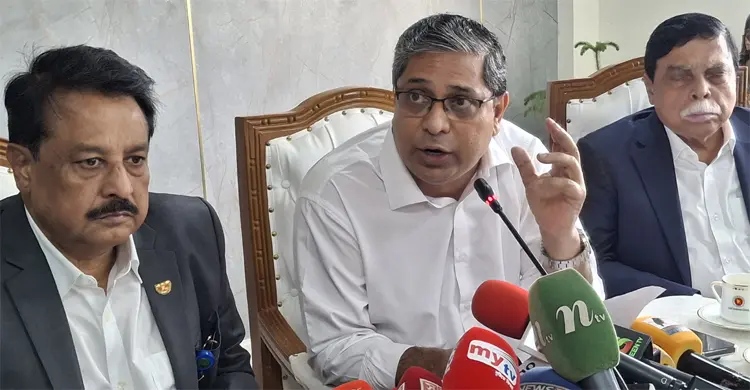
The government is planning to send dengue patients to private hospitals for treatment if public hospitals lack sufficient beds or necessary facilities, with the state set to bear the cost of their treatment.
Local Government State Minister Mir Shahe Alam disclosed the plan after an emergency meeting on dengue prevention at the Bangladesh Secretariat on Wednesday.
He said the Health Department is working on a pilot arrangement with a number of private hospitals to accommodate dengue patients when public hospitals run out of beds or other necessary facilities.
“If there is no capacity for treatment or beds at a government hospital, the Health Department is trying to send some patients to selected private hospitals. The government will bear the treatment costs in such cases,” he said.
The state minister also said government hospitals currently have adequate supplies of saline and dengue testing kits.
According to information provided by the Health Department, he said, there are sufficient stocks of saline as well as kits for diagnosing dengue.
The government has also instructed authorities to strengthen dengue treatment facilities at the upazila level in areas experiencing a high incidence of the disease, Shahe Alam said.
He said dengue treatment facilities were previously not available at the upazila level, but Prime Minister Tarique Rahman has directed authorities to increase bed capacity in red-marked upazilas whenever necessary.
“If an upazila has five beds, the number should be increased to 10 if necessary to treat dengue patients,” he said.
Authorities have also been instructed to ensure adequate supplies of testing kits, saline and essential medicines in the affected areas.
Describing the regional dengue situation, Shahe Alam said the highest number of cases were being reported in Khulna, Barishal, Chattogram, Mymensingh and Dhaka divisions. The number of patients in Sylhet and Rangpur was negligible, while Rajshahi was also recording relatively fewer cases.
Among the affected areas, Pirojpur has reported a particularly high number of dengue patients, he said.
The state minister identified stagnant water collecting around the bases of betel nut and coconut trees after their trunks or branches are cut as one possible reason for the high incidence of dengue in the Barishal region. Such stagnant water can serve as a breeding ground for Aedes mosquito larvae, he said.
He urged citizens to ensure that no water remains stagnant around their homes, rooftops or balconies.
People should regularly clean flowerpots and other places where water can accumulate, he added.
Prime Minister’s Principal Secretary ABM Abdus Sattar, secretaries of various ministries and senior officials of the Ministry of Local Government were present at the meeting.