


 Play store

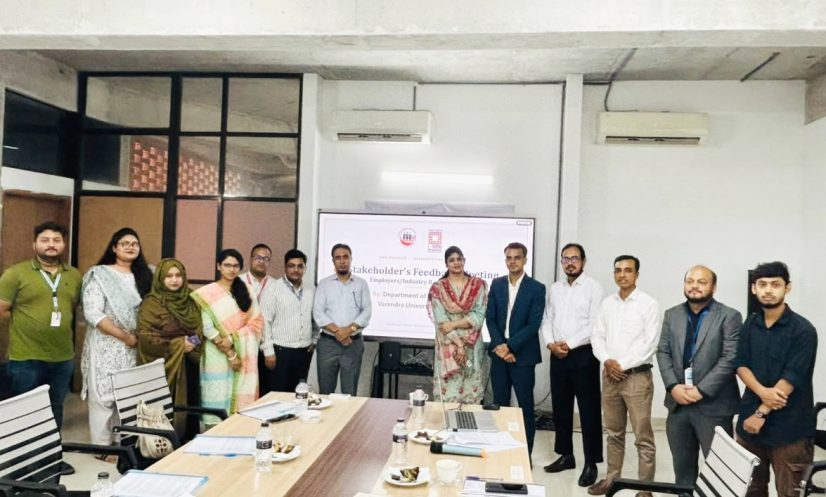
An international collaborative research project led by Varendra University has highlighted the roles of green taxation, financial development, banking development, fintech adoption and economic growth in advancing sustainable development in Bangladesh.
The findings were presented at a research dissemination and stakeholder engagement session organised by the Department of Business Administration of Varendra University. Representatives from industry, policymakers, media and other stakeholders attended the event.
The research was led by Dr Rezaul Karim, associate professor of the Department of Business Administration at Varendra University. Researchers from Varendra University, Bangladesh; INTI International University, Malaysia; Putra Business School of Universiti Putra Malaysia; Comilla University; and International Islamic University Chittagong jointly conducted the study.
Titled “Unveiling the roles of green tax, financial development, banking development, fintech adoption, and economic growth on sustainable development in Bangladesh”, the research was published in World Development Sustainability, a Scopus-indexed Q1 journal published by Elsevier.
The researchers analysed data from Bangladesh covering the period from 1990 to 2023 to assess how green tax, financial development, banking development, fintech adoption and economic growth affect the country’s sustainable development.
The findings suggest that fintech development can play an important role in expanding financial inclusion, increasing access to digital financial services and creating new opportunities for green financing in the future.
The study also highlights the need to align economic growth with environmentally friendly technologies, social development and responsible investment to ensure sustainable development.
It recommends strengthening environmental, social and governance (ESG)-based practices, green lending and sustainable financing policies in Bangladesh’s banking and financial sectors. Such measures could help create a better balance between economic growth and environmental sustainability.
The researchers also stressed the need for effective green tax policies, environmentally friendly investment frameworks and an enabling policy environment for sustainable financing.
Banks and financial institutions should become more active in ESG-based lending, financing green projects and assessing environmental risks, according to the study.
The expansion of fintech could also be used to increase financial inclusion among rural and underserved communities and create digital and green business opportunities for young entrepreneurs, it said.
Speakers at the event stressed that university research should not remain confined to academic circles but should reach industry, government, policymakers and the wider public.
They said high-quality research conducted through international collaboration could contribute to addressing Bangladesh’s development challenges, shaping effective policies and building a more sustainable future.
They also emphasised that research can have a greater impact on development when universities work closely with industry, government and society.
Industry experts and representatives of employers attending the event included Bangladesh Bank Additional Director AKM Amirul Islam, Sonali Bank Principal Officer Sheikh Sohrab Ahmed, Grameenphone Rajshahi Regional Head (Marketing) Nadim Shahriar, Sonali Bank Senior Officer Sahedul Basar, Rajshahi Krishi Unnayan Bank Principal Officer Tanbi Rani Dutta and Sonali Bank Maugachhi Branch Manager and Principal Officer Md Mizanur Rahman.
The session was chaired by Prof Dr Kaniz Habiba Afrin, head of the Department of Business Administration. Dr Rezaul Karim, coordinator of the department, Associate Professor Atia Ahmed and Assistant Professor Sirajum Monir Pratik, among others, were also present.
The Department of Business Administration said it would continue conducting high-quality research through national and international collaborations and working to disseminate research findings among industry and wider society.