Play store

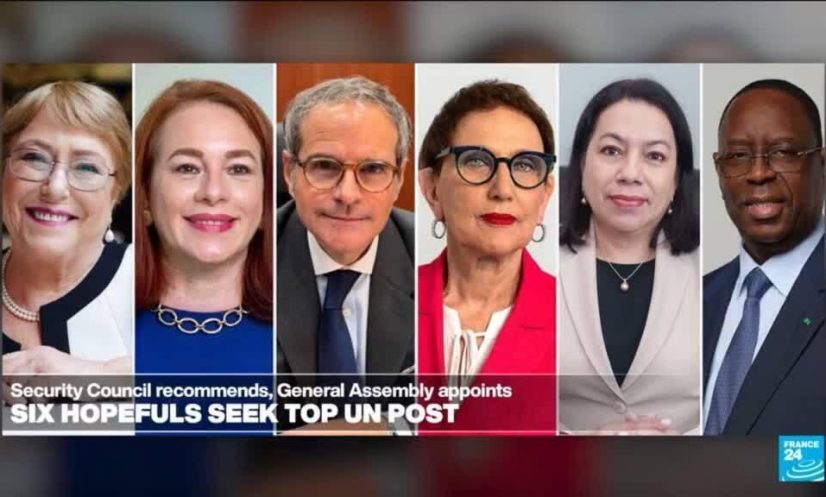
The race to become the next United Nations secretary general remains wide open, with two women candidates leading the latest Security Council straw poll but neither securing enough support to emerge as a clear favourite.
Guyana’s UN ambassador Carolyn Rodrigues-Birkett topped the second confidential poll with eight “encourage” votes, moving ahead of Costa Rica’s Rebeca Grynspan, who received seven. Grynspan had led the first poll with 10 favourable votes.
Argentine diplomat Rafael Grossi, head of the International Atomic Energy Agency (IAEA), came third with seven “encourage” votes. However, his support fell from the first poll, while opposition to his candidacy increased.
The Security Council has 15 members, including five permanent members — the United States, Russia, China, Britain and France — which have veto power. A candidate generally needs at least nine favourable votes and must avoid a veto from any permanent member to be recommended for the post.
The latest result is significant because women now occupy the top two positions in the race. It has strengthened calls for the UN to elect its first woman secretary general.
Rodrigues-Birkett, Guyana’s top diplomat in New York, emerged as the new leader despite not being considered a leading contender at the start of the race. Grynspan, a former UN official and Costa Rican diplomat, had been seen as one of the strongest candidates after her first-poll performance.
Grossi’s position, meanwhile, appears more difficult. His opposition votes increased to six from two in the first poll. Russia has publicly criticised him over his handling of the Ukraine war and his decision to cancel a visit to the Russian-controlled Zaporizhzhia nuclear power plant.
Grossi was nominated by Argentina’s government. His links with President Javier Milei’s administration and tensions between Argentina and Britain over the Falkland Islands/Malvinas dispute could also complicate his chances, analysts say.
Ecuadorian diplomat Ivonne A-Baki faced an even tougher result, receiving eight “discourage” votes. Analysts say her late entry into the contest may have worked against her, while claims of close ties with US President Donald Trump appear to have failed to attract wider support.
The second poll also highlighted divisions among the Security Council’s permanent members. None has publicly indicated a clear favourite, raising concerns that political bargaining could influence the selection.
Civil society groups have long criticised the secretive nature of the process. They allege that Security Council members have sometimes used opposition votes to seek policy concessions or promises of senior UN positions for their nationals.
The General Assembly has been pushing for a more open process, including public hearings for candidates. But the United States has criticised some of these efforts, arguing that the General Assembly president has exceeded her authority.
More candidates could also enter the race in the coming months. Names reportedly linked to the contest include former UN envoy Nickolay Mladenov and FIFA president Gianni Infantino, although neither has emerged as a confirmed candidate.
The uncertainty could lead to a prolonged selection process. The Security Council took nine straw polls before choosing Kofi Annan in 1996.
The next secretary general will succeed António Guterres, whose second term ends on December 31, 2026. With no candidate yet close to the required level of support, the contest is likely to remain uncertain as the deadline approaches.
a
Women lead race for next UN chief as no clear favourite emerges
SB Desk
15 September 2026 11:27
Updated: 15 September 2026 11:28