


 Play store

More than 450,000 people could die from additional heat linked to an exceptionally strong El Niño over the next six months, according to a new estimate by climate scientists.
The projected deaths, covering September 2026 to February 2027, would come on top of heat-related deaths already associated with human-driven climate change. The impact is expected to be felt across tropical regions, including Nigeria, Indonesia, Sudan, India and Brazil, while the United States could see around 3,500 additional heat deaths.
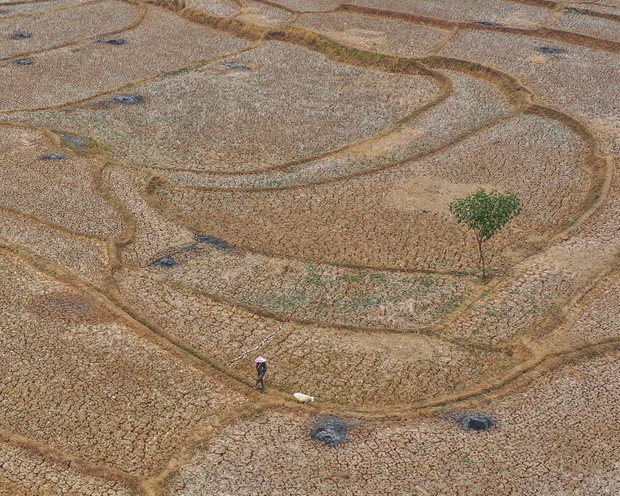
Researchers warned that the effects could extend beyond heat, with El Niño also increasing the risk of drought, wildfires and flooding in vulnerable regions.
The estimate was developed at a regional level to identify areas where targeted measures could help reduce deaths. Such measures include improved heat forecasting, cooling centres, additional medical staff during extreme heat and stronger protections for outdoor workers.
The current El Niño has already exceeded the highest temperature previously recorded for the phenomenon, months before its expected peak. Scientists have described its intensity as exceptionally extreme, while noting that El Niño is a natural climate cycle that can be amplified by global warming.
Prof Michael Greenstone, co-founder of the Climate Impact Lab and a University of Chicago researcher, said the estimated toll of 451,000 deaths represents real people and families whose lives could be affected by extreme heat.
The researchers said elevated heat-related mortality could continue beyond the six-month forecast period, potentially lasting until June or July 2027.
The Sahel region of Africa and parts of Southeast Asia are expected to be among the hardest-hit areas. Researchers described the current event as a warning of the extreme temperatures that could become more common as the climate warms.
Dr Tamma Carleton of the University of California, Berkeley, a co-author of the report, said stronger emergency responses and better-targeted measures could save lives in the immediate future.
She also stressed the need for longer-term investment in systems capable of protecting communities as extreme temperatures become increasingly common.